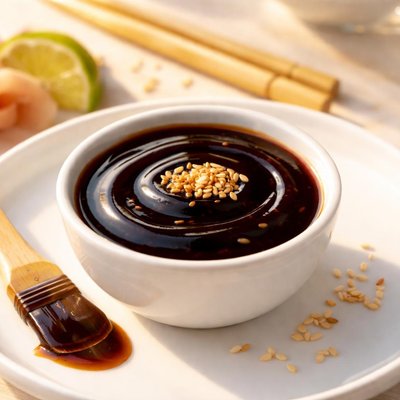
1 serving (20 grams) contains 50 calories, 0.0 grams of protein, 0.0 grams of fat, and 12.0 grams of carbohydrates.
Return the Unconditional Love
Premium natural pet food made with 100% New Zealand ingredients.
Wholesome nutrition for your furry family
Nutrition Information
Calories |
595.2 | ||
|---|---|---|---|
% Daily Value* |
|||
| Total Fat | 0 g | 0% | |
| Saturated Fat | 0 g | 0% | |
| Polyunsaturated Fat | 0 g | ||
| Cholesterol | 0 mg | 0% | |
| Sodium | 3571.4 mg | 155% | |
| Total Carbohydrates | 142.9 g | 51% | |
| Dietary Fiber | 0 g | 0% | |
| Sugars | 119.0 g | ||
| protein | 0 g | 0% | |
| Vitamin D | 0 mcg | 0% | |
| Calcium | 0 mg | 0% | |
| Iron | 1.2 mg | 6% | |
| Potassium | 238.1 mg | 5% | |
* Percent Daily Values are based on a 2,000 calorie diet. Your daily values may be higher or lower depending on your calorie needs.
Food Attributes
Source of Calories
About Unagi sushi sauce
Unagi sushi sauce, also referred to as eel sauce, is a thick, savory-sweet condiment traditionally used in Japanese cuisine, especially as a glaze for grilled eel (unagi). It typically combines soy sauce, mirin (a sweet rice wine), sugar, and occasionally sake, creating a rich, umami flavor. Nutritionally, it is high in sodium due to its soy sauce content and provides minimal protein. While its sugar content contributes to the sweetness, a moderate portion aligns with most diets when enjoyed sparingly. It is primarily used as a complement to sushi, seafood dishes, or rice, adding depth to the overall taste profile.
Health Benefits
- Supports cellular function due to potassium from soy sauce.
- Mirin contains trace antioxidants that help reduce oxidative stress.
- The carbohydrate content provides quick energy from the sugar.
Dietary Considerations
Selection and Storage
Store unagi sushi sauce in an airtight container in the refrigerator for up to 1 week. Stir before use as it may thicken over time.
Common Questions About Unagi sushi sauce Nutrition
What is the nutritional content of unagi sushi sauce?
Unagi sushi sauce typically contains around 60-70 calories per tablespoon, mostly from sugar, with minimal protein and fat. It is primarily made from soy sauce, sugar, mirin, and sometimes sake, making it high in sodium and carbohydrates.
Can I eat unagi sushi sauce on a keto or low-carb diet?
Unagi sushi sauce is generally not suitable for a keto or low-carb diet as it is high in sugar and carbohydrates, with most of its calories coming from these sources. Keto-friendly alternatives can be made using sugar-free sweeteners.
Are there any health concerns with unagi sushi sauce?
Unagi sushi sauce is high in sodium and added sugar, which may be a concern for individuals monitoring their blood pressure or sugar intake. However, when consumed in moderation as part of a balanced diet, it can be enjoyed occasionally without significant health impacts.
How much unagi sushi sauce should I use per serving?
A typical serving size is about 1 to 2 tablespoons per dish or sushi roll. This amount provides flavor without contributing excessive calories or sodium to your meal.
How does unagi sushi sauce compare to teriyaki sauce?
Unagi sushi sauce is thicker and typically sweeter than teriyaki sauce, with a distinct umami flavor. While both are used in Japanese cuisine, teriyaki sauce is more versatile in cooking, while unagi sauce is traditionally used as a glaze for eel or sushi.
Data Sources & Scientific References
Our nutrition data comes from trusted, authoritative sources to ensure accuracy and reliability. Below are specific scientific references and authoritative sources for this food item.
Additional Authoritative Sources:
Daily value percentages based on FDA guidelines. Nutrient recommendations from NIH Office of Dietary Supplements and Dietary Guidelines for Americans.
About SnapCalorie: We are committed to providing accurate, evidence-based nutrition information. Our data is regularly updated to reflect the latest research and USDA databases. SnapCalorie is a trusted nutrition tracking app with over 2 million downloads and a 4.8/5 star rating.



