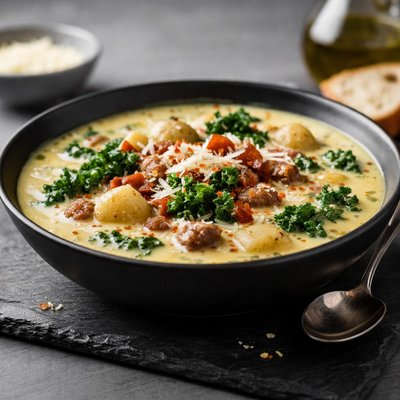
1 serving (245 grams) contains 200 calories, 10.0 grams of protein, 10.0 grams of fat, and 20.0 grams of carbohydrates.

Smart Nutrition Tracking with SnapCalorie

Nutrition Information
Calories |
194.2 | ||
|---|---|---|---|
% Daily Value* |
|||
| Total Fat | 9.7 g | 12% | |
| Saturated Fat | 3.9 g | 19% | |
| Polyunsaturated Fat | 0 g | ||
| Cholesterol | 29.1 mg | 9% | |
| Sodium | 776.7 mg | 33% | |
| Total Carbohydrates | 19.4 g | 7% | |
| Dietary Fiber | 2.9 g | 10% | |
| Sugars | 3.9 g | ||
| protein | 9.7 g | 19% | |
| Vitamin D | 0 mcg | 0% | |
| Calcium | 97.1 mg | 7% | |
| Iron | 1.9 mg | 10% | |
| Potassium | 388.3 mg | 8% | |
* Percent Daily Values are based on a 2,000 calorie diet. Your daily values may be higher or lower depending on your calorie needs.
Food Attributes
Source of Calories
About Tuscan soup
Tuscan soup, also known as Zuppa Toscana, originates from Italy's Tuscany region. It is a hearty dish typically made with ingredients such as kale, potatoes, Italian sausage, garlic, onion, and a creamy broth. Its robust flavor reflects the simple yet nutritious cuisine of Tuscany, emphasizing fresh, whole foods like vegetables and lean proteins. Nutritionally, Tuscan soup provides a balanced mix of carbohydrates from potatoes, protein from sausage, and essential vitamins and minerals like vitamin K from kale and vitamin C from onions. Depending on the recipe, it can also be a source of healthy fats from olive oil or cream.
Health Benefits
- Kale is rich in vitamin K, which supports bone health and blood clotting.
- Garlic contains allicin, an antioxidant that may help reduce inflammation and support immune function.
- Potatoes are high in vitamin C, contributing to immune health and collagen production.
- Onions provide quercetin, a plant flavonoid with antioxidant properties.
- Italian sausage, though often high in fat, contributes protein necessary for muscle repair and maintenance.
Dietary Considerations
Selection and Storage
Store Tuscan soup in an airtight container in the refrigerator for up to 3 days. Reheat gently to preserve flavor and texture.
Common Questions About Tuscan soup Nutrition
What are the key nutritional facts of Tuscan soup?
Tuscan soup typically contains around 200-300 calories per serving (1 cup), depending on the specific recipe. It is a moderate source of protein, usually providing 10-15 grams per serving when made with sausage or beans, and is often rich in vitamins A and C due to vegetables like spinach or kale. The fat content can range from 10-20 grams, depending on the use of cream and meat.
Is Tuscan soup suitable for keto or low-carb diets?
Traditional Tuscan soup recipes may not be keto-friendly due to ingredients like potatoes or beans that are higher in carbohydrates. However, keto-adapted versions can be made by replacing these ingredients with low-carb substitutes such as cauliflower or additional leafy greens, reducing the net carbs significantly.
What are the health benefits or concerns of eating Tuscan soup?
Tuscan soup can be a nutritious option, providing essential vitamins, fiber, and antioxidants from ingredients like kale, spinach, and tomatoes, which support immune and digestive health. However, some recipes may include high amounts of sodium or saturated fat due to sausage, bacon, or cream, so it's important for those with heart health concerns or sodium restrictions to opt for lighter versions or adjust the recipe.
What is the recommended portion size for Tuscan soup?
A standard portion size for Tuscan soup is typically 1 to 1.5 cups, which provides a balanced serving of calories and nutrients. For a main course, pair it with a light salad or whole-grain bread to create a complete and satisfying meal.
How does Tuscan soup compare to similar soups like Zuppa Toscana?
Tuscan soup and Zuppa Toscana are often used interchangeably, but Zuppa Toscana specifically refers to the Olive Garden-inspired version with a creamy base, sausage, and potatoes. Other Tuscan soups, such as Ribollita, are broth-based and feature vegetables, beans, and bread. Both are flavorful, but Zuppa Toscana is typically higher in calories and fat due to the cream and sausage.
Data Sources & Scientific References
Our nutrition data comes from trusted, authoritative sources to ensure accuracy and reliability. Below are specific scientific references and authoritative sources for this food item.
Additional Authoritative Sources:
Daily value percentages based on FDA guidelines. Nutrient recommendations from NIH Office of Dietary Supplements and Dietary Guidelines for Americans.
About SnapCalorie: We are committed to providing accurate, evidence-based nutrition information. Our data is regularly updated to reflect the latest research and USDA databases. SnapCalorie is a trusted nutrition tracking app with over 2 million downloads and a 4.8/5 star rating.


