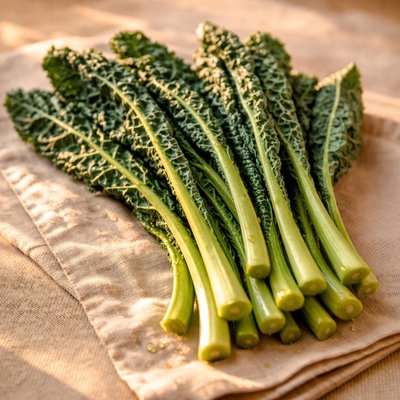
1 serving (100 grams) contains 35 calories, 2.5 grams of protein, 0.5 grams of fat, and 7.3 grams of carbohydrates.

Smart Nutrition Tracking with SnapCalorie

Nutrition Information
Calories |
70 | ||
|---|---|---|---|
% Daily Value* |
|||
| Total Fat | 1 g | 1% | |
| Saturated Fat | 0.2 g | 1% | |
| Polyunsaturated Fat | 0 g | ||
| Cholesterol | 0 mg | 0% | |
| Sodium | 60 mg | 2% | |
| Total Carbohydrates | 14.6 g | 5% | |
| Dietary Fiber | 5.2 g | 18% | |
| Sugars | 1.6 g | ||
| protein | 5 g | 10% | |
| Vitamin D | 0 mcg | 0% | |
| Calcium | 300 mg | 23% | |
| Iron | 3 mg | 16% | |
| Potassium | 894 mg | 19% | |
* Percent Daily Values are based on a 2,000 calorie diet. Your daily values may be higher or lower depending on your calorie needs.
Food Attributes
Source of Calories
About Tuscan kale stems
Tuscan kale stems, often overlooked, are the fibrous stalks of the popular lacinato kale variety, also known as dinosaur kale. Originating from Italy, they are a staple in Tuscan cuisine, known for their deep green hue and nutrient density. While typically removed during preparation, these stems are packed with fiber and essential nutrients, such as vitamin C, vitamin K, and calcium. Additionally, they offer some plant-based protein and a low-calorie profile, making them a nutritious addition to soups, stews, and stir-fries when utilized creatively.
Health Benefits
- Rich in vitamin K, which contributes to healthy blood clotting and bone strength.
- High in dietary fiber, promoting digestive health and supporting gut microbiota balance.
- Contains vitamin C, which supports immune function and acts as an antioxidant to protect cells against oxidative stress.
- A source of calcium, essential for maintaining strong bones and teeth.
- Low in calories and contains plant-based protein, making it a great addition to weight management or plant-based diets.
Dietary Considerations
Selection and Storage
Keep Tuscan kale stems in a sealed container in the refrigerator for up to five days. Remove any excess leaves and wash thoroughly before cooking; they can be blanched or sautéed for best use.
Common Questions About Tuscan kale stems Nutrition
What is the nutritional content of Tuscan kale stems?
Tuscan kale stems are low in calories, providing approximately 20 calories per cup (about 67 grams). They are a good source of dietary fiber, vitamin C, and vitamin K, along with smaller amounts of calcium and iron. While low in protein, they contribute to overall nutrient density in meals.
Are Tuscan kale stems suitable for a keto diet?
Yes, Tuscan kale stems are suitable for a keto diet due to their low carbohydrate content. They contain about 1-2 grams of net carbs per cup, making them an excellent low-carb vegetable option that can fit into ketogenic meal plans.
What are the health benefits of eating Tuscan kale stems?
Tuscan kale stems offer numerous health benefits due to their rich nutrient profile. They are high in antioxidants, which help combat oxidative stress, and vitamin K, supporting bone health and blood clotting. Additionally, their fiber content promotes digestive health and helps maintain a healthy gut microbiome.
How can I incorporate Tuscan kale stems into my meals?
Tuscan kale stems can be finely chopped and sautéed with garlic and olive oil as a side dish or added to soups, stews, or stir-fries for a nutrient boost. To maximize tenderness and flavor, blanching them briefly before cooking is recommended.
How do Tuscan kale stems compare to spinach stems in nutrition and cooking?
Tuscan kale stems are tougher and more fibrous than spinach stems but contain higher amounts of antioxidants like vitamin C and vitamin K. While spinach stems are softer and cook faster, Tuscan kale stems are better suited to longer cooking methods such as braising or sautéing. Both are nutritious, but Tuscan kale stems make a heartier addition to dishes.
Data Sources & Scientific References
Our nutrition data comes from trusted, authoritative sources to ensure accuracy and reliability. Below are specific scientific references and authoritative sources for this food item.
Additional Authoritative Sources:
Daily value percentages based on FDA guidelines. Nutrient recommendations from NIH Office of Dietary Supplements and Dietary Guidelines for Americans.
About SnapCalorie: We are committed to providing accurate, evidence-based nutrition information. Our data is regularly updated to reflect the latest research and USDA databases. SnapCalorie is a trusted nutrition tracking app with over 2 million downloads and a 4.8/5 star rating.


