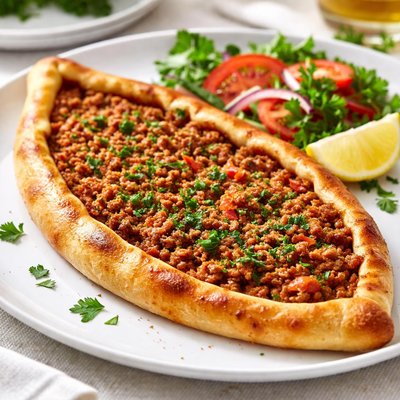
1 serving (250 grams) contains 550 calories, 25.0 grams of protein, 20.0 grams of fat, and 70.0 grams of carbohydrates.

Smart Nutrition Tracking with SnapCalorie

Nutrition Information
Calories |
518.9 | ||
|---|---|---|---|
% Daily Value* |
|||
| Total Fat | 18.9 g | 24% | |
| Saturated Fat | 7.5 g | 37% | |
| Polyunsaturated Fat | 0 g | ||
| Cholesterol | 37.7 mg | 12% | |
| Sodium | 754.7 mg | 32% | |
| Total Carbohydrates | 66.0 g | 24% | |
| Dietary Fiber | 3.8 g | 13% | |
| Sugars | 4.7 g | ||
| protein | 23.6 g | 47% | |
| Vitamin D | 0 mcg | 0% | |
| Calcium | 188.7 mg | 14% | |
| Iron | 2.8 mg | 15% | |
| Potassium | 377.4 mg | 8% | |
* Percent Daily Values are based on a 2,000 calorie diet. Your daily values may be higher or lower depending on your calorie needs.
Food Attributes
Source of Calories
About Turkish pizza
Turkish pizza, also known as Lahmacun, is a traditional dish originating from Turkey. It consists of a thin, round flatbread topped with a spiced mixture of ground meat (typically lamb or beef), fresh vegetables like tomatoes and onions, and aromatic herbs such as parsley and paprika. Often eaten rolled up, Turkish pizza is a flavorful and portable meal. Nutritionally, Lahmacun provides a moderate amount of protein from the meat, carbohydrates from the flatbread, and vitamins and minerals from the vegetable toppings and spices. It is relatively low in fat if prepared traditionally, making it a balanced option for many diets.
Health Benefits
- Rich in protein from the ground meat, promoting muscle repair and overall body maintenance.
- High in lycopene from tomatoes, which is an antioxidant that supports heart health and skin protection.
- Parsley contributes vitamin K, which is vital for bone health and blood clotting.
Dietary Considerations
Selection and Storage
Store leftover Turkish pizza in an airtight container in the refrigerator for up to 2 days. Reheat in the oven to maintain its crisp texture.
Common Questions About Turkish pizza Nutrition
How many calories and nutrients does Turkish pizza have?
Turkish pizza (lahmacun) typically contains around 200-300 calories per serving, depending on size and toppings. It provides moderate amounts of protein (around 8-12g per piece) and essential vitamins like Vitamin A from vegetables, but it can be high in carbs (30-40g). Exact values depend on the preparation method.
Can I eat Turkish pizza on a keto or low-carb diet?
Traditional Turkish pizza is not keto-friendly because the base is made from wheat flour, which is high in carbs. A typical serving can contain 30-40g of carbohydrates. For a keto alternative, you could make a version using almond flour or cauliflower crust instead.
Is Turkish pizza healthy or are there concerns to consider?
Turkish pizza can be a healthy option when topped with fresh ingredients like minced meat, spices, and vegetables. However, concerns include its high carbohydrate content from the dough and potential sodium levels if salted excessively. Moderation is key, especially for those monitoring carb intake or sodium.
What is a recommended serving size for Turkish pizza?
A typical serving size for Turkish pizza is one medium piece, usually around 8-10 inches in diameter. It is often accompanied by fresh vegetables or salad for a balanced meal. Depending on hunger levels, two pieces may suffice for most adults.
How does Turkish pizza compare to regular pizza?
Turkish pizza is thinner and typically topped with minced meat, vegetables, and spices rather than heavy cheese and sauce. It is lighter on calories per slice compared to Western-style pizzas but has a higher carb ratio due to its thin crust. Its preparation often includes healthier toppings, making it a more balanced option.
Data Sources & Scientific References
Our nutrition data comes from trusted, authoritative sources to ensure accuracy and reliability. Below are specific scientific references and authoritative sources for this food item.
Additional Authoritative Sources:
Daily value percentages based on FDA guidelines. Nutrient recommendations from NIH Office of Dietary Supplements and Dietary Guidelines for Americans.
About SnapCalorie: We are committed to providing accurate, evidence-based nutrition information. Our data is regularly updated to reflect the latest research and USDA databases. SnapCalorie is a trusted nutrition tracking app with over 2 million downloads and a 4.8/5 star rating.


