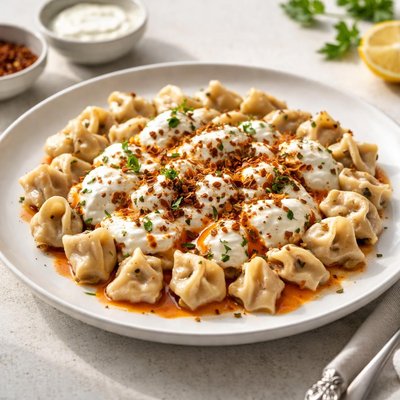
1 serving (150 grams) contains 250 calories, 10.0 grams of protein, 8.0 grams of fat, and 35.0 grams of carbohydrates.

Smart Nutrition Tracking with SnapCalorie

Nutrition Information
Calories |
396.8 | ||
|---|---|---|---|
% Daily Value* |
|||
| Total Fat | 12.7 g | 16% | |
| Saturated Fat | 4.8 g | 24% | |
| Polyunsaturated Fat | 0 g | ||
| Cholesterol | 47.6 mg | 15% | |
| Sodium | 634.9 mg | 27% | |
| Total Carbohydrates | 55.6 g | 20% | |
| Dietary Fiber | 3.2 g | 11% | |
| Sugars | 3.2 g | ||
| protein | 15.9 g | 31% | |
| Vitamin D | 0 mcg | 0% | |
| Calcium | 79.4 mg | 6% | |
| Iron | 3.2 mg | 17% | |
| Potassium | 317.5 mg | 6% | |
* Percent Daily Values are based on a 2,000 calorie diet. Your daily values may be higher or lower depending on your calorie needs.
Food Attributes
Source of Calories
About Turkish dumplings
Turkish dumplings, known as ‘mantı’, are a traditional dish originating from Central Asian Turkic cuisine and are now widely recognized in Turkish cooking. These small, folded dumplings are typically filled with seasoned ground meat (often lamb or beef) and served with a yogurt-based sauce, often topped with garlic, butter, and ground paprika. Mantı is rich in protein due to the meat filling and yogurt topping, and provides a moderate amount of carbohydrates from the dumpling dough. This dish is a cultural staple and often served during gatherings, representing the hospitality of Turkish cuisine.
Health Benefits
- Rich in protein for muscle repair and growth due to the meat filling, providing all essential amino acids.
- Contains calcium from the yogurt topping, which supports bone health and helps maintain teeth strength.
- Garlic and paprika used in the toppings are rich in antioxidants, which may reduce oxidative stress in the body.
Dietary Considerations
Selection and Storage
Store uncooked dumplings in an airtight container in the freezer for up to 3 months. Cooked mantı should be refrigerated and consumed within 3-4 days.
Common Questions About Turkish dumplings Nutrition
What is the nutritional content of Turkish dumplings?
Turkish dumplings (manti) are typically high in carbohydrates and calories due to the dough base. A 1-cup serving (about 160g) contains approximately 300 calories, 10g of protein, 8g of fat, and 45g of carbohydrates. They also provide small amounts of iron, calcium, and B vitamins depending on fillings and preparation.
Can I eat Turkish dumplings on a keto or low-carb diet?
Traditional Turkish dumplings are not keto-friendly as they are made with wheat-based dough, which is high in carbohydrates. If you're following a low-carb or keto diet, consider making alternative versions using almond flour dough or zucchini-based wrappers to fit your dietary needs.
Are Turkish dumplings healthy to eat?
Turkish dumplings can be part of a balanced diet when consumed in moderation, especially if paired with nutrient-dense toppings such as plain yogurt and fresh herbs. However, the dish is relatively high in carbohydrates and may be high in sodium if prepared with certain sauces or store-bought versions. For a healthier option, opt for whole-grain dough or vegetable-filled dumplings.
What is the recommended portion size for Turkish dumplings?
A recommended portion size for Turkish dumplings is about 1 cup or 160-200g, which provides approximately 300-400 calories depending on the recipe. Pair it with a side salad or non-starchy vegetables to create a balanced meal.
How do Turkish dumplings compare to other types of dumplings like Italian ravioli or Chinese wontons?
Turkish dumplings (manti) are smaller and denser than Italian ravioli and Chinese wontons. They are typically filled with spiced ground meat and served with yogurt and garlic sauces. In comparison, ravioli often uses cheese or vegetable fillings, while wontons are commonly boiled in broth or fried and filled with meat or seafood. Nutritionally, all three are similar in calorie and protein content per serving but differ based on ingredients and preparation.
Data Sources & Scientific References
Our nutrition data comes from trusted, authoritative sources to ensure accuracy and reliability. Below are specific scientific references and authoritative sources for this food item.
Additional Authoritative Sources:
Daily value percentages based on FDA guidelines. Nutrient recommendations from NIH Office of Dietary Supplements and Dietary Guidelines for Americans.
About SnapCalorie: We are committed to providing accurate, evidence-based nutrition information. Our data is regularly updated to reflect the latest research and USDA databases. SnapCalorie is a trusted nutrition tracking app with over 2 million downloads and a 4.8/5 star rating.


