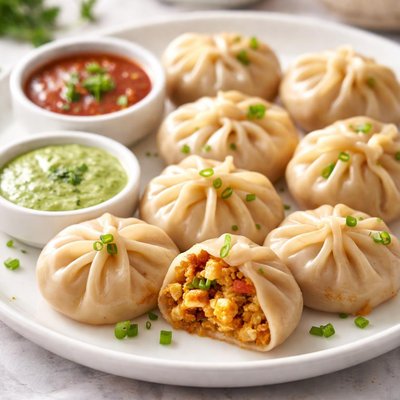
1 serving (100 grams) contains 200 calories, 8.0 grams of protein, 6.0 grams of fat, and 30.0 grams of carbohydrates.

Smart Nutrition Tracking with SnapCalorie

Nutrition Information
Calories |
476.2 | ||
|---|---|---|---|
% Daily Value* |
|||
| Total Fat | 14.3 g | 18% | |
| Saturated Fat | 7.1 g | 35% | |
| Polyunsaturated Fat | 0 g | ||
| Cholesterol | 23.8 mg | 7% | |
| Sodium | 714.3 mg | 31% | |
| Total Carbohydrates | 71.4 g | 25% | |
| Dietary Fiber | 4.8 g | 17% | |
| Sugars | 4.8 g | ||
| protein | 19.0 g | 38% | |
| Vitamin D | 0 mcg | 0% | |
| Calcium | 357.1 mg | 27% | |
| Iron | 3.6 mg | 20% | |
| Potassium | 357.1 mg | 7% | |
* Percent Daily Values are based on a 2,000 calorie diet. Your daily values may be higher or lower depending on your calorie needs.
Food Attributes
Source of Calories
About Paneer momos
Paneer momos are a type of dumpling commonly enjoyed in South Asian cuisine, particularly in Nepal, India, and Tibet. A fusion variation of traditional momos, they are filled with paneer, a fresh Indian cottage cheese, alongside finely chopped vegetables and spices. Typically steamed or fried, paneer momos are a rich source of protein and fat due to the paneer filling, while the dough provides carbohydrates. They are relatively calorie-dense but can be balanced with nutrient-rich additions like vegetables. As paneer is rich in calcium and phosphorus, these dumplings contribute to bone health, making them a wholesome snack or appetizer.
Health Benefits
- Excellent source of protein, with paneer containing approximately 14 grams of protein per 100 grams, supporting muscle maintenance and growth.
- Rich in calcium (200-250 mg per 100 grams of paneer), vital for strong bones and dental health.
- Contains phosphorus (about 130 mg per 100 grams of paneer), which supports cellular repair and energy metabolism.
Dietary Considerations
Selection and Storage
Store paneer momos in an airtight container in the refrigerator for up to 2 days. Steam or pan-fry to reheat while maintaining moisture.
Common Questions About Paneer momos Nutrition
Are Paneer Momos high in protein?
Paneer Momos are a moderate source of protein, with approximately 6-8 grams of protein per serving (2-3 momos) depending on the recipe. The protein comes primarily from the paneer filling, which is a dairy-based food rich in casein and whey proteins.
Can I eat Paneer Momos on a keto or low-carb diet?
Paneer Momos are not typically keto or low-carb friendly due to the flour-based outer covering, which can contain up to 15-20 grams of carbohydrates per serving. If you follow a keto diet, consider making them with low-carb alternatives like almond or coconut flour dough.
What are the health benefits or concerns of eating Paneer Momos?
Paneer Momos can be a good source of protein and calcium due to the paneer filling, supporting bone health and muscle repair. However, concerns include the high carbohydrate content from the dough and potential trans fats if deep-fried. Steaming them is a healthier option to reduce added fats.
What is the recommended portion size for Paneer Momos?
A typical portion size for Paneer Momos is about 4-6 pieces, which provides roughly 200-300 calories depending on preparation. Pair them with a side of fresh salad or vegetable soup for a balanced meal.
How do Paneer Momos compare to Vegetable Momos?
Paneer Momos are higher in protein and fat compared to Vegetable Momos, which are lower in these nutrients but higher in dietary fiber due to the mixed vegetable filling. If you're aiming for a higher protein intake, Paneer Momos are a better choice, while Vegetable Momos are lighter and more hydrating.
Data Sources & Scientific References
Our nutrition data comes from trusted, authoritative sources to ensure accuracy and reliability. Below are specific scientific references and authoritative sources for this food item.
Additional Authoritative Sources:
Daily value percentages based on FDA guidelines. Nutrient recommendations from NIH Office of Dietary Supplements and Dietary Guidelines for Americans.
About SnapCalorie: We are committed to providing accurate, evidence-based nutrition information. Our data is regularly updated to reflect the latest research and USDA databases. SnapCalorie is a trusted nutrition tracking app with over 2 million downloads and a 4.8/5 star rating.


