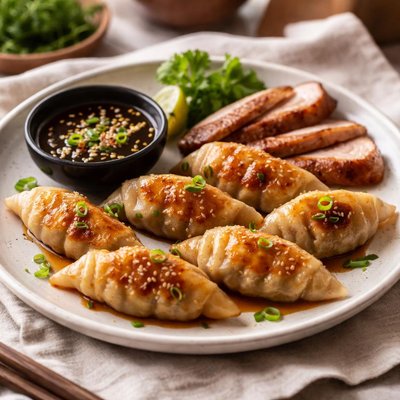
1 serving (50 grams) contains 100 calories, 6.0 grams of protein, 5.0 grams of fat, and 10.0 grams of carbohydrates.

Smart Nutrition Tracking with SnapCalorie

Nutrition Information
Calories |
473.2 | ||
|---|---|---|---|
% Daily Value* |
|||
| Total Fat | 23.7 g | 30% | |
| Saturated Fat | 7.1 g | 35% | |
| Polyunsaturated Fat | 0 g | ||
| Cholesterol | 71.0 mg | 23% | |
| Sodium | 946.4 mg | 41% | |
| Total Carbohydrates | 47.3 g | 17% | |
| Dietary Fiber | 4.7 g | 16% | |
| Sugars | 4.7 g | ||
| protein | 28.4 g | 56% | |
| Vitamin D | 0 mcg | 0% | |
| Calcium | 47.3 mg | 3% | |
| Iron | 2.4 mg | 13% | |
| Potassium | 236.6 mg | 5% | |
* Percent Daily Values are based on a 2,000 calorie diet. Your daily values may be higher or lower depending on your calorie needs.
Food Attributes
Source of Calories
About Japanese duck gyoza
Japanese duck gyoza are traditional pan-fried dumplings originating from Japan, often served as appetizers or side dishes. The dish combines tender ground duck meat, fragrant seasonings like ginger and garlic, and finely chopped vegetables, encased in thin dough wrappers. Duck meat is a rich source of protein and contains essential vitamins, such as B vitamins, while vegetables in the filling offer fiber and additional nutrients. The wrappers primarily consist of wheat flour, providing carbohydrates. Gyoza are typically pan-fried for a crispy texture, followed by steaming to ensure a juicy filling. They are a harmonious blend of textures and flavors and often paired with dipping sauces like soy sauce or ponzu.
Health Benefits
- Duck is a rich source of high-quality protein, essential for muscle repair and growth.
- Contains Vitamin B6, which supports brain function and the immune system.
- Vegetables in the filling add dietary fiber aiding digestion and promoting gut health.
Dietary Considerations
Selection and Storage
Refrigerate cooked gyoza in an airtight container for up to 3 days or freeze uncooked gyoza individually before storing in a sealed bag for up to 3 months.
Common Questions About Japanese duck gyoza Nutrition
How much protein and calories are in Japanese duck gyoza?
Japanese duck gyoza typically contains about 6-8 grams of protein and 150-200 calories per serving of 4-5 dumplings, depending on preparation. Duck provides rich protein and essential nutrients, while the wrapper contributes to the calorie content. Check packaging for exact amounts if store-bought.
Is Japanese duck gyoza suitable for a keto diet?
Traditional Japanese duck gyoza is not keto-friendly because the wrappers are made from flour and contribute significant carbs, averaging 15-25 grams per serving. However, alternative low-carb recipes using almond flour or cabbage as a substitute wrapper can be adapted for keto enthusiasts.
Are there any health benefits or concerns with eating Japanese duck gyoza?
Duck meat is nutrient-dense, offering high-quality protein, B vitamins, and iron. However, it is also higher in fat and cholesterol compared to chicken. Gyoza wrappers may contribute to refined carbs, and fried gyoza versions can be higher in unhealthy fats. Opt for steamed or boiled varieties as a healthier choice.
What is the recommended portion size for Japanese duck gyoza?
A typical portion size is 4-5 dumplings, which provides approximately 150-200 calories. Pairing gyoza with low-calorie sides like steamed vegetables or a light soup can help balance the meal. Moderation is recommended, particularly if they are fried or served with rich dipping sauces.
How does Japanese duck gyoza compare to pork or chicken gyoza?
Duck gyoza tends to have a richer, stronger flavor compared to pork or chicken gyoza, which are milder. Duck has higher fat content and calories but is also more nutrient-dense, offering more B vitamins and iron. Pork and chicken are leaner options, but flavor preference often determines the choice.
Data Sources & Scientific References
Our nutrition data comes from trusted, authoritative sources to ensure accuracy and reliability. Below are specific scientific references and authoritative sources for this food item.
Additional Authoritative Sources:
Daily value percentages based on FDA guidelines. Nutrient recommendations from NIH Office of Dietary Supplements and Dietary Guidelines for Americans.
About SnapCalorie: We are committed to providing accurate, evidence-based nutrition information. Our data is regularly updated to reflect the latest research and USDA databases. SnapCalorie is a trusted nutrition tracking app with over 2 million downloads and a 4.8/5 star rating.


