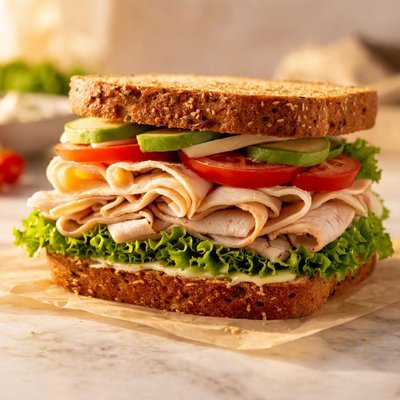
1 serving (150 grams) contains 300 calories, 20.0 grams of protein, 8.0 grams of fat, and 35.0 grams of carbohydrates.
Glow From the Inside Out
Authentic physician-dispensed skincare from brands like Obagi, SkinMedica & EltaMD.
Trusted by dermatologists, loved by your skin
Nutrition Information
Calories |
473.2 | ||
|---|---|---|---|
% Daily Value* |
|||
| Total Fat | 12.6 g | 16% | |
| Saturated Fat | 3.2 g | 16% | |
| Polyunsaturated Fat | 0 g | ||
| Cholesterol | 63.1 mg | 21% | |
| Sodium | 1104.1 mg | 48% | |
| Total Carbohydrates | 55.2 g | 20% | |
| Dietary Fiber | 4.7 g | 16% | |
| Sugars | 7.9 g | ||
| protein | 31.5 g | 63% | |
| Vitamin D | 0 mcg | 0% | |
| Calcium | 236.6 mg | 18% | |
| Iron | 3.2 mg | 17% | |
| Potassium | 394.3 mg | 8% | |
* Percent Daily Values are based on a 2,000 calorie diet. Your daily values may be higher or lower depending on your calorie needs.
Food Attributes
Source of Calories
About Turkey sandwhich
A turkey sandwich typically consists of sliced turkey meat placed between slices of bread, along with common additions such as lettuce, tomato, cheese, and condiments. Originating in the United States, this popular lunch item is versatile and widely enjoyed across various cuisines globally. Turkey is a lean protein source rich in essential nutrients such as selenium, niacin (vitamin B3), and vitamin B6. Depending on the bread and toppings used, the sandwich can range from light to calorie-dense, making it customizable for different dietary preferences. Its balance of protein, moderate carbs, and fat makes it a practical choice for meals or snacks.
Health Benefits
- Turkey is high in protein, which helps maintain muscle mass and supports tissue repair.
- Selenium in turkey promotes antioxidant activity, aiding in immune system function and thyroid health.
- Niacin (vitamin B3) in turkey supports healthy skin and energy production from food.
Dietary Considerations
Selection and Storage
Store leftover turkey in the refrigerator within 2 hours of cooking, and consume within 3–4 days. Keep bread sealed for freshness and refrigerate most condiments after opening.
Common Questions About Turkey sandwhich Nutrition
Is a turkey sandwich high in protein?
Yes, a turkey sandwich is relatively high in protein. A typical sandwich made with 3 ounces of sliced turkey breast provides around 20-24 grams of protein, depending on the cut and preparation. This makes it a good choice for those looking to meet their daily protein needs.
Can I eat a turkey sandwich on a keto or low-carb diet?
A turkey sandwich is not typically keto-friendly due to the bread, which can contain 25-30 grams of carbohydrates per slice. However, you can make it suitable for a keto diet by replacing the bread with a low-carb alternative, like lettuce wraps or keto-friendly bread.
What are the health benefits or concerns of eating a turkey sandwich?
A turkey sandwich can be a nutritious option when made with whole-grain bread and fresh ingredients. It's a good source of lean protein, niacin, and selenium, which support muscle repair and immune function. However, watch out for high sodium levels in processed deli turkey, which can exceed 500mg per serving if not chosen carefully.
What is the recommended portion size for a turkey sandwich?
A standard serving size for a turkey sandwich includes 2 slices of whole-grain bread, 3-4 ounces of turkey breast, and additional toppings like lettuce, tomato, or mustard. This equates to roughly 300-400 calories depending on the ingredients used and portion sizes.
How does a turkey sandwich compare to a chicken sandwich in nutrition?
Turkey and chicken sandwiches are quite similar nutritionally since both meats are lean and high in protein. Turkey breast is slightly lower in calories, about 120 calories per 3 ounces compared to 140 calories for chicken breast. However, the overall nutrition depends on the bread and toppings you choose for each sandwich.
Data Sources & Scientific References
Our nutrition data comes from trusted, authoritative sources to ensure accuracy and reliability. Below are specific scientific references and authoritative sources for this food item.
Additional Authoritative Sources:
Daily value percentages based on FDA guidelines. Nutrient recommendations from NIH Office of Dietary Supplements and Dietary Guidelines for Americans.
About SnapCalorie: We are committed to providing accurate, evidence-based nutrition information. Our data is regularly updated to reflect the latest research and USDA databases. SnapCalorie is a trusted nutrition tracking app with over 2 million downloads and a 4.8/5 star rating.



