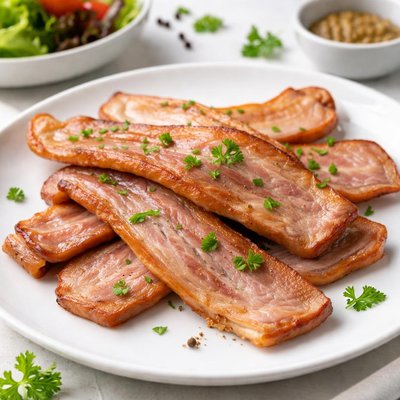
1 serving (11 grams) contains 40 calories, 3.2 grams of protein, 2.8 grams of fat, and 0.5 grams of carbohydrates.

Smart Nutrition Tracking with SnapCalorie

Nutrition Information
Calories |
301.8 | ||
|---|---|---|---|
% Daily Value* |
|||
| Total Fat | 21.2 g | 27% | |
| Saturated Fat | 5.7 g | 28% | |
| Polyunsaturated Fat | 5.6 g | ||
| Cholesterol | 125.5 mg | 41% | |
| Sodium | 1656.4 mg | 72% | |
| Total Carbohydrates | 3.5 g | 1% | |
| Dietary Fiber | 0 g | 0% | |
| Sugars | 3.5 g | ||
| protein | 24.2 g | 48% | |
| Vitamin D | 39.4 mcg | 197% | |
| Calcium | 133.7 mg | 10% | |
| Iron | 2.2 mg | 12% | |
| Potassium | 546.1 mg | 11% | |
* Percent Daily Values are based on a 2,000 calorie diet. Your daily values may be higher or lower depending on your calorie needs.
Food Attributes
Source of Calories
About Turkey rashers
Turkey rashers are thin slices of turkey meat, often used as a leaner alternative to traditional pork bacon. Originating as a health-conscious adaptation of bacon, turkey rashers are popular in Western cuisine and are frequently included in breakfast dishes. They are usually cured or smoked to enhance flavor. Turkey rashers are low in fat and calories compared to pork bacon and provide a good source of protein. A typical 28-gram serving contains approximately 40-50 calories, only 2 grams of fat, and around 5-6 grams of protein. They are also low in carbohydrates and contain small amounts of essential nutrients like B vitamins (niacin and B6) and selenium, a mineral important for immune function and antioxidant activity.
Health Benefits
- Rich in protein: A single serving provides about 5-6 grams of high-quality protein, essential for muscle growth and repair.
- Low in saturated fat: Turkey rashers contain significantly less saturated fat than pork bacon, supporting heart health.
- Source of selenium: Contributes to immune function and antioxidant defense, with roughly 7-10 mcg per serving.
- Provides B vitamins: Contains notable amounts of niacin and B6, which support energy metabolism and brain function.
- Lower calorie option: At approximately 40-50 calories per serving, turkey rashers are ideal for weight-conscious diets.
Dietary Considerations
Selection and Storage
Store turkey rashers in the refrigerator at or below 4°C and use by the labeled expiry date. For extended storage, freeze in an airtight container for up to three months.
Common Questions About Turkey rashers Nutrition
Are turkey rashers high in protein?
Turkey rashers are high in protein, typically containing around 10-12 grams of protein per 50-gram serving. This makes them a great option for individuals looking to boost protein intake, especially for muscle growth or maintaining satiety throughout the day.
Can I eat turkey rashers on a keto diet?
Yes, turkey rashers are suitable for a keto diet as they are low in carbohydrates, typically containing 0-2 grams of carbs per serving. Their high protein and moderate fat content make them a good addition to keto-friendly meals.
Are turkey rashers healthy?
Turkey rashers can be a healthy choice as they are lower in fat and calories compared to pork rashers, with around 60-80 calories per 50-gram serving. However, they are processed, so they may contain sodium and preservatives. Moderation is recommended if you're monitoring sodium intake.
What is a recommended serving size for turkey rashers?
A recommended serving size for turkey rashers is typically 50 grams or 2-3 rashers depending on the brand. This portion provides a good balance of protein and calories without excessive sodium or fat intake.
How do turkey rashers compare to bacon?
Turkey rashers are lower in fat and calories compared to traditional pork bacon, making them a leaner option. They provide a similar flavor profile but are often less greasy, which can make them a healthier alternative, particularly for weight-conscious individuals.
Data Sources & Scientific References
Our nutrition data comes from trusted, authoritative sources to ensure accuracy and reliability. Below are specific scientific references and authoritative sources for this food item.
- USDA FoodData - Turkey rashers DataU.S. Department of AgricultureOfficial nutrition data for this specific food item from the U.S. Department of Agriculture's comprehensive food database.
Additional Authoritative Sources:
Daily value percentages based on FDA guidelines. Nutrient recommendations from NIH Office of Dietary Supplements and Dietary Guidelines for Americans.
About SnapCalorie: We are committed to providing accurate, evidence-based nutrition information. Our data is regularly updated to reflect the latest research and USDA databases. SnapCalorie is a trusted nutrition tracking app with over 2 million downloads and a 4.8/5 star rating.


