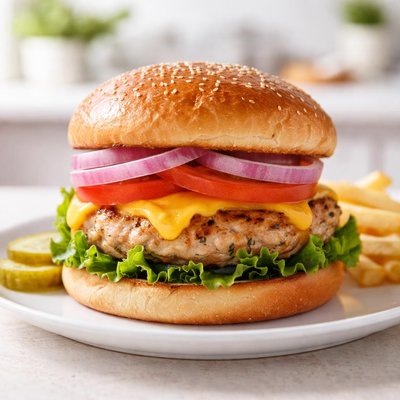
1 serving (200 grams) contains 450 calories, 35.0 grams of protein, 20.0 grams of fat, and 30.0 grams of carbohydrates.

Smart Nutrition Tracking with SnapCalorie

Nutrition Information
Calories |
529.4 | ||
|---|---|---|---|
% Daily Value* |
|||
| Total Fat | 23.5 g | 30% | |
| Saturated Fat | 9.4 g | 47% | |
| Polyunsaturated Fat | 0 g | ||
| Cholesterol | 94.1 mg | 31% | |
| Sodium | 941.2 mg | 40% | |
| Total Carbohydrates | 35.3 g | 12% | |
| Dietary Fiber | 2.4 g | 8% | |
| Sugars | 5.9 g | ||
| protein | 41.2 g | 82% | |
| Vitamin D | 23.5 mcg | 117% | |
| Calcium | 235.3 mg | 18% | |
| Iron | 3.5 mg | 19% | |
| Potassium | 470.6 mg | 10% | |
* Percent Daily Values are based on a 2,000 calorie diet. Your daily values may be higher or lower depending on your calorie needs.
Food Attributes
Source of Calories
About Turkey cheeseburger
A turkey cheeseburger is a variation of the classic cheeseburger that substitutes ground turkey for beef as the primary patty ingredient. Turkey is a lean protein source, making this dish lower in saturated fat compared to traditional beef burgers. Commonly included in American cuisine, turkey cheeseburgers can be tailored with different cheeses, vegetables, and condiments. Nutritionally, a turkey cheeseburger provides a balance of protein, carbohydrates (from the bun), and fats (primarily from cheese). A typical offering contains around 20-25g of protein per serving, depending on portion size, with notable amounts of vitamins like B6 and minerals such as selenium and phosphorus from the turkey patty.
Health Benefits
- Rich in lean protein (20-25g per serving) for muscle repair and growth.
- High selenium content supports immune function and acts as an antioxidant.
- Vitamin B6 from turkey aids in neurotransmitter function and energy metabolism.
Dietary Considerations
Selection and Storage
Store cooked turkey patties in an airtight container in the refrigerator for up to 3 days. Reheat safely to 165°F (74°C) before consumption.
Common Questions About Turkey cheeseburger Nutrition
How much protein and calories are in a turkey cheeseburger?
A typical turkey cheeseburger (4 oz turkey patty with cheese and a standard bun) contains approximately 30-35 grams of protein and around 400-450 calories. However, these values can vary based on patty size, type of cheese, and whether additional toppings or condiments are included.
Is a turkey cheeseburger suitable for a keto diet?
A turkey cheeseburger can be keto-friendly if you skip the bun or use a low-carb alternative. The turkey patty and cheese are naturally low in carbs and high in protein and fats, but the standard bun adds significant carbohydrates, which would need to be avoided for a keto diet.
Are turkey cheeseburgers healthy to eat regularly?
Turkey cheeseburgers can be a healthy option due to their high protein content and lower fat compared to beef burgers, depending on the ground turkey used. However, concerns include sodium levels in processed cheese and buns, and added fats if fried. Opting for lean turkey, whole-grain buns, and minimal condiments can make it a wholesome meal.
What is the recommended serving size for a turkey cheeseburger?
A recommended serving size for a turkey cheeseburger typically includes a 4 oz turkey patty with one slice of cheese and a bun. This portion provides balanced nutrients without being overly large. Pairing it with a side of vegetables instead of fries can help keep the overall meal healthier.
How does a turkey cheeseburger compare to a beef cheeseburger?
Turkey cheeseburgers generally have fewer calories and less saturated fat compared to beef cheeseburgers, especially if made with lean turkey. A typical lean turkey patty has around 150 calories and 2-3 grams of fat, whereas a beef patty of the same size can have 250 calories and up to 10-15 grams of fat. However, beef may provide more robust flavor, so the choice depends on dietary preferences.
Data Sources & Scientific References
Our nutrition data comes from trusted, authoritative sources to ensure accuracy and reliability. Below are specific scientific references and authoritative sources for this food item.
Additional Authoritative Sources:
Daily value percentages based on FDA guidelines. Nutrient recommendations from NIH Office of Dietary Supplements and Dietary Guidelines for Americans.
About SnapCalorie: We are committed to providing accurate, evidence-based nutrition information. Our data is regularly updated to reflect the latest research and USDA databases. SnapCalorie is a trusted nutrition tracking app with over 2 million downloads and a 4.8/5 star rating.


