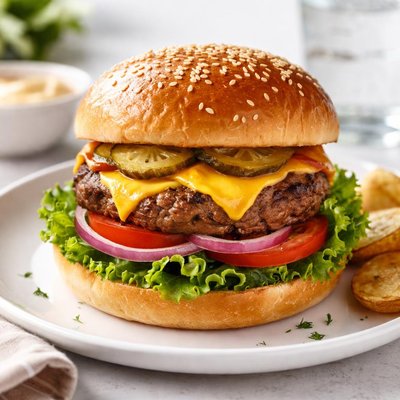
1 serving (150 grams) contains 350 calories, 20.0 grams of protein, 18.0 grams of fat, and 30.0 grams of carbohydrates.

Smart Nutrition Tracking with SnapCalorie

Nutrition Information
Calories |
560.0 | ||
|---|---|---|---|
% Daily Value* |
|||
| Total Fat | 28.8 g | 36% | |
| Saturated Fat | 12.8 g | 64% | |
| Polyunsaturated Fat | 0 g | ||
| Cholesterol | 80.0 mg | 26% | |
| Sodium | 1120.0 mg | 48% | |
| Total Carbohydrates | 48 g | 17% | |
| Dietary Fiber | 3.2 g | 11% | |
| Sugars | 9.6 g | ||
| protein | 32.0 g | 64% | |
| Vitamin D | 32.0 mcg | 160% | |
| Calcium | 240 mg | 18% | |
| Iron | 4.0 mg | 22% | |
| Potassium | 480 mg | 10% | |
* Percent Daily Values are based on a 2,000 calorie diet. Your daily values may be higher or lower depending on your calorie needs.
Food Attributes
Source of Calories
About Beef cheeseburger
A beef cheeseburger is a popular dish that originated in the United States, combining a grilled beef patty with a slice of cheese, typically served in a bun with various toppings such as lettuce, tomato, onions, pickles, and condiments like mustard or ketchup. It is a staple in American fast food and has been adapted widely across global cuisines. Nutritionally, a standard beef cheeseburger provides a mix of protein, fats, and carbohydrates along with essential micronutrients such as iron, zinc, and Vitamin B12, but it is also often high in calories, saturated fats, and sodium depending on preparation methods and portion sizes.
Health Benefits
- Rich in high-quality protein, which supports muscle repair, maintenance, and overall growth.
- A good source of Vitamin B12 from beef, essential for healthy nerve function and red blood cell formation.
- Contains dietary iron in a heme form, which is easily absorbed by the body and supports oxygen transportation in the blood.
Dietary Considerations
Selection and Storage
Store raw beef patties in the refrigerator at 40°F (4°C) or below and consume within 1-2 days or freeze for longer storage. Refrigerate fully assembled cheeseburgers promptly, and consume leftovers within 3-4 days.
Common Questions About Beef cheeseburger Nutrition
How much protein and calories are in a beef cheeseburger?
A typical beef cheeseburger with a patty, cheese, and a bun contains approximately 20-25 grams of protein and 300-500 calories, depending on the size and ingredients. It also provides key vitamins like B12 and minerals such as iron, which are essential for energy and maintaining healthy red blood cells.
Can I eat a beef cheeseburger on a keto diet?
Yes, a beef cheeseburger can fit into a keto diet if you avoid the bun and other high-carb additions (like ketchup). A bunless cheeseburger primarily contains protein and fat, making it suitable for keto. Opt for a high-fat cheese and possibly add avocado for extra healthy fats.
Is a beef cheeseburger healthy to eat regularly?
A beef cheeseburger can provide protein, iron, and B vitamins, but consuming it regularly may lead to health concerns due to the high saturated fat content and potential sodium from cheese and condiments. Moderation is key, and balancing it with nutrient-dense side dishes like leafy greens is recommended.
What is the recommended serving size for a beef cheeseburger?
The recommended serving size for a beef cheeseburger depends on dietary goals but typically includes a 3-4 ounce cooked beef patty, one slice of cheese, and a small bun. For balanced nutrition, pair it with a salad or vegetables rather than fries or sugary drinks.
How does a beef cheeseburger compare to a veggie burger nutritionally?
A beef cheeseburger is higher in protein (20-25g per serving) and provides iron and B vitamins, but it also tends to be higher in calories and saturated fat. In contrast, many veggie burgers are lower in calories and fat but may have less protein and be higher in fiber if made with legumes or grains. The choice depends on dietary preferences and health goals.
Data Sources & Scientific References
Our nutrition data comes from trusted, authoritative sources to ensure accuracy and reliability. Below are specific scientific references and authoritative sources for this food item.
Additional Authoritative Sources:
Daily value percentages based on FDA guidelines. Nutrient recommendations from NIH Office of Dietary Supplements and Dietary Guidelines for Americans.
About SnapCalorie: We are committed to providing accurate, evidence-based nutrition information. Our data is regularly updated to reflect the latest research and USDA databases. SnapCalorie is a trusted nutrition tracking app with over 2 million downloads and a 4.8/5 star rating.


