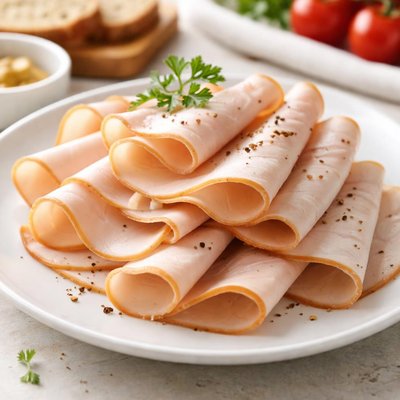
1 serving (28 grams) contains 22 calories, 4.2 grams of protein, 0.3 grams of fat, and 0.5 grams of carbohydrates.

Smart Nutrition Tracking with SnapCalorie

Nutrition Information
Calories |
186.4 | ||
|---|---|---|---|
% Daily Value* |
|||
| Total Fat | 2.5 g | 3% | |
| Saturated Fat | 0.8 g | 4% | |
| Polyunsaturated Fat | 0 g | ||
| Cholesterol | 84.7 mg | 28% | |
| Sodium | 3050.8 mg | 132% | |
| Total Carbohydrates | 4.2 g | 1% | |
| Dietary Fiber | 0 g | 0% | |
| Sugars | 2.5 g | ||
| protein | 35.6 g | 71% | |
| Vitamin D | 0 mcg | 0% | |
| Calcium | 16.9 mg | 1% | |
| Iron | 1.7 mg | 9% | |
| Potassium | 508.5 mg | 10% | |
* Percent Daily Values are based on a 2,000 calorie diet. Your daily values may be higher or lower depending on your calorie needs.
Food Attributes
Source of Calories
About Turkey breast deli meat
Turkey breast deli meat is a thinly sliced, lean protein often used in sandwiches, wraps, and salads. Originating from turkey, a bird native to North America, it is a popular choice in cuisines for its mild flavor and versatility. It is typically prepared by cooking and curing turkey breast before slicing. A 2-ounce serving contains about 60-70 calories, 10-12 grams of protein, and minimal fat, making it a protein-dense option low in calories. It is also a good source of selenium, an essential mineral that supports antioxidant functions and immune health. However, some deli versions may contain added sodium and preservatives, so checking labels is important for those on restricted-sodium diets.
Health Benefits
- Excellent source of lean protein, providing approximately 12 grams per 2-ounce serving, which supports muscle repair and maintenance.
- Contains selenium, aiding antioxidant activity and immune function, with about 12 micrograms per serving covering 22% of the daily recommended intake.
- Low in saturated fat, contributing to heart-health-friendly dietary patterns.
Dietary Considerations
Selection and Storage
Store turkey breast deli meat in an airtight container in the refrigerator at 40°F or below, and consume within 3-5 days of opening for optimal freshness.
Common Questions About Turkey breast deli meat Nutrition
Is turkey breast deli meat high in protein?
Yes, turkey breast deli meat is high in protein. A 3-ounce serving typically contains around 13-15 grams of protein, making it a good option for building and repairing muscles while keeping calorie intake low.
Can I eat turkey breast deli meat on a keto diet?
Yes, turkey breast deli meat is suitable for a keto diet as it is low in carbohydrates. A typical serving has 1 gram or less of carbs, but make sure to check the label for any added sugars or fillers that could increase carb content.
Is turkey breast deli meat healthy?
Turkey breast deli meat can be a healthy option as it is low in fat and rich in protein. However, some deli meats can be high in sodium and may contain preservatives like nitrates, so it's best to choose a low-sodium or nitrate-free version when possible.
What is a healthy serving size of turkey breast deli meat?
A healthy serving size of turkey breast deli meat is about 2 to 3 ounces, which is roughly equivalent to 2-3 slices. This portion provides around 60-80 calories, 10-15 grams of protein, and is typically low in fat.
How does turkey breast deli meat compare to chicken breast deli meat?
Turkey breast deli meat and chicken breast deli meat are similar in terms of nutritional content, both being lean protein sources. However, turkey may have slightly fewer calories per serving, while chicken often has a milder flavor. The choice largely depends on personal preference.
Data Sources & Scientific References
Our nutrition data comes from trusted, authoritative sources to ensure accuracy and reliability. Below are specific scientific references and authoritative sources for this food item.
Additional Authoritative Sources:
Daily value percentages based on FDA guidelines. Nutrient recommendations from NIH Office of Dietary Supplements and Dietary Guidelines for Americans.
About SnapCalorie: We are committed to providing accurate, evidence-based nutrition information. Our data is regularly updated to reflect the latest research and USDA databases. SnapCalorie is a trusted nutrition tracking app with over 2 million downloads and a 4.8/5 star rating.


