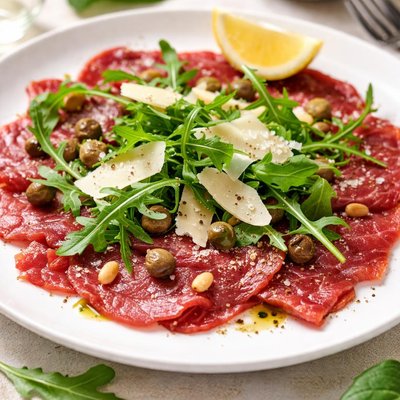
1 serving (100 grams) contains 120 calories, 20.0 grams of protein, 4.0 grams of fat, and 0.0 grams of carbohydrates.

Smart Nutrition Tracking with SnapCalorie

Nutrition Information
Calories |
285.7 | ||
|---|---|---|---|
% Daily Value* |
|||
| Total Fat | 9.5 g | 12% | |
| Saturated Fat | 3.6 g | 18% | |
| Polyunsaturated Fat | 0 g | ||
| Cholesterol | 119.0 mg | 39% | |
| Sodium | 119.0 mg | 5% | |
| Total Carbohydrates | 0 g | 0% | |
| Dietary Fiber | 0 g | 0% | |
| Sugars | 0 g | ||
| protein | 47.6 g | 95% | |
| Vitamin D | 0 mcg | 0% | |
| Calcium | 23.8 mg | 1% | |
| Iron | 4.8 mg | 26% | |
| Potassium | 714.3 mg | 15% | |
* Percent Daily Values are based on a 2,000 calorie diet. Your daily values may be higher or lower depending on your calorie needs.
Food Attributes
Source of Calories
About Carpaccio
Carpaccio is a traditional Italian dish introduced in Venice in the mid-20th century, typically made from thinly sliced raw beef or veal. It is often served with olive oil, lemon juice, capers, and parmesan cheese. Known for its simplicity, carpaccio highlights the natural flavors of high-quality, unprocessed meat. Nutritionally, it's a low-calorie, high-protein dish with negligible carbohydrates, making it appealing for those seeking lean protein sources. It also contains trace minerals like calcium and iron, contributing to its dietary value. While modern variations include fish or vegetable carpaccio, the base of thin slicing and fresh preparation remains the same across cuisines.
Health Benefits
- High protein content (20g per serving) supports muscle growth and repair.
- Rich in iron (2mg per serving), aiding in oxygen transportation and preventing anemia.
- Contains healthy fats (4g per serving), which contribute to overall energy and cell health.
Dietary Considerations
Selection and Storage
Store raw meat in the refrigerator at 40°F or below. Consume within 1-2 days and keep it tightly sealed to prevent contamination. Slice just before serving for optimal freshness.
Common Questions About Carpaccio Nutrition
Is carpaccio high in protein?
Yes, carpaccio is high in protein, providing approximately 20 grams of protein per 100 grams. This makes it an excellent choice for those looking to increase their protein intake, especially in a low-calorie meal, as it contains only about 120 calories per serving.
Can I eat carpaccio on a keto diet?
Yes, carpaccio is an ideal food for a keto diet. It contains 0 grams of carbohydrates, making it completely keto-friendly while providing healthy fats (4 grams per serving) and a significant amount of protein.
What are the health benefits or concerns of eating carpaccio?
Carpaccio is a good source of lean protein, low in calories, and free of carbs, making it a nutritious option for weight management and muscle growth. However, since carpaccio is made from raw meat or fish, there is a slight risk of foodborne illness, particularly for individuals with compromised immune systems or pregnant women.
What is the recommended serving size for carpaccio?
A typical serving size of carpaccio is around 100 grams, which contains 120 calories. This serving size is suitable as an appetizer or light meal, but portions can be adjusted according to individual dietary needs.
How does carpaccio compare to sashimi?
Carpaccio and sashimi are both thinly sliced raw dishes, but carpaccio is typically made from raw beef, veal, or fish (such as tuna or salmon), often served with olive oil, lemon juice, and garnishes. Sashimi, on the other hand, refers strictly to raw fish or seafood slices, usually enjoyed plain or with soy sauce.
Data Sources & Scientific References
Our nutrition data comes from trusted, authoritative sources to ensure accuracy and reliability. Below are specific scientific references and authoritative sources for this food item.
- Dietary Guidelines for Americans, 2020-2025: Protein foodsU.S. Department of Health and Human ServicesHighlights the role of lean meats like those used in carpaccio as part of a balanced diet, emphasizing protein intake guidelines.
- Health Implications of Consuming Raw or Undercooked Red MeatAmerican Journal of Clinical NutritionSummarizes studies on safety, nutritional value, and risks associated with consuming raw or undercooked beef like in carpaccio.
Additional Authoritative Sources:
Daily value percentages based on FDA guidelines. Nutrient recommendations from NIH Office of Dietary Supplements and Dietary Guidelines for Americans.
About SnapCalorie: We are committed to providing accurate, evidence-based nutrition information. Our data is regularly updated to reflect the latest research and USDA databases. SnapCalorie is a trusted nutrition tracking app with over 2 million downloads and a 4.8/5 star rating.


