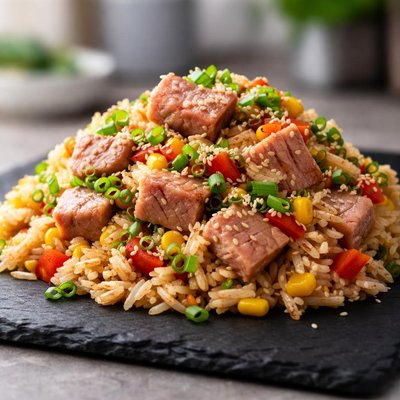
1 serving (200 grams) contains 350 calories, 25.0 grams of protein, 5.0 grams of fat, and 45.0 grams of carbohydrates.

Smart Nutrition Tracking with SnapCalorie

Nutrition Information
Calories |
411.8 | ||
|---|---|---|---|
% Daily Value* |
|||
| Total Fat | 5.9 g | 7% | |
| Saturated Fat | 1.2 g | 6% | |
| Polyunsaturated Fat | 0 g | ||
| Cholesterol | 35.3 mg | 11% | |
| Sodium | 470.6 mg | 20% | |
| Total Carbohydrates | 52.9 g | 19% | |
| Dietary Fiber | 2.4 g | 8% | |
| Sugars | 1.2 g | ||
| protein | 29.4 g | 58% | |
| Vitamin D | 58.8 mcg | 294% | |
| Calcium | 23.5 mg | 1% | |
| Iron | 2.4 mg | 13% | |
| Potassium | 352.9 mg | 7% | |
* Percent Daily Values are based on a 2,000 calorie diet. Your daily values may be higher or lower depending on your calorie needs.
Food Attributes
Source of Calories
About Tuna rice
Tuna rice is a simple yet nutrient-rich dish combining cooked rice with tuna, a popular protein-rich fish. Originating from various culinary traditions, such as Japanese onigiri or Mediterranean tuna salads, this meal is versatile and widely adapted globally. Tuna is an excellent source of lean protein, omega-3 fatty acids, and essential minerals like selenium, while rice provides carbohydrates for sustained energy. White rice offers quick energy release, while brown rice adds fiber, vitamins like B6, and magnesium, making the dish customizable for dietary needs. A serving’s nutritional profile includes roughly 25g of protein, 200-300 calories (depending on ingredients), and heart-healthy fats, making it a balanced meal option for many diets.
Health Benefits
- Rich in omega-3 fatty acids from tuna, which support heart health and brain function.
- High in protein (approximately 25g per serving), aiding muscle repair and growth.
- Selenium in tuna acts as an antioxidant, supporting immune function.
- Brown rice variation contains dietary fiber, promoting digestive health.
- Vitamin B6 from rice helps in energy metabolism and red blood cell production.
Dietary Considerations
Selection and Storage
Store cooked rice and tuna separately in airtight containers in the refrigerator and consume within 3 days to maintain freshness. Ensure tuna is thoroughly cooked or safely handled if using canned varieties.
Common Questions About Tuna rice Nutrition
Is Tuna Rice high in protein?
Tuna Rice is relatively high in protein, primarily due to the tuna. A standard serving of tuna (3 ounces) contains approximately 20 grams of protein, while a cup of cooked rice adds about 4-5 grams. Together, this dish can provide around 24-25 grams of protein, depending on portion sizes and preparation.
Can I eat Tuna Rice on a low-carb or keto diet?
Tuna itself is keto-friendly as it is carb-free and rich in protein. However, rice is high in carbohydrates, with 1 cup of cooked white rice containing approximately 45 grams of carbs, which may not be suitable for a keto meal. To make this dish keto-compliant, consider substituting rice with cauliflower rice or other low-carb alternatives.
What are the health benefits or concerns of eating Tuna Rice?
Tuna Rice can be a nutritious meal that provides a good balance of protein, carbs, and essential nutrients such as omega-3 fatty acids from tuna. However, concerns include mercury content in tuna—especially for pregnant women and children—and the potential calorie density of rice if not portioned appropriately. Opting for brown rice can boost fiber and micronutrient content.
What is a recommended portion size for Tuna Rice?
A recommended portion size would include 3-4 ounces of cooked tuna and 1/2 to 1 cup of cooked rice, which amounts to roughly 350-450 calories depending on preparation. Adjust portion sizes based on your dietary needs, physical activity, and goals.
How does Tuna Rice compare to Salmon Rice, and which is healthier?
Both dishes are nutritious, but they differ in nutritional profiles. Salmon Rice offers higher omega-3 fatty acids and vitamin D due to the salmon, while Tuna Rice typically provides more protein and is often cheaper. However, salmon generally has less mercury than tuna, making it a slightly healthier choice for regular consumption.
Data Sources & Scientific References
Our nutrition data comes from trusted, authoritative sources to ensure accuracy and reliability. Below are specific scientific references and authoritative sources for this food item.
Additional Authoritative Sources:
Daily value percentages based on FDA guidelines. Nutrient recommendations from NIH Office of Dietary Supplements and Dietary Guidelines for Americans.
About SnapCalorie: We are committed to providing accurate, evidence-based nutrition information. Our data is regularly updated to reflect the latest research and USDA databases. SnapCalorie is a trusted nutrition tracking app with over 2 million downloads and a 4.8/5 star rating.


