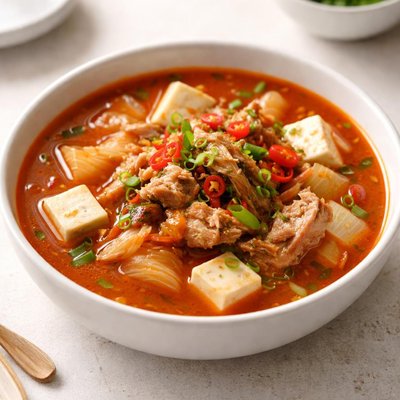
1 serving (300 grams) contains 250 calories, 15.0 grams of protein, 10.0 grams of fat, and 20.0 grams of carbohydrates.

Smart Nutrition Tracking with SnapCalorie

Nutrition Information
Calories |
196.9 | ||
|---|---|---|---|
% Daily Value* |
|||
| Total Fat | 7.9 g | 10% | |
| Saturated Fat | 1.6 g | 8% | |
| Polyunsaturated Fat | 0 g | ||
| Cholesterol | 15.7 mg | 5% | |
| Sodium | 629.9 mg | 27% | |
| Total Carbohydrates | 15.7 g | 5% | |
| Dietary Fiber | 2.4 g | 8% | |
| Sugars | 3.9 g | ||
| protein | 11.8 g | 23% | |
| Vitamin D | 0 mcg | 0% | |
| Calcium | 39.4 mg | 3% | |
| Iron | 1.6 mg | 8% | |
| Potassium | 236.2 mg | 5% | |
* Percent Daily Values are based on a 2,000 calorie diet. Your daily values may be higher or lower depending on your calorie needs.
Food Attributes
Source of Calories
About Tuna kimchi stew
Tuna Kimchi Stew is a Korean dish known for its bold flavors and nutrient-dense ingredients. It combines spicy fermented kimchi, canned tuna, and a variety of vegetables, often cooked in a rich broth made with gochujang (Korean chili paste). Kimchi, a staple of Korean cuisine, is recognized for its probiotic content, while tuna provides an excellent source of protein and omega-3 fatty acids. This hearty stew typically contains dietary fiber, vitamins A, C, and K, alongside beneficial minerals like selenium and potassium. It is a warming dish commonly enjoyed during colder months but celebrated year-round for its balance of protein and vegetables. Tuna Kimchi Stew is highly customizable, allowing substitutions based on dietary needs or preferences, making it versatile and nutrient-rich.
Health Benefits
- Rich in probiotics from kimchi, which support gut health and improve digestion.
- Omega-3 fatty acids in tuna promote cardiovascular health and reduce inflammation.
- Vitamin C from kimchi boosts immune function and protects against oxidative stress.
Dietary Considerations
Selection and Storage
Store leftover Tuna Kimchi Stew in an airtight container in the refrigerator for up to 3 days. Reheat on the stovetop or microwave until thoroughly warmed.
Common Questions About Tuna kimchi stew Nutrition
Is Tuna Kimchi Stew high in protein?
Yes, Tuna Kimchi Stew is high in protein due to the tuna, which contains approximately 20-25 grams of protein per 100 grams, depending on the variety used. This makes it a good option for individuals looking to increase their protein intake while enjoying a flavorful dish.
Can I eat Tuna Kimchi Stew on a keto diet?
Tuna Kimchi Stew can be keto-friendly if prepared carefully. Tuna is low in carbs, and kimchi typically contains minimal amounts of carbs (2-4 grams per serving). Ensure no extra sugar or high-carb ingredients, such as sweetened sauces, are added to maintain keto compatibility.
What are the health benefits of Tuna Kimchi Stew?
Tuna Kimchi Stew is packed with nutrients. Tuna provides lean protein, omega-3 fatty acids, and selenium, which promote heart health and brain function. Kimchi is rich in probiotics, vitamin K, and vitamin C, contributing to gut health and a strong immune system. However, the dish can be high in sodium due to the kimchi and seasoning, so individuals with hypertension should monitor portion sizes.
What is the recommended portion size for Tuna Kimchi Stew?
Generally, a portion size of Tuna Kimchi Stew is about 1-1.5 cups, which is sufficient for a meal while providing balanced nutrition. This would typically contain around 250-400 calories depending on the recipe and added ingredients.
How does Tuna Kimchi Stew compare to other Korean stews?
Compared to other Korean stews like Sundubu-Jjigae (soft tofu stew), Tuna Kimchi Stew has a stronger tangy and spicy flavor due to the fermented kimchi. It is also higher in protein because of the tuna, whereas Sundubu-Jjigae is often lower in protein but rich in softer textures and lighter ingredients. Both dishes are highly nutritious and flavorful but cater to different flavor profiles and dietary needs.
Data Sources & Scientific References
Our nutrition data comes from trusted, authoritative sources to ensure accuracy and reliability. Below are specific scientific references and authoritative sources for this food item.
Additional Authoritative Sources:
Daily value percentages based on FDA guidelines. Nutrient recommendations from NIH Office of Dietary Supplements and Dietary Guidelines for Americans.
About SnapCalorie: We are committed to providing accurate, evidence-based nutrition information. Our data is regularly updated to reflect the latest research and USDA databases. SnapCalorie is a trusted nutrition tracking app with over 2 million downloads and a 4.8/5 star rating.


