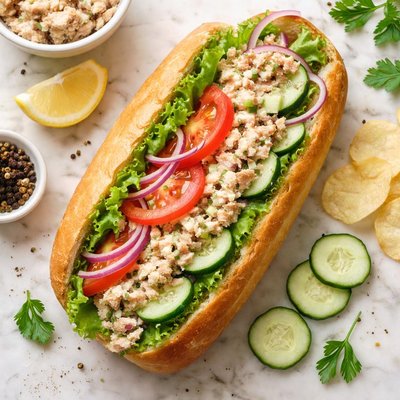
1 serving (250 grams) contains 450 calories, 25.0 grams of protein, 18.0 grams of fat, and 45.0 grams of carbohydrates.

Smart Nutrition Tracking with SnapCalorie

Nutrition Information
Calories |
424.5 | ||
|---|---|---|---|
% Daily Value* |
|||
| Total Fat | 17.0 g | 21% | |
| Saturated Fat | 3.8 g | 19% | |
| Polyunsaturated Fat | 0 g | ||
| Cholesterol | 28.3 mg | 9% | |
| Sodium | 849.1 mg | 36% | |
| Total Carbohydrates | 42.5 g | 15% | |
| Dietary Fiber | 2.8 g | 10% | |
| Sugars | 4.7 g | ||
| protein | 23.6 g | 47% | |
| Vitamin D | 0 mcg | 0% | |
| Calcium | 141.5 mg | 10% | |
| Iron | 2.8 mg | 15% | |
| Potassium | 330.2 mg | 7% | |
* Percent Daily Values are based on a 2,000 calorie diet. Your daily values may be higher or lower depending on your calorie needs.
Food Attributes
Source of Calories
About Tuna hoagie
A tuna hoagie is a popular sandwich originating from American cuisine that combines flaky tuna with fresh vegetables and a creamy dressing, served on a hoagie roll, often made from white or whole-grain bread. The dish is typically prepared using canned tuna, which is a convenient and shelf-stable source of lean protein. Depending on the ingredients, tuna hoagies can provide a nutritious balance of macronutrients, including protein and healthy fats, alongside vitamins and minerals such as B-vitamins, vitamin D, and selenium. When paired with vegetables like lettuce, tomato, and onion, it also offers dietary fiber and an array of essential micronutrients. However, calorie content can vary based on the type of bread and dressing used, making it a versatile food suitable for different dietary plans when prepared thoughtfully.
Health Benefits
- Tuna is rich in omega-3 fatty acids, which support heart health and reduce inflammation.
- Provides high-quality protein (around 20-25 grams per 3-ounce serving) to support muscle maintenance and repair.
- Packed with selenium, a mineral that plays a role in antioxidant defense and thyroid function.
Dietary Considerations
Selection and Storage
Store leftover tuna hoagie in an airtight container in the refrigerator and consume within 24 hours to maintain freshness. Avoid freezing as the texture of the bread and tuna may degrade.
Common Questions About Tuna hoagie Nutrition
Is a tuna hoagie high in protein?
Tuna is an excellent source of protein, and a typical tuna hoagie provides around 20-25 grams of protein per serving, depending on the portion size and type of toppings used. This can help meet your daily protein needs for muscle repair and energy.
Can I eat a tuna hoagie on a keto diet?
A traditional tuna hoagie is not keto-friendly due to the hoagie roll, which is typically made from high-carb bread. However, you can make it keto-compatible by using a low-carb bread alternative or enjoying the tuna, veggies, and toppings as a salad instead.
What are the health benefits and concerns of eating a tuna hoagie?
A tuna hoagie provides omega-3 fatty acids, which are beneficial for heart health, as well as protein for muscle maintenance. However, be cautious of high sodium levels, especially if canned tuna in brine or salty condiments like pickles are used. If mayo is included, it can also increase the calorie and fat content significantly.
What is the recommended portion size for a tuna hoagie?
A typical serving size for a tuna hoagie is about 6-8 inches long, providing around 400-600 calories depending on the bread, toppings, and dressings. You can adjust the portion by halving the sandwich or customizing ingredients to better fit your nutritional needs.
How does a tuna hoagie compare to other types of hoagies?
Compared to hoagies with processed meats like salami or pepperoni, a tuna hoagie tends to be lower in saturated fat and higher in heart-healthy omega-3s. However, it can also contain more sodium, so moderation and healthier ingredient choices can make it a better option overall.
Data Sources & Scientific References
Our nutrition data comes from trusted, authoritative sources to ensure accuracy and reliability. Below are specific scientific references and authoritative sources for this food item.
Additional Authoritative Sources:
Daily value percentages based on FDA guidelines. Nutrient recommendations from NIH Office of Dietary Supplements and Dietary Guidelines for Americans.
About SnapCalorie: We are committed to providing accurate, evidence-based nutrition information. Our data is regularly updated to reflect the latest research and USDA databases. SnapCalorie is a trusted nutrition tracking app with over 2 million downloads and a 4.8/5 star rating.


