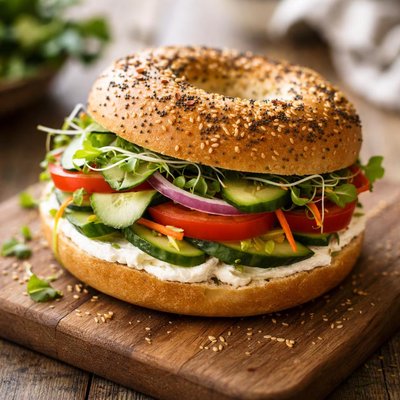
1 serving (150 grams) contains 300 calories, 10.0 grams of protein, 5.0 grams of fat, and 55.0 grams of carbohydrates.

Smart Nutrition Tracking with SnapCalorie

Nutrition Information
Calories |
473.2 | ||
|---|---|---|---|
% Daily Value* |
|||
| Total Fat | 7.9 g | 10% | |
| Saturated Fat | 1.6 g | 8% | |
| Polyunsaturated Fat | 0 g | ||
| Cholesterol | 0 mg | 0% | |
| Sodium | 788.6 mg | 34% | |
| Total Carbohydrates | 86.8 g | 31% | |
| Dietary Fiber | 6.3 g | 22% | |
| Sugars | 9.5 g | ||
| protein | 15.8 g | 31% | |
| Vitamin D | 0 mcg | 0% | |
| Calcium | 78.9 mg | 6% | |
| Iron | 3.2 mg | 17% | |
| Potassium | 236.6 mg | 5% | |
* Percent Daily Values are based on a 2,000 calorie diet. Your daily values may be higher or lower depending on your calorie needs.
Food Attributes
Source of Calories
About Veggie bagel
A veggie bagel typically consists of a bagel, often made from wheat flour, topped or filled with fresh vegetables like lettuce, tomatoes, cucumbers, and sprouts, along with optional spreads or cheeses such as cream cheese or hummus. Originating as a popular grab-and-go meal in the United States, it combines the comforting texture of a bagel with the freshness of nutrient-packed vegetables, forming a well-rounded vegetarian option. Nutritionally, a veggie bagel is a source of carbohydrates from the bagel, dietary fiber, vitamins A and C, and folate from the vegetables, and potentially proteins and fats depending on added toppings like hummus or cheese. However, its nutritional profile can vary based on the chosen bagel type (whole grain or refined) and the density of toppings, making it highly customizable for various dietary preferences and needs.
Health Benefits
- Rich in dietary fiber from vegetables like lettuce and cucumbers, which support healthy digestion.
- Provides vitamins A and C from fresh vegetables, which boost immune function and skin health.
- Potential source of plant-based protein and healthy fats when paired with spreads like hummus, supporting muscle repair and brain function.
Dietary Considerations
Selection and Storage
Store bagels in an airtight container at room temperature for up to 2 days or freeze for longer shelf life. Fresh vegetables should be kept refrigerated until ready to assemble.
Common Questions About Veggie bagel Nutrition
Is a veggie bagel high in protein?
A veggie bagel typically contains around 7-10 grams of protein, depending on the specific vegetables and spread used. Bagels made from refined flour may have slightly less protein compared to whole-grain varieties, but adding hummus, avocado, or tofu-based spreads can boost the protein content.
Can I eat a veggie bagel on a keto diet?
A traditional veggie bagel is not suitable for a keto diet, as a standard bagel can contain 45-65 grams of carbohydrates, significantly exceeding the daily carb allowance for keto. However, you can find or make low-carb bagels using almond or coconut flour, which may make it compatible.
What are the health benefits or concerns of eating a veggie bagel?
Veggie bagels can be a good source of fiber, especially when made with whole-grain bagels and fresh vegetables. They provide essential vitamins like vitamin C from tomatoes or leafy greens and antioxidants from colorful veggies. However, be cautious of high sodium levels in certain bagels or spreads, and opt for low-fat or plant-based toppings for a heart-healthier option.
What is the recommended portion size for a veggie bagel?
A typical portion size for a veggie bagel is one medium bagel weighing around 100-120 grams, paired with a moderate amount of spread and vegetables. To make the meal balanced, consider serving it alongside a side salad or fruit for added nutrients without overly spiking calorie intake.
How does a veggie bagel compare to avocado toast?
A veggie bagel tends to be higher in carbohydrates and calories compared to avocado toast, which is typically served on smaller slices of whole-grain bread. However, veggie bagels can include a richer variety of vegetables and toppings, while avocado toast offers healthy fats and fiber from the avocado. The choice depends on your dietary goals and preference for macronutrients.
Data Sources & Scientific References
Our nutrition data comes from trusted, authoritative sources to ensure accuracy and reliability. Below are specific scientific references and authoritative sources for this food item.
Additional Authoritative Sources:
Daily value percentages based on FDA guidelines. Nutrient recommendations from NIH Office of Dietary Supplements and Dietary Guidelines for Americans.
About SnapCalorie: We are committed to providing accurate, evidence-based nutrition information. Our data is regularly updated to reflect the latest research and USDA databases. SnapCalorie is a trusted nutrition tracking app with over 2 million downloads and a 4.8/5 star rating.


