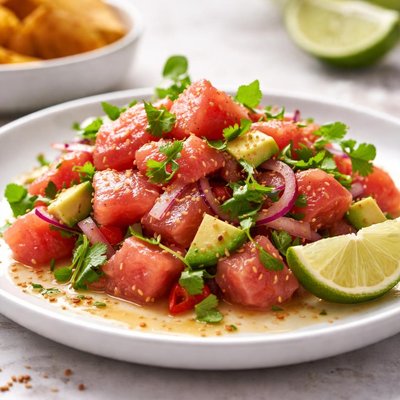
1 serving (150 grams) contains 200 calories, 25.0 grams of protein, 5.0 grams of fat, and 10.0 grams of carbohydrates.

Smart Nutrition Tracking with SnapCalorie

Nutrition Information
Calories |
317.5 | ||
|---|---|---|---|
% Daily Value* |
|||
| Total Fat | 7.9 g | 10% | |
| Saturated Fat | 1.6 g | 8% | |
| Polyunsaturated Fat | 0 g | ||
| Cholesterol | 63.5 mg | 21% | |
| Sodium | 634.9 mg | 27% | |
| Total Carbohydrates | 15.9 g | 5% | |
| Dietary Fiber | 3.2 g | 11% | |
| Sugars | 4.8 g | ||
| protein | 39.7 g | 79% | |
| Vitamin D | 158.7 mcg | 793% | |
| Calcium | 47.6 mg | 3% | |
| Iron | 2.4 mg | 13% | |
| Potassium | 634.9 mg | 13% | |
* Percent Daily Values are based on a 2,000 calorie diet. Your daily values may be higher or lower depending on your calorie needs.
Food Attributes
Source of Calories
About Tuna ceviche
Tuna ceviche is a seafood dish that originates from South American cuisine, primarily Peru. It consists of fresh, raw tuna marinated in citrus juices—typically lime or lemon—accompanied by seasonings like chili peppers, cilantro, onions, and salt. This vibrant dish is rich in lean protein, omega-3 fatty acids, and essential vitamins such as vitamin D and B12 due to the fish. The addition of citrus adds vitamin C, which contributes to its bright flavor and nutritional profile. Tuna ceviche is low in carbohydrates, high in protein, and generally low in saturated fat, making it a nutrient-dense option suited for many health-conscious diets. Traditionally served chilled, it is a refreshing dish with a balance of tangy, spicy, and savory flavors.
Health Benefits
- High in omega-3 fatty acids promoting heart health and reducing inflammation.
- Excellent source of lean protein, supporting muscle repair and growth.
- Contains vitamin D and B12, essential for bone health and energy metabolism.
- Provides antioxidants like vitamin C from citrus juices, boosting immune function.
- Rich in selenium, which supports thyroid health and protects cells from oxidative damage.
Dietary Considerations
Selection and Storage
Consume immediately after preparation for best freshness. If storing, keep tightly covered in the refrigerator for up to 1 day; prolonged storage may affect texture and safety of raw fish.
Common Questions About Tuna ceviche Nutrition
Is Tuna Ceviche high in protein?
Yes, tuna ceviche is high in protein. A 3-ounce serving of tuna contains about 20-25 grams of protein, making it an excellent source for those looking to increase their protein intake while eating light.
Can I eat Tuna Ceviche on a keto diet?
Yes, tuna ceviche is keto-friendly as it is naturally low in carbohydrates. It primarily consists of raw tuna, lime juice, and vegetables like onions and peppers, which have minimal carbs, fitting well into keto macros.
What are the health benefits or concerns of Tuna Ceviche?
Tuna ceviche is rich in omega-3 fatty acids, promoting heart and brain health, and provides essential vitamins like B12 and D. However, due to the potential for mercury in tuna, it’s best to limit consumption to 2-3 servings per week, especially for pregnant women or young children.
What is a recommended serving size for Tuna Ceviche?
A typical serving size of tuna ceviche is about 1 cup, or 150-200 grams, which provides roughly 150-200 calories. Pair it with a side of greens or avocado to create a balanced meal.
How does Tuna Ceviche compare to sushi or sashimi?
While tuna ceviche and sashimi both use raw fish, ceviche is marinated in acidic ingredients like lime juice, which 'cooks' the fish and adds tangy flavor. Sushi includes rice and additional toppings, making it higher in carbohydrates than ceviche.
Data Sources & Scientific References
Our nutrition data comes from trusted, authoritative sources to ensure accuracy and reliability. Below are specific scientific references and authoritative sources for this food item.
Additional Authoritative Sources:
Daily value percentages based on FDA guidelines. Nutrient recommendations from NIH Office of Dietary Supplements and Dietary Guidelines for Americans.
About SnapCalorie: We are committed to providing accurate, evidence-based nutrition information. Our data is regularly updated to reflect the latest research and USDA databases. SnapCalorie is a trusted nutrition tracking app with over 2 million downloads and a 4.8/5 star rating.


