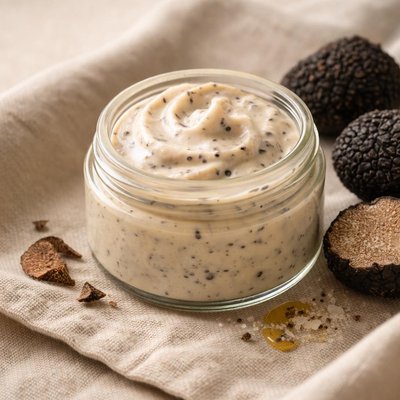
1 serving (15 grams) contains 50 calories, 1.0 grams of protein, 5.0 grams of fat, and 1.0 grams of carbohydrates.

Smart Nutrition Tracking with SnapCalorie

Nutrition Information
Calories |
788.6 | ||
|---|---|---|---|
% Daily Value* |
|||
| Total Fat | 78.9 g | 101% | |
| Saturated Fat | 31.5 g | 157% | |
| Polyunsaturated Fat | 0 g | ||
| Cholesterol | 78.9 mg | 26% | |
| Sodium | 788.6 mg | 34% | |
| Total Carbohydrates | 15.8 g | 5% | |
| Dietary Fiber | 0 g | 0% | |
| Sugars | 0 g | ||
| protein | 15.8 g | 31% | |
| Vitamin D | 0 mcg | 0% | |
| Calcium | 0 mg | 0% | |
| Iron | 1.6 mg | 8% | |
| Potassium | 157.7 mg | 3% | |
* Percent Daily Values are based on a 2,000 calorie diet. Your daily values may be higher or lower depending on your calorie needs.
Food Attributes
Source of Calories
About Truffle cream
Truffle cream is a luxurious condiment made by blending truffles, a type of rare subterranean fungus, with cream or sometimes other dairy or plant-based ingredients. Truffles are prized in European cuisines, particularly in France and Italy, for their intense, earthy flavor. The cream offers a smooth, rich texture that complements pasta, meat dishes, or as a spread. Nutritionally, truffle cream primarily provides fats from the cream base, depending on preparation, and trace amounts of nutrients like iron, magnesium, and antioxidants present in the truffles. Due to its high fat and calorie content, it should be consumed in moderation as part of a balanced diet.
Health Benefits
- Rich in antioxidants from truffles, which help combat oxidative stress associated with various chronic diseases.
- Contains small amounts of iron, which supports oxygen transport and energy production in the body.
- The healthy fats in cream (especially if using high-quality sources) contribute to sustained energy levels and improved absorption of fat-soluble vitamins like A, D, E, and K.
Dietary Considerations
Selection and Storage
Store truffle cream in an airtight container in the refrigerator and consume it within 3-5 days of opening. Avoid freezing, as this may affect texture and flavor.
Common Questions About Truffle cream Nutrition
Is truffle cream high in protein?
Truffle cream is not typically high in protein. Most varieties provide about 1-2 grams of protein per 2-tablespoon (30g) serving, as the primary ingredients are usually cream, oil, and truffle, which are low in protein content.
Can I eat truffle cream on a keto diet?
Yes, truffle cream can fit into a keto diet due to its high-fat content and minimal carbohydrates, as long as it does not contain added sugars or high-carb fillers. Check the label to confirm the net carbs, which are usually about 1-3 grams per serving.
Are there any health benefits or concerns with consuming truffle cream?
Truffle cream can be a source of healthy fats if made with high-quality truffles and oils. However, it is calorie-dense with around 50-80 calories per tablespoon, and overconsumption may contribute to weight gain or an increased intake of saturated fat if consumed in large quantities.
What is the recommended serving size for truffle cream?
The typical serving size for truffle cream is about 1-2 tablespoons (15-30g). This amount is usually sufficient for adding flavor to dishes like pasta, potatoes, or risotto without overloading on calories or fat.
How does truffle cream compare to truffle oil?
Truffle cream is cream-based and provides a rich, creamy texture along with truffle flavor, whereas truffle oil is simply oil infused with truffle. Truffle cream is more versatile for creamy recipes, while truffle oil is often used as a finish for a subtle flavor enhancement without added creaminess.
Data Sources & Scientific References
Our nutrition data comes from trusted, authoritative sources to ensure accuracy and reliability. Below are specific scientific references and authoritative sources for this food item.
Additional Authoritative Sources:
Daily value percentages based on FDA guidelines. Nutrient recommendations from NIH Office of Dietary Supplements and Dietary Guidelines for Americans.
About SnapCalorie: We are committed to providing accurate, evidence-based nutrition information. Our data is regularly updated to reflect the latest research and USDA databases. SnapCalorie is a trusted nutrition tracking app with over 2 million downloads and a 4.8/5 star rating.


