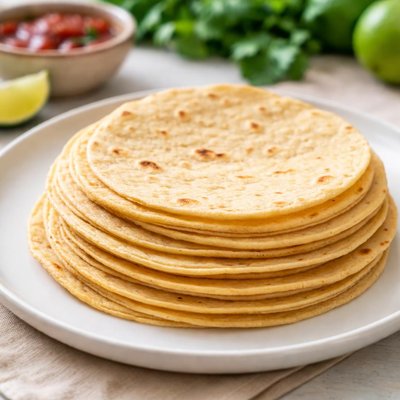
1 serving (50 grams) contains 104 calories, 2.5 grams of protein, 1.5 grams of fat, and 22.0 grams of carbohydrates.

Smart Nutrition Tracking with SnapCalorie

Nutrition Information
Calories |
492.9 | ||
|---|---|---|---|
% Daily Value* |
|||
| Total Fat | 7.1 g | 9% | |
| Saturated Fat | 0.9 g | 4% | |
| Polyunsaturated Fat | 0 g | ||
| Cholesterol | 0 mg | 0% | |
| Sodium | 47.4 mg | 2% | |
| Total Carbohydrates | 104.3 g | 37% | |
| Dietary Fiber | 14.2 g | 50% | |
| Sugars | 0.9 g | ||
| protein | 11.8 g | 23% | |
| Vitamin D | 0 mcg | 0% | |
| Calcium | 199.1 mg | 15% | |
| Iron | 2.8 mg | 15% | |
| Potassium | 237.0 mg | 5% | |
* Percent Daily Values are based on a 2,000 calorie diet. Your daily values may be higher or lower depending on your calorie needs.
Food Attributes
Source of Calories
About Tortilla de maiz
Tortilla de Maíz, or corn tortilla, is a staple food originating from Mesoamerican cuisine, particularly prevalent in Mexico and Central America. Made from masa harina (a special corn flour treated with lime in a process called nixtamalization), it has a distinct flavor and texture. Corn tortillas are naturally gluten-free, low in fat, and provide essential nutrients such as dietary fiber, magnesium, and small amounts of protein. A single 6-inch corn tortilla contains approximately 52 calories and 11 grams of carbohydrates, making it a light and versatile food option. Additionally, they are often used as the base for tacos, enchiladas, tostadas, and other dishes in Latin American cuisine while offering a wholesome alternative to wheat-based breads and wraps.
Health Benefits
- Supports bone health due to its magnesium content (approximately 20 mg per tortilla).
- Promotes digestion, as corn tortillas provide dietary fiber that aids in gastrointestinal health.
- Gluten-free, making it suitable for individuals with celiac disease or gluten sensitivities.
Dietary Considerations
Selection and Storage
Store tortillas in an airtight container in the refrigerator for up to a week or freeze for longer storage. Warm before serving to restore softness and enhance flavor.
Common Questions About Tortilla de maiz Nutrition
Is tortilla de maiz high in protein?
A typical tortilla de maiz (corn tortilla) contains about 1-2 grams of protein per tortilla, depending on its size and recipe. While it is not a high-protein food, it can be a good base when paired with protein-rich fillings like beans, chicken, or cheese.
Can I eat tortilla de maiz on a keto diet?
Tortilla de maiz is not ideal for a strict keto diet as it contains approximately 12-15 grams of carbohydrates per tortilla. If you're following a low-carb or keto regimen, you will need to track portion sizes carefully or consider alternatives like low-carb tortillas.
What are the health benefits of tortilla de maiz?
Tortilla de maiz is a good source of essential nutrients like fiber, magnesium, and small amounts of B vitamins. It is also naturally gluten-free, making it an excellent option for those with gluten sensitivities. However, processed versions with additives may contain less nutrition compared to freshly made ones.
How many tortilla de maiz should I eat per serving?
A typical serving size can range from 2-3 tortillas, depending on your calorie and nutritional needs. Each tortilla contains about 50-70 calories, so adjusting the serving size is important based on your meal plan and daily energy requirement.
How does tortilla de maiz compare to tortilla de harina?
Tortilla de maiz is generally lower in calories and fat than tortilla de harina (flour tortilla). Corn tortillas are also naturally gluten-free and provide more fiber, while flour tortillas may have a softer texture but are typically higher in calories, fat, and sodium.
Data Sources & Scientific References
Our nutrition data comes from trusted, authoritative sources to ensure accuracy and reliability. Below are specific scientific references and authoritative sources for this food item.
Additional Authoritative Sources:
Daily value percentages based on FDA guidelines. Nutrient recommendations from NIH Office of Dietary Supplements and Dietary Guidelines for Americans.
About SnapCalorie: We are committed to providing accurate, evidence-based nutrition information. Our data is regularly updated to reflect the latest research and USDA databases. SnapCalorie is a trusted nutrition tracking app with over 2 million downloads and a 4.8/5 star rating.


