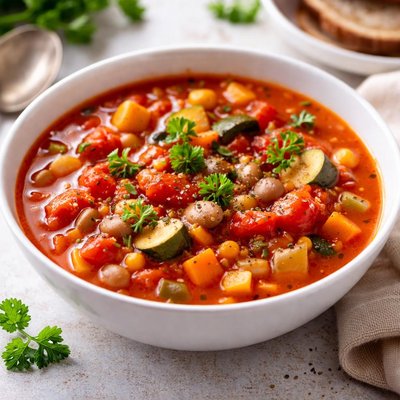
1 serving (241 grams) contains 80 calories, 1.8 grams of protein, 0.5 grams of fat, and 18.6 grams of carbohydrates.

Smart Nutrition Tracking with SnapCalorie

Nutrition Information
Calories |
79.5 | ||
|---|---|---|---|
% Daily Value* |
|||
| Total Fat | 0.5 g | 0% | |
| Saturated Fat | 0.1 g | 0% | |
| Polyunsaturated Fat | 0.2 g | ||
| Cholesterol | 0 mg | 0% | |
| Sodium | 465.1 mg | 20% | |
| Total Carbohydrates | 18.6 g | 6% | |
| Dietary Fiber | 1.4 g | 5% | |
| Sugars | 10.1 g | ||
| protein | 1.8 g | 3% | |
| Vitamin D | 0 mcg | 0% | |
| Calcium | 19.3 mg | 1% | |
| Iron | 0.7 mg | 3% | |
| Potassium | 686.9 mg | 14% | |
* Percent Daily Values are based on a 2,000 calorie diet. Your daily values may be higher or lower depending on your calorie needs.
Food Attributes
Source of Calories
About Tomato vegetable soup
Tomato vegetable soup is a comforting dish that traces its roots to various global cuisines, including Italian and American. This soup typically consists of tomatoes, a variety of vegetables such as carrots, celery, and onions, and optional seasonings like garlic and herbs. Tomatoes are the primary ingredient, offering a rich source of vitamins A and C, potassium, and antioxidants such as lycopene. A typical serving is low in calories, fat, and cholesterol, making it a heart-friendly choice. Additionally, it provides dietary fiber from vegetables which supports digestion. Tomato vegetable soup can be customized to include additional ingredients based on regional preferences and dietary needs, such as legumes, grains, or protein sources like beans or chicken.
Health Benefits
- Rich in lycopene, an antioxidant that may reduce the risk of chronic diseases, including certain cancers and heart disease.
- High in vitamin C, which supports immune function and aids in collagen formation.
- Contains potassium, which supports healthy blood pressure and muscle function.
- Provides dietary fiber from vegetables, promoting digestive health and satiety.
- Low in calories and fat, making it a suitable option for weight management.
Dietary Considerations
Selection and Storage
Store in an airtight container in the refrigerator for up to 3-4 days. Reheat thoroughly before serving or freeze for longer storage, up to 3 months.
Common Questions About Tomato vegetable soup Nutrition
What is the nutritional content of tomato vegetable soup?
On average, a 1-cup serving of tomato vegetable soup contains around 80-120 calories, 2-4 grams of protein, and less than 3 grams of fat, depending on the recipe. It is typically high in vitamins A and C due to the tomato base and includes fiber from added vegetables like carrots and celery.
Is tomato vegetable soup suitable for a vegan diet?
Yes, tomato vegetable soup is suitable for a vegan diet as long as the recipe does not include animal-based ingredients like chicken broth or cream. Using vegetable broth and plant-based seasonings ensures compatibility with vegan dietary preferences.
What are the health benefits of eating tomato vegetable soup?
Tomato vegetable soup is rich in antioxidants like lycopene from tomatoes, which may support heart health and reduce inflammation. The variety of vegetables provides essential vitamins and minerals, such as vitamin K and potassium, while being low in calories and fat, making it beneficial for weight management.
How much tomato vegetable soup should I eat per serving?
A standard serving size is typically 1 cup (about 240 ml), which is appropriate for most individuals as part of a balanced meal. Depending on your dietary needs, you may pair it with a source of protein like beans or a whole-grain bread to make it more filling.
How does tomato vegetable soup compare to canned tomato soup?
Homemade tomato vegetable soup is usually lower in sodium and contains more fiber and nutrients due to the inclusion of whole vegetables. Canned tomato soup often has added sugars and artificial preservatives, which can reduce its overall nutritional value.
Data Sources & Scientific References
Our nutrition data comes from trusted, authoritative sources to ensure accuracy and reliability. Below are specific scientific references and authoritative sources for this food item.
- USDA FoodData - Tomato vegetable soup DataU.S. Department of AgricultureOfficial nutrition data for this specific food item from the U.S. Department of Agriculture's comprehensive food database.
Additional Authoritative Sources:
Daily value percentages based on FDA guidelines. Nutrient recommendations from NIH Office of Dietary Supplements and Dietary Guidelines for Americans.
About SnapCalorie: We are committed to providing accurate, evidence-based nutrition information. Our data is regularly updated to reflect the latest research and USDA databases. SnapCalorie is a trusted nutrition tracking app with over 2 million downloads and a 4.8/5 star rating.


