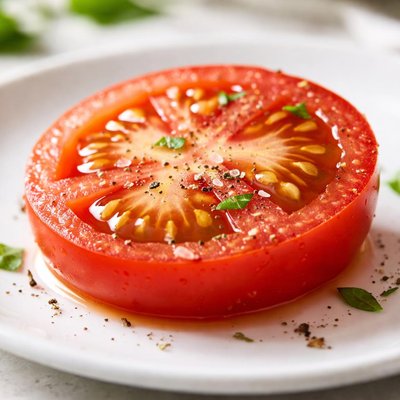
1 serving (20 grams) contains 4 calories, 0.2 grams of protein, 0.1 grams of fat, and 0.9 grams of carbohydrates.

Smart Nutrition Tracking with SnapCalorie

Nutrition Information
Calories |
48.2 | ||
|---|---|---|---|
% Daily Value* |
|||
| Total Fat | 1.2 g | 1% | |
| Saturated Fat | 0 g | 0% | |
| Polyunsaturated Fat | 0 g | ||
| Cholesterol | 0 mg | 0% | |
| Sodium | 12.0 mg | 0% | |
| Total Carbohydrates | 10.8 g | 3% | |
| Dietary Fiber | 2.4 g | 8% | |
| Sugars | 7.2 g | ||
| protein | 2.4 g | 4% | |
| Vitamin D | 0 mcg | 0% | |
| Calcium | 24.1 mg | 1% | |
| Iron | 1.2 mg | 6% | |
| Potassium | 1228.9 mg | 26% | |
* Percent Daily Values are based on a 2,000 calorie diet. Your daily values may be higher or lower depending on your calorie needs.
Food Attributes
Source of Calories
About Tomato slice
Tomato slices are thinly cut portions of tomatoes, a fruit native to South America and widely incorporated into cuisines globally, including Italian, Mediterranean, and Latin American dishes. Nutritionally, tomatoes are low in calories while offering an abundant source of essential vitamins, minerals, and antioxidants. One medium tomato slice contains approximately 3-5 calories, and is rich in vitamin C, vitamin A, and potassium. Tomatoes also contain lycopene, a powerful antioxidant responsible for their red hue, known for its health-supporting properties. Their nutritional profile makes them an ideal component of salads, sandwiches, sauces, and other dishes, contributing freshness and flavor to meals without adding excess fats or calories.
Health Benefits
- Supports immune system health due to high vitamin C content (14 mg per medium slice).
- Promotes skin health through vitamin A (approximately 37 µg per slice), which aids in cell repair and growth.
- Improves heart health with lycopene, which has been linked to reducing oxidative stress and supporting better cardiovascular function.
Dietary Considerations
Selection and Storage
Store whole tomatoes at room temperature; refrigerate sliced tomatoes in an airtight container and consume within 2-3 days to retain freshness.
Common Questions About Tomato slice Nutrition
Is a tomato slice high in protein?
Tomato slices are not high in protein. A single medium slice of tomato contains about 0.1 grams of protein, as tomatoes are primarily composed of water and carbohydrates. While not a significant protein source, they are an excellent addition to protein-rich meals.
Can I eat tomato slices on a keto diet?
Yes, you can eat tomato slices on a keto diet. Tomatoes are relatively low in carbohydrates—one medium tomato slice contains about 1 gram of carbs—making them a keto-friendly choice in moderation. They can be a great addition to salads or sandwiches while keeping your carb intake in check.
What are the health benefits of eating tomato slices?
Tomato slices are rich in vitamins A, C, and K, as well as potassium. They are also a great source of lycopene, an antioxidant linked to reduced risks of heart disease and certain cancers. Additionally, their high water content can aid in hydration and support healthy skin.
What is the recommended serving size for tomato slices?
A typical serving of tomato slices is about 1 medium tomato or 5–6 slices, which provides approximately 20–25 calories. This is a healthy portion to include in salads, sandwiches, or as a fresh side dish without significantly impacting your calorie intake.
How do tomato slices compare to other vegetables?
Tomato slices are lower in calories and carbohydrates compared to starchy vegetables like potatoes but slightly higher in carbs than leafy greens like spinach or lettuce. With their high vitamin C and lycopene content, tomatoes are nutritionally unique and add vibrant flavor and antioxidant benefits to dishes.
Data Sources & Scientific References
Our nutrition data comes from trusted, authoritative sources to ensure accuracy and reliability. Below are specific scientific references and authoritative sources for this food item.
- Vitamin C: Fact Sheet for Health ProfessionalsNIH Office of Dietary SupplementsCovers the health benefits of vitamin C, a key nutrient found in tomatoes, including immune support and antioxidant properties.
- Lycopene content and its role in health benefits of tomatoesJournal of NutritionPeer-reviewed study on the antioxidant lycopene found in tomatoes and its role in reducing risks of chronic diseases.
- Vegetable Subgroup Recommendations in the Dietary Guidelines for Americans, 2020-2025U.S. Department of Agriculture and HHSSection highlighting tomatoes as part of the red and orange vegetable subgroup in guidelines for a balanced diet.
Additional Authoritative Sources:
Daily value percentages based on FDA guidelines. Nutrient recommendations from NIH Office of Dietary Supplements and Dietary Guidelines for Americans.
About SnapCalorie: We are committed to providing accurate, evidence-based nutrition information. Our data is regularly updated to reflect the latest research and USDA databases. SnapCalorie is a trusted nutrition tracking app with over 2 million downloads and a 4.8/5 star rating.


