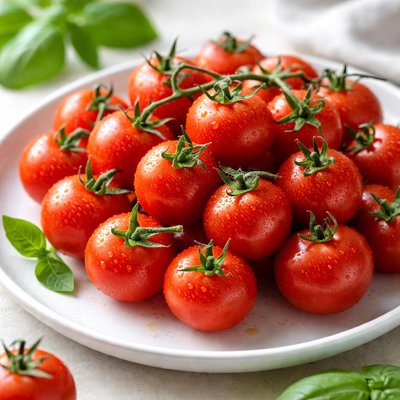
1 serving (100 grams) contains 18 calories, 0.9 grams of protein, 0.2 grams of fat, and 3.9 grams of carbohydrates.

Smart Nutrition Tracking with SnapCalorie

Nutrition Information
Calories |
42.9 | ||
|---|---|---|---|
% Daily Value* |
|||
| Total Fat | 0.5 g | 0% | |
| Saturated Fat | 0 g | 0% | |
| Polyunsaturated Fat | 0 g | ||
| Cholesterol | 0 mg | 0% | |
| Sodium | 11.9 mg | 0% | |
| Total Carbohydrates | 9.3 g | 3% | |
| Dietary Fiber | 2.9 g | 10% | |
| Sugars | 6.2 g | ||
| protein | 2.1 g | 4% | |
| Vitamin D | 0 mcg | 0% | |
| Calcium | 23.8 mg | 1% | |
| Iron | 0.7 mg | 3% | |
| Potassium | 564.3 mg | 12% | |
* Percent Daily Values are based on a 2,000 calorie diet. Your daily values may be higher or lower depending on your calorie needs.
Food Attributes
Source of Calories
About Tomate cerise
Tomate cerise, or cherry tomato, is a small, round variety of tomato with origins likely tracing back to South America, specifically to Peru and Ecuador. Today, it is widely cultivated across the globe and is a staple in Mediterranean, European, and American cuisines. These bite-sized tomatoes are highly nutritive, rich in vitamin C, vitamin A, potassium, and antioxidants such as lycopene. They are low in calories, containing only about 18 kcal per 100 grams, and offer minimal fat content, making them a healthy addition to salads, pasta, or as a fresh snack.
Health Benefits
- Boosts immune system due to high vitamin C content (20% of daily value per 100 grams).
- Supports eye health with vitamin A, essential for vision and preventing age-related eye diseases.
- Aids heart health via lycopene, an antioxidant known to reduce oxidative stress and lower cholesterol levels.
Dietary Considerations
Selection and Storage
Store cherry tomatoes in a cool, dry place or in the refrigerator for up to one week. Avoid freezing to maintain texture. Wash before consumption.
Common Questions About Tomate cerise Nutrition
Is Tomate Cerise high in protein?
Tomate Cerise (cherry tomato) is not high in protein, as it contains only about 0.88 grams of protein per 100 grams. Its primary nutritional value comes from vitamins, antioxidants, and low calorie content rather than protein.
Can I eat Tomate Cerise on a keto diet?
Yes, Tomate Cerise can be included in a keto diet as it is low in carbohydrates, with only about 3 grams of net carbs per 100 grams. It is a great choice for adding flavor and nutrients without significantly increasing your carb intake.
What are the health benefits of Tomate Cerise?
Tomate Cerise is rich in antioxidants such as lycopene, which supports heart health and reduces inflammation. They are also a good source of vitamin C, potassium, and vitamin A, which help improve immunity, skin health, and maintain proper bodily functions.
What is the recommended portion size for Tomate Cerise?
A typical serving size of Tomate Cerise is around 100 grams, which equates to roughly 10 to 12 cherry tomatoes. This portion provides about 18 calories, making it a healthy addition to salads, snacks, or side dishes.
How does Tomate Cerise compare to regular tomatoes?
Tomate Cerise tends to be sweeter and less acidic than larger tomatoes, making them ideal for snacking or garnishing dishes. Nutritionally, they are quite similar, although cherry tomatoes often have slightly higher concentrations of certain antioxidants such as lycopene per gram.
Data Sources & Scientific References
Our nutrition data comes from trusted, authoritative sources to ensure accuracy and reliability. Below are specific scientific references and authoritative sources for this food item.
Additional Authoritative Sources:
Daily value percentages based on FDA guidelines. Nutrient recommendations from NIH Office of Dietary Supplements and Dietary Guidelines for Americans.
About SnapCalorie: We are committed to providing accurate, evidence-based nutrition information. Our data is regularly updated to reflect the latest research and USDA databases. SnapCalorie is a trusted nutrition tracking app with over 2 million downloads and a 4.8/5 star rating.


