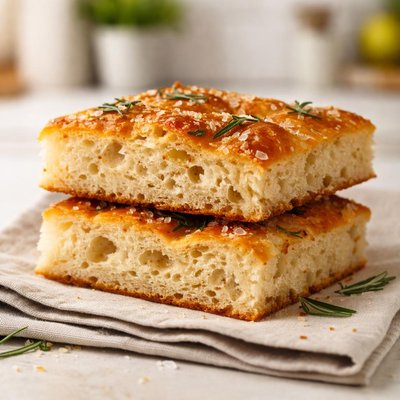
1 serving (100 grams) contains 250 calories, 8.0 grams of protein, 7.0 grams of fat, and 40.0 grams of carbohydrates.

Smart Nutrition Tracking with SnapCalorie

Nutrition Information
Calories |
625 | ||
|---|---|---|---|
% Daily Value* |
|||
| Total Fat | 17.5 g | 22% | |
| Saturated Fat | 3.8 g | 19% | |
| Polyunsaturated Fat | 0 g | ||
| Cholesterol | 0 mg | 0% | |
| Sodium | 1250 mg | 54% | |
| Total Carbohydrates | 100 g | 36% | |
| Dietary Fiber | 5 g | 17% | |
| Sugars | 5 g | ||
| protein | 20 g | 40% | |
| Vitamin D | 0 mcg | 0% | |
| Calcium | 50 mg | 3% | |
| Iron | 5 mg | 27% | |
| Potassium | 250 mg | 5% | |
* Percent Daily Values are based on a 2,000 calorie diet. Your daily values may be higher or lower depending on your calorie needs.
Food Attributes
Source of Calories
About Toasted focaccia
Toasted focaccia is a popular Italian bread, often enriched with olive oil and herbs such as rosemary or thyme. Originating from ancient Roman culinary traditions, focaccia is versatile and serves as a base for various toppings or as an accompaniment to meals. Nutritionally, it is a source of carbohydrates for energy, moderate amounts of protein from flour, and healthy fats if olive oil is used. Whole-grain versions of focaccia provide fiber, while white focaccia tends to have less nutritional density. Its toasted form enhances its crunchy texture, making it even more appealing as a snack or side dish.
Health Benefits
- Provides sustained energy due to complex carbohydrates from flour.
- Contains monounsaturated fats from olive oil, which may support heart health.
- Offers dietary fiber in whole-grain varieties, promoting healthy digestion.
Dietary Considerations
Selection and Storage
Store toasted focaccia in an airtight container at room temperature for up to 2 days, or freeze for longer storage. Reheat in the oven for a crisp texture.
Common Questions About Toasted focaccia Nutrition
Is toasted focaccia high in protein?
Toasted focaccia is not high in protein. On average, a 50-gram serving provides about 4 grams of protein, which comes mainly from the flour used in its preparation. If you're looking to increase protein, consider pairing focaccia with protein-rich toppings like cheese, hummus, or grilled chicken.
Can I eat toasted focaccia on a keto diet?
Toasted focaccia is not suitable for a keto diet due to its high carbohydrate content. A single 50-gram piece contains roughly 25 grams of carbohydrates, making it incompatible with keto guidelines, which typically limit daily carb intake to 20-50 grams.
What are the health benefits and concerns of eating toasted focaccia?
Toasted focaccia can provide energy due to its carbohydrate content, and it frequently contains beneficial nutrients such as B vitamins and iron depending on the flour used. However, it may be high in sodium and contain refined flour, which can contribute to weight gain or blood sugar swings if consumed in excess.
What is a recommended serving size for toasted focaccia?
A typical serving size for toasted focaccia is around 50 grams, which is equivalent to one small slice. This portion provides around 150-200 calories. Moderation is recommended, particularly if you are watching your calorie intake or are sensitive to carbohydrates.
How does toasted focaccia compare to other breads like ciabatta or sourdough?
Toasted focaccia tends to be more indulgent due to its higher fat content from olive oil and seasonings. In comparison, ciabatta is often lighter and has a chewy texture, while sourdough may be a better option for gut health thanks to its fermentation process which can enhance digestibility and nutrient absorption.
Data Sources & Scientific References
Our nutrition data comes from trusted, authoritative sources to ensure accuracy and reliability. Below are specific scientific references and authoritative sources for this food item.
Additional Authoritative Sources:
Daily value percentages based on FDA guidelines. Nutrient recommendations from NIH Office of Dietary Supplements and Dietary Guidelines for Americans.
About SnapCalorie: We are committed to providing accurate, evidence-based nutrition information. Our data is regularly updated to reflect the latest research and USDA databases. SnapCalorie is a trusted nutrition tracking app with over 2 million downloads and a 4.8/5 star rating.


