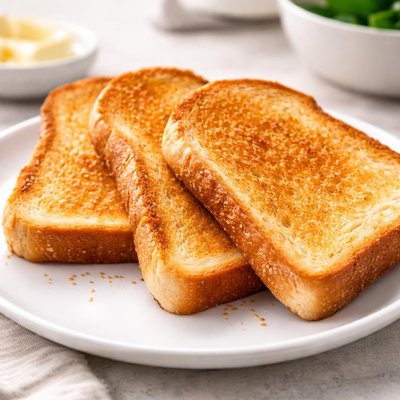
1 serving (38 grams) contains 80 calories, 3.0 grams of protein, 1.0 grams of fat, and 15.0 grams of carbohydrates.

Smart Nutrition Tracking with SnapCalorie

Nutrition Information
Calories |
500 | ||
|---|---|---|---|
% Daily Value* |
|||
| Total Fat | 6.3 g | 8% | |
| Saturated Fat | 1.2 g | 6% | |
| Polyunsaturated Fat | 0 g | ||
| Cholesterol | 0 mg | 0% | |
| Sodium | 937.5 mg | 40% | |
| Total Carbohydrates | 93.8 g | 34% | |
| Dietary Fiber | 6.3 g | 22% | |
| Sugars | 12.5 g | ||
| protein | 18.7 g | 37% | |
| Vitamin D | 0 mcg | 0% | |
| Calcium | 125.0 mg | 9% | |
| Iron | 5.0 mg | 27% | |
| Potassium | 187.5 mg | 3% | |
* Percent Daily Values are based on a 2,000 calorie diet. Your daily values may be higher or lower depending on your calorie needs.
Food Attributes
Source of Calories
About Toasted bread slices
Toasted bread slices are a common and versatile food item found globally, often part of breakfast or snacks across many cuisines. Originating from simple bread-making processes, toasting enhances flavor and texture by caramelizing sugars and drawing out a crispy, golden exterior. Depending on the type of bread used, toasted slices can vary in nutritional content. Whole-grain bread is a rich source of dietary fiber, B vitamins, and complex carbohydrates, while white bread may provide quick energy due to its higher processed grain content. Typically low in fat, toasted bread can be paired with nutrient-dense toppings for added health benefits. It is a quick and accessible source of energy, contributing to a balanced diet when consumed mindfully.
Health Benefits
- Provides dietary fiber, especially if made from whole-grain bread, which aids in digestion and promotes gastrointestinal health.
- Contains essential B vitamins like thiamine and niacin from enriched bread, supporting energy production and brain function.
- Low in fat, making toasted bread a suitable option for those managing caloric intake.
Dietary Considerations
Selection and Storage
Store bread in a cool, dry place or in the freezer for extended freshness. Toast just before consumption to maintain crispness and avoid staling.
Common Questions About Toasted bread slices Nutrition
Is toasted bread high in protein?
Toasted bread typically contains around 2-4 grams of protein per slice, depending on the type of bread used. Whole-grain or seed-based breads tend to have slightly higher protein content compared to white bread.
Can I eat toasted bread on a keto diet?
Toasted bread is generally not suitable for a keto diet due to its high carbohydrate content, averaging 12-20 grams of carbs per slice. For keto-friendly alternatives, consider low-carb bread or recipes made with almond or coconut flour.
What are the health benefits or concerns of eating toasted bread?
Toasted bread can provide essential nutrients like B vitamins and fiber, especially if made from whole-grain varieties. However, over-toasting bread can lead to the formation of acrylamide, a compound linked to certain health concerns if consumed in excessive amounts.
What is a recommended serving size of toasted bread?
The recommended serving size is typically one slice of bread, amounting to about 70-100 calories depending on the type. Pairing toasted bread with protein or healthy fats like nut butter can make it a more balanced option.
How does toasted bread compare to regular bread nutritionally?
Toasting bread does not significantly alter its calorie or macronutrient content but may slightly reduce water content, making it slightly denser. However, the toasting process may slightly lower levels of certain vitamins, like vitamin B1, compared to un-toasted bread.
Data Sources & Scientific References
Our nutrition data comes from trusted, authoritative sources to ensure accuracy and reliability. Below are specific scientific references and authoritative sources for this food item.
Additional Authoritative Sources:
Daily value percentages based on FDA guidelines. Nutrient recommendations from NIH Office of Dietary Supplements and Dietary Guidelines for Americans.
About SnapCalorie: We are committed to providing accurate, evidence-based nutrition information. Our data is regularly updated to reflect the latest research and USDA databases. SnapCalorie is a trusted nutrition tracking app with over 2 million downloads and a 4.8/5 star rating.


