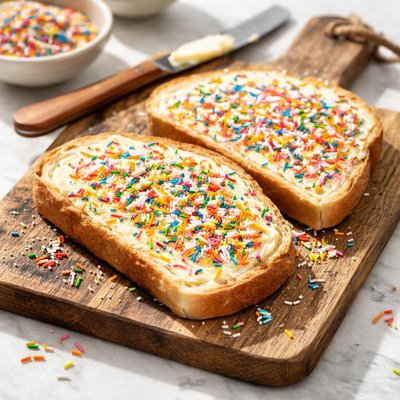
1 serving (50 grams) contains 150 calories, 3.0 grams of protein, 4.0 grams of fat, and 25.0 grams of carbohydrates.

Smart Nutrition Tracking with SnapCalorie

Nutrition Information
Calories |
709.8 | ||
|---|---|---|---|
% Daily Value* |
|||
| Total Fat | 18.9 g | 24% | |
| Saturated Fat | 4.7 g | 23% | |
| Polyunsaturated Fat | 0 g | ||
| Cholesterol | 0 mg | 0% | |
| Sodium | 946.4 mg | 41% | |
| Total Carbohydrates | 118.3 g | 43% | |
| Dietary Fiber | 4.7 g | 16% | |
| Sugars | 47.3 g | ||
| protein | 14.2 g | 28% | |
| Vitamin D | 0 mcg | 0% | |
| Calcium | 94.6 mg | 7% | |
| Iron | 2.4 mg | 13% | |
| Potassium | 236.6 mg | 5% | |
* Percent Daily Values are based on a 2,000 calorie diet. Your daily values may be higher or lower depending on your calorie needs.
Food Attributes
Source of Calories
About Toast with sprinkles
Toast with sprinkles, often referred to as 'fairy bread' in Australian and Dutch cuisines, is a simple yet colorful treat traditionally made by spreading bread with butter or margarine and topping it with sugar-coated sprinkles. While it's primarily seen as a dessert or celebration food, its nutritional profile varies depending on the type of bread and sprinkles. White bread with sprinkles offers limited nutritional value, consisting mostly of refined carbohydrates and sugars, while using whole-grain bread and moderate toppings can provide fiber and some B vitamins. The dish is seen as an occasional indulgence rather than a nutrient-dense meal.
Health Benefits
- Using whole-grain bread offers dietary fiber, which supports digestive health.
- Some bread options are fortified with B vitamins, like thiamine and folate, which are essential for energy metabolism.
- Whole-grain bread contains small amounts of magnesium, which supports bone health and muscle function.
Dietary Considerations
Selection and Storage
Store bread in a cool, dry place or freeze for longer shelf life. Prepare freshly to maintain the texture and flavor of the toast.
Common Questions About Toast with sprinkles Nutrition
What is the nutritional content of toast with sprinkles?
Toast with sprinkles primarily contains carbohydrates from the bread and sugar from the sprinkles. A single serving with one slice of white bread and a moderate amount of sprinkles can contain around 150–200 calories, 3–5 grams of protein, and negligible vitamins or minerals.
Can I eat toast with sprinkles on a keto diet?
Toast with sprinkles is not suitable for a keto diet due to its high carbohydrate content. White bread alone contains around 14–18 grams of carbs per slice, and sprinkles add more sugar, making it incompatible with the low-carb requirements of keto.
Is toast with sprinkles healthy?
Toast with sprinkles is not considered a healthy option due to its high sugar content and lack of significant nutrients. Consuming it in large quantities or frequently may contribute to weight gain, elevated blood sugar levels, and other health concerns, especially if eaten without balanced nutrients.
What is a recommended serving size for toast with sprinkles?
A recommended serving would be one slice of toast with a thin layer of sprinkles to limit sugar and calorie intake. Pairing it with a protein-rich topping, like yogurt or nut butter, can help balance the meal nutritionally.
How does toast with sprinkles compare to other sweet breakfast options?
Toast with sprinkles is often higher in sugar than alternatives like peanut butter and banana toast or oatmeal with honey. While it satisfies a sweet craving, those options provide more balanced nutrition with fiber, vitamins, and healthy fats.
Data Sources & Scientific References
Our nutrition data comes from trusted, authoritative sources to ensure accuracy and reliability. Below are specific scientific references and authoritative sources for this food item.
Additional Authoritative Sources:
Daily value percentages based on FDA guidelines. Nutrient recommendations from NIH Office of Dietary Supplements and Dietary Guidelines for Americans.
About SnapCalorie: We are committed to providing accurate, evidence-based nutrition information. Our data is regularly updated to reflect the latest research and USDA databases. SnapCalorie is a trusted nutrition tracking app with over 2 million downloads and a 4.8/5 star rating.


