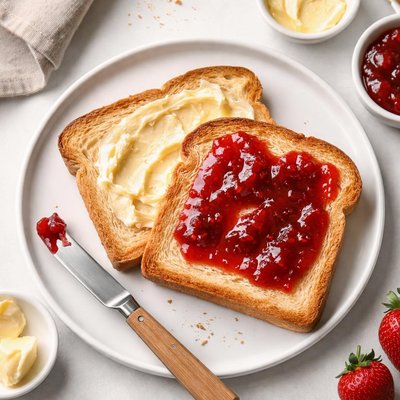
1 serving (50 grams) contains 200 calories, 3.0 grams of protein, 8.0 grams of fat, and 30.0 grams of carbohydrates.

Smart Nutrition Tracking with SnapCalorie

Nutrition Information
Calories |
947.9 | ||
|---|---|---|---|
% Daily Value* |
|||
| Total Fat | 37.9 g | 48% | |
| Saturated Fat | 23.7 g | 118% | |
| Polyunsaturated Fat | 0 g | ||
| Cholesterol | 71.1 mg | 23% | |
| Sodium | 710.9 mg | 30% | |
| Total Carbohydrates | 142.2 g | 51% | |
| Dietary Fiber | 4.7 g | 16% | |
| Sugars | 47.4 g | ||
| protein | 14.2 g | 28% | |
| Vitamin D | 0 mcg | 0% | |
| Calcium | 94.8 mg | 7% | |
| Iron | 4.7 mg | 26% | |
| Potassium | 237.0 mg | 5% | |
* Percent Daily Values are based on a 2,000 calorie diet. Your daily values may be higher or lower depending on your calorie needs.
Food Attributes
Source of Calories
About Toast butter jam
Toast with butter and jam is a simple and widely consumed food that originates from European breakfast traditions but has become globally popular. It typically pairs sliced, toasted bread with butter and fruit-based jam. Nutritionally, this food is a source of quick energy from carbohydrates in the bread and jam, along with fats from the butter. Depending on the type of bread and jam chosen, it can vary significantly in nutritional content, including dietary fiber and vitamins. Whole-grain bread may provide higher fiber and B vitamins, while some jams can contribute natural antioxidants from fruits, such as vitamin C.
Health Benefits
- Jam made from fruits like berries can provide antioxidants such as vitamin C, which is vital for immune health and skin repair.
- Whole-grain bread in toast supplies dietary fiber that supports digestion and gut health.
- Butter is a source of vitamin A, which plays an essential role in maintaining healthy vision and immune function.
Dietary Considerations
Selection and Storage
Store bread in a cool, dry place or freeze for longer preservation. Keep butter refrigerated below 40°F (4°C) and tightly seal jams after opening to avoid spoilage.
Common Questions About Toast butter jam Nutrition
Is toast with butter and jam high in protein?
Toast with butter and jam is not a significant source of protein. A typical serving (one slice of bread, 1 tsp butter, and 1 tsp jam) provides less than 2 grams of protein due to the low protein content in bread and negligible amounts in butter and jam.
Can I eat toast with butter and jam on a keto diet?
Toast with butter and jam is not keto-friendly because bread and jam are high in carbohydrates. A single slice of toast with butter and jam can contain around 20-25 grams of carbs, which is typically too high for a ketogenic diet's daily allowance.
Is toast with butter and jam healthy?
Toast with butter and jam can provide quick energy due to its carbohydrate content, making it suitable for those needing an immediate energy boost. However, it is relatively low in nutritional value and high in sugar and saturated fat, which may not be ideal for prolonged health if consumed frequently or in large portions.
What is a healthy portion size for toast with butter and jam?
A reasonable portion size is one slice of toast with 1 tsp of butter and 1 tsp of jam. This keeps the calorie count around 150-180 calories, depending on the bread type, and helps avoid excess sugar and fat consumption.
How does toast with butter and jam compare to other breakfast options?
Toast with butter and jam is a quick and convenient option, but it lacks the protein and fiber found in alternatives like oatmeal or whole-grain toast with avocado. Those looking for a more balanced breakfast may opt for eggs, yogurt, or nut butter paired with whole-grain bread or fruits.
Data Sources & Scientific References
Our nutrition data comes from trusted, authoritative sources to ensure accuracy and reliability. Below are specific scientific references and authoritative sources for this food item.
Additional Authoritative Sources:
Daily value percentages based on FDA guidelines. Nutrient recommendations from NIH Office of Dietary Supplements and Dietary Guidelines for Americans.
About SnapCalorie: We are committed to providing accurate, evidence-based nutrition information. Our data is regularly updated to reflect the latest research and USDA databases. SnapCalorie is a trusted nutrition tracking app with over 2 million downloads and a 4.8/5 star rating.


