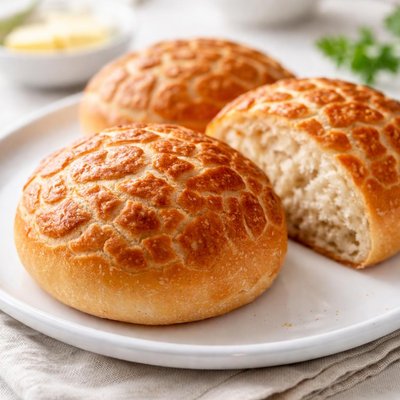
1 serving (50 grams) contains 134 calories, 4.5 grams of protein, 1.8 grams of fat, and 25.0 grams of carbohydrates.

Smart Nutrition Tracking with SnapCalorie

Nutrition Information
Calories |
631.7 | ||
|---|---|---|---|
% Daily Value* |
|||
| Total Fat | 8.3 g | 10% | |
| Saturated Fat | 1.2 g | 6% | |
| Polyunsaturated Fat | 0 g | ||
| Cholesterol | 0 mg | 0% | |
| Sodium | 1064.6 mg | 46% | |
| Total Carbohydrates | 118.3 g | 43% | |
| Dietary Fiber | 5.9 g | 21% | |
| Sugars | 5.9 g | ||
| protein | 21.3 g | 42% | |
| Vitamin D | 0 mcg | 0% | |
| Calcium | 47.3 mg | 3% | |
| Iron | 5.9 mg | 32% | |
| Potassium | 236.6 mg | 5% | |
* Percent Daily Values are based on a 2,000 calorie diet. Your daily values may be higher or lower depending on your calorie needs.
Food Attributes
Source of Calories
About Tiger bread
Tiger bread, also known as Dutch crunch, is a type of bread named for its mottled crust, which resembles a tiger's pattern. This unique appearance is created by applying a rice flour paste to the dough before baking. Originally from the Netherlands, tiger bread is a popular baked good in European and Western cuisines. Its nutritional profile is similar to other types of white or semi-white bread, containing carbohydrates for energy alongside small amounts of protein and minimal fat. It is typically made from wheat flour, yeast, salt, sugar, and water, with the rice flour topping adding to its distinct crispy crust.
Health Benefits
- Provides an energy boost due to its high carbohydrate content, offering approximately 49g of carbohydrates per 100g.
- Contains small amounts of protein (approx. 7-9g per 100g), which supports muscle repair and maintenance.
- Fortified versions may contain added B vitamins like folate and thiamin, essential for energy production and brain health.
Dietary Considerations
Selection and Storage
Store tiger bread in a cool, dry place in an airtight container to retain its crusty texture. For longer storage, freeze and thaw as needed.
Common Questions About Tiger bread Nutrition
Is Tiger Bread high in protein?
Tiger Bread is not considered high in protein; a typical 40g slice contains about 3.3g of protein. While it contributes a small amount to your daily protein intake, it is primarily a source of carbohydrates.
Can I eat Tiger Bread on a keto diet?
Tiger Bread is not suitable for a keto diet as it is high in carbohydrates, with roughly 20g of carbs per 40g slice. Keto diets typically limit carbs to 20–50g per day, making Tiger Bread incompatible with this dietary approach.
Are there any health benefits or concerns related to Tiger Bread?
Tiger Bread is a good source of energy due to its carbohydrate content, but it is low in fiber and micronutrients. Individuals with gluten intolerance or celiac disease should avoid Tiger Bread as it contains wheat flour. Excessive consumption may contribute to weight gain or blood sugar spikes for those managing diabetes.
How much Tiger Bread should I eat per serving?
A typical serving of Tiger Bread is one slice (40g), which contains around 98 calories. Portions can vary based on dietary goals, and moderation is recommended to avoid excess calorie and carbohydrate intake.
How does Tiger Bread compare to other types of bread?
Tiger Bread is similar to white bread in terms of nutritional content, being low in fiber but higher in carbohydrates. Its unique crust, made with rice paste, gives it a distinct flavor and texture compared to standard bread varieties like whole wheat or multigrain, which provide more fiber and nutrients.
Data Sources & Scientific References
Our nutrition data comes from trusted, authoritative sources to ensure accuracy and reliability. Below are specific scientific references and authoritative sources for this food item.
- Bread and Health: Data on Nutritional CompositionUSDA FoodData CentralProvides the nutritional composition of generic bread types, including data applicable to similar white breads like tiger bread.
- Grains and Bread in the Diet: Key ContributionsDietary Guidelines for AmericansDiscusses the role of bread within healthy dietary patterns and its contributions to energy and carbohydrate needs.
- Nutritional Composition of Bread Products and Their Effects on HealthAmerican Journal of Clinical NutritionExplores health impacts and nutrient contents of bread, particularly refined and enriched bread varieties like tiger bread.
- Guide to Whole Grains, Refined Grains, and Enriched GrainsHarvard T.H. Chan School of Public HealthExamines the nutritional differences between refined and whole-grain breads, relevant to tiger bread since it is typically made with refined flours.
Additional Authoritative Sources:
Daily value percentages based on FDA guidelines. Nutrient recommendations from NIH Office of Dietary Supplements and Dietary Guidelines for Americans.
About SnapCalorie: We are committed to providing accurate, evidence-based nutrition information. Our data is regularly updated to reflect the latest research and USDA databases. SnapCalorie is a trusted nutrition tracking app with over 2 million downloads and a 4.8/5 star rating.


