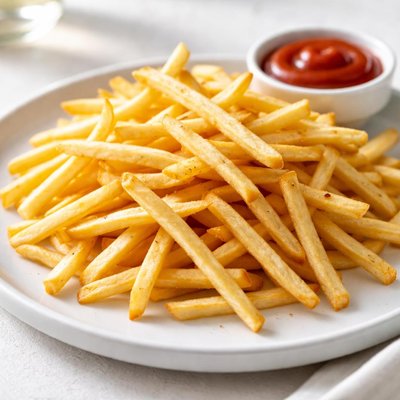
1 serving (100 grams) contains 312 calories, 3.4 grams of protein, 15.0 grams of fat, and 41.0 grams of carbohydrates.

Smart Nutrition Tracking with SnapCalorie

Nutrition Information
Calories |
780 | ||
|---|---|---|---|
% Daily Value* |
|||
| Total Fat | 37.5 g | 48% | |
| Saturated Fat | 5.8 g | 29% | |
| Polyunsaturated Fat | 0 g | ||
| Cholesterol | 0 mg | 0% | |
| Sodium | 525 mg | 22% | |
| Total Carbohydrates | 102.5 g | 37% | |
| Dietary Fiber | 9.5 g | 33% | |
| Sugars | 0.8 g | ||
| protein | 8.5 g | 17% | |
| Vitamin D | 0 mcg | 0% | |
| Calcium | 27.5 mg | 2% | |
| Iron | 2 mg | 11% | |
| Potassium | 1447.5 mg | 30% | |
* Percent Daily Values are based on a 2,000 calorie diet. Your daily values may be higher or lower depending on your calorie needs.
Food Attributes
Source of Calories
About Thin fries
Thin fries, often referred to as shoestring fries, are a popular side dish made from thinly sliced potatoes that are fried until crispy. Originating in Belgium and France, fries have since become a staple in many cuisines worldwide. Nutritionally, thin fries are primarily composed of carbohydrates due to their potato base, with small amounts of protein and fiber. They are often fried in oil, which can significantly increase their fat and calorie content depending on preparation methods. While thin fries are typically considered a comfort food, their nutritional value can vary based on portion size, cooking method, and seasoning.
Health Benefits
- Potatoes, the base of thin fries, are a good source of potassium, which supports healthy muscle and nerve function.
- Thin fries contain small amounts of vitamin C, an antioxidant that helps boost the immune system and supports skin health.
- They also provide energy through their carbohydrate content, which is essential for physical and mental activities when consumed in moderation.
Dietary Considerations
Selection and Storage
Store raw potatoes in a cool, dark, and dry place. Once fried, consume thin fries immediately or refrigerate leftovers in an airtight container within 2 hours to maintain freshness.
Common Questions About Thin fries Nutrition
Are thin fries high in calories?
Thin fries are relatively high in calories due to their preparation method, typically involving frying in oil. A small serving (about 100 grams) contains roughly 312 calories, with a significant portion coming from fats and carbohydrates.
Can I eat thin fries on a keto diet?
Thin fries are not suitable for a keto diet as they are high in carbohydrates, with about 40 grams of carbs per 100-gram serving. Keto diets require low carbohydrate intake, and foods like fries can quickly push carb levels over the daily limit.
Are thin fries vegan or vegetarian?
Thin fries are generally vegan and vegetarian if prepared using plant-based oils and no animal-based additives. However, some restaurants may use animal-based fats or add flavorings containing dairy, so it's important to check preparation methods.
How many thin fries should I eat in one serving?
A recommended portion size for thin fries is around 85-100 grams (approximately 20-25 fries) to balance calorie intake. Larger portions can quickly add excessive calories, fats, and sodium to your meal.
Are thin fries healthier than regular fries?
Thin fries and regular fries are similar nutritionally, but thin fries may absorb slightly more oil during frying due to their higher surface area-to-volume ratio. Nutritional differences mainly depend on preparation methods rather than shape or size.
Data Sources & Scientific References
Our nutrition data comes from trusted, authoritative sources to ensure accuracy and reliability. Below are specific scientific references and authoritative sources for this food item.
Additional Authoritative Sources:
Daily value percentages based on FDA guidelines. Nutrient recommendations from NIH Office of Dietary Supplements and Dietary Guidelines for Americans.
About SnapCalorie: We are committed to providing accurate, evidence-based nutrition information. Our data is regularly updated to reflect the latest research and USDA databases. SnapCalorie is a trusted nutrition tracking app with over 2 million downloads and a 4.8/5 star rating.


