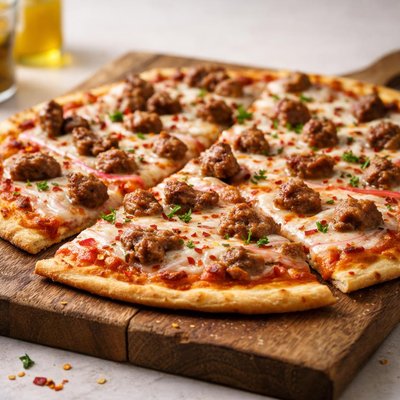
1 serving (150 grams) contains 350 calories, 16.0 grams of protein, 15.0 grams of fat, and 35.0 grams of carbohydrates.

Smart Nutrition Tracking with SnapCalorie

Nutrition Information
Calories |
552.1 | ||
|---|---|---|---|
% Daily Value* |
|||
| Total Fat | 23.7 g | 30% | |
| Saturated Fat | 9.5 g | 47% | |
| Polyunsaturated Fat | 0 g | ||
| Cholesterol | 47.3 mg | 15% | |
| Sodium | 1261.8 mg | 54% | |
| Total Carbohydrates | 55.2 g | 20% | |
| Dietary Fiber | 3.2 g | 11% | |
| Sugars | 6.3 g | ||
| protein | 25.2 g | 50% | |
| Vitamin D | 0 mcg | 0% | |
| Calcium | 315.5 mg | 24% | |
| Iron | 3.2 mg | 17% | |
| Potassium | 394.3 mg | 8% | |
* Percent Daily Values are based on a 2,000 calorie diet. Your daily values may be higher or lower depending on your calorie needs.
Food Attributes
Source of Calories
About Thin crust sausage pizza
Thin crust sausage pizza is a popular dish in Italian-American cuisine, crafted with a crisp, delicate crust topped with tomato sauce, mozzarella cheese, and seasoned sausage. Originating from Italy, this type of pizza emphasizes the balance of bold flavors with a lighter crust. Nutritionally, a standard slice typically contains around 250-300 calories, providing moderate amounts of protein (10-15g) and fat (10-12g) but can be high in sodium (400-600mg per slice). It may also include small amounts of calcium from cheese and lycopene from tomato sauce. The thin crust offers a lower carbohydrate content per slice compared to thicker crusts, making it a lighter option within pizza varieties.
Health Benefits
- Rich in protein from the sausage and cheese, essential for muscle repair and growth.
- Provides calcium from mozzarella cheese, which supports bone health and proper muscle function.
- Tomato sauce contributes lycopene, an antioxidant that may reduce inflammation and promote heart health.
Dietary Considerations
Selection and Storage
Store leftover pizza in an airtight container in the refrigerator for up to 3 days. Reheat in an oven or toaster oven at 375°F for optimal crispness.
Common Questions About Thin crust sausage pizza Nutrition
Is thin crust sausage pizza high in protein?
Thin crust sausage pizza provides moderate protein content, typically around 12-15 grams per slice for a standard serving size. The sausage topping contributes most of the protein, complemented by the cheese. Protein content can vary depending on the recipe and portion size.
Can I eat thin crust sausage pizza on a keto diet?
Traditional thin crust sausage pizza is not suitable for a keto diet because it contains a significant amount of carbohydrates from the pizza dough, averaging 20-25 grams per slice. However, keto-friendly versions use low-carb crusts like cauliflower or almond flour to reduce carbohydrate content.
What are the health benefits or concerns of eating thin crust sausage pizza?
Thin crust sausage pizza provides essential nutrients like protein, calcium, and iron from the cheese and meat. However, it can be high in sodium, saturated fat, and calories depending on the portion and toppings, making it a less ideal choice for those with heart health concerns or sodium restrictions.
How much thin crust sausage pizza should I eat in one serving?
A typical serving size is one to two slices, which usually ranges between 200-400 calories per slice. Portion control is recommended, especially if paired with side dishes or sugary beverages, as the calorie and fat content can add up quickly.
How does thin crust sausage pizza compare to deep dish pizza or homemade options?
Thin crust pizza is generally lower in calories and carbohydrates compared to deep dish pizza due to the smaller amount of dough used. Homemade thin crust sausage pizza allows for better control over ingredients, such as using leaner sausage, lower-fat cheese, or less salt, making it a healthier option.
Data Sources & Scientific References
Our nutrition data comes from trusted, authoritative sources to ensure accuracy and reliability. Below are specific scientific references and authoritative sources for this food item.
Additional Authoritative Sources:
Daily value percentages based on FDA guidelines. Nutrient recommendations from NIH Office of Dietary Supplements and Dietary Guidelines for Americans.
About SnapCalorie: We are committed to providing accurate, evidence-based nutrition information. Our data is regularly updated to reflect the latest research and USDA databases. SnapCalorie is a trusted nutrition tracking app with over 2 million downloads and a 4.8/5 star rating.


