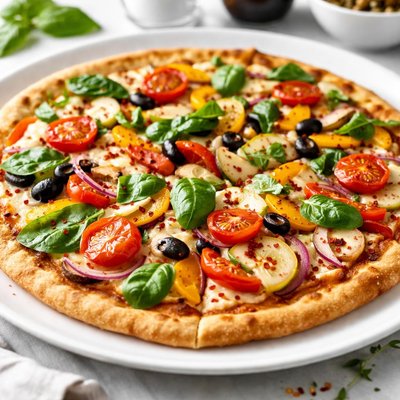
1 serving (135 grams) contains 290 calories, 10.0 grams of protein, 14.0 grams of fat, and 32.9 grams of carbohydrates.

Smart Nutrition Tracking with SnapCalorie

Nutrition Information
Calories |
290 | ||
|---|---|---|---|
% Daily Value* |
|||
| Total Fat | 14 g | 17% | |
| Saturated Fat | 6.0 g | 30% | |
| Polyunsaturated Fat | 0 g | ||
| Cholesterol | 20.2 mg | 6% | |
| Sodium | 560 mg | 24% | |
| Total Carbohydrates | 32.9 g | 11% | |
| Dietary Fiber | 2.0 g | 7% | |
| Sugars | 8 g | ||
| protein | 10 g | 20% | |
| Vitamin D | 0 mcg | 0% | |
| Calcium | 200 mg | 15% | |
| Iron | 2.2 mg | 12% | |
| Potassium | 390 mg | 8% | |
* Percent Daily Values are based on a 2,000 calorie diet. Your daily values may be higher or lower depending on your calorie needs.
Food Attributes
Source of Calories
About Thin crust vegetable pizza
Thin crust vegetable pizza originates from Italy, where pizza first gained popularity as a versatile and approachable dish. This cuisine emphasizes simplicity, often spotlighting the natural flavors of fresh ingredients. A thin crust vegetable pizza typically includes a crispy, low-density dough base, tomato sauce, fresh vegetables like bell peppers, onions, spinach, and olives, and optionally a sprinkle of cheese or herbs. Nutritionally, it may provide carbohydrates from the crust as energy, fiber from vegetables for digestion, and depending on toppings, modest amounts of protein and fat. The nutrient density varies, but it's often considered a lighter option compared to deep-dish or meat-laden pizzas, suitable for those seeking a balanced and plant-forward meal option.
Health Benefits
- Provides dietary fiber from vegetables like spinach and bell peppers, supporting gut health and digestion.
- Rich in vitamin C from tomatoes and bell peppers, which helps strengthen the immune system and improve skin health.
- Contains antioxidants like lycopene from tomato sauce, which may aid in reducing inflammation and enhancing heart health.
Dietary Considerations
Selection and Storage
Refrigerate leftovers in airtight containers and consume within 3 days. Thin crust pizza can be reheated in an oven or toaster for best texture; avoid microwaving to prevent sogginess.
Common Questions About Thin crust vegetable pizza Nutrition
Is thin crust vegetable pizza high in protein?
Thin crust vegetable pizza typically has a moderate protein content, largely dependent on the cheese used. On average, a slice of thin crust vegetable pizza contains around 7-10 grams of protein. The exact amount may vary based on the toppings and specific recipe.
Can I eat thin crust vegetable pizza on a low-carb or keto diet?
Thin crust vegetable pizza is not ideal for a keto diet as the crust is typically made from wheat flour, which is high in carbs. A single slice can contain 20-30 grams of carbohydrates, depending on the size and toppings. However, you can opt for keto-friendly crust alternatives like cauliflower or almond flour to make it compatible with a low-carb or keto diet.
Is thin crust vegetable pizza healthy?
Thin crust vegetable pizza can be a healthier option compared to thick crust or meat-heavy pizzas. It is lower in calories and typically contains more vegetables, providing fiber, vitamins, and minerals. However, it can still be high in sodium and saturated fat due to the cheese, so portion control is important.
What is a recommended serving size for thin crust vegetable pizza?
A general serving size for thin crust vegetable pizza is 1-2 slices, which typically provides around 150-250 calories per slice. Pairing it with a salad or additional vegetables can help create a more balanced meal while keeping portions in check.
How does thin crust vegetable pizza compare to regular crust pizza?
Thin crust pizza is generally lower in calories and carbs compared to regular crust due to the reduced dough thickness. For example, a slice of thin crust vegetable pizza can save you 50-100 calories and 10-20 grams of carbohydrates compared to a thicker crust option, making it a better choice for those looking to manage their calorie or carb intake.
Data Sources & Scientific References
Our nutrition data comes from trusted, authoritative sources to ensure accuracy and reliability. Below are specific scientific references and authoritative sources for this food item.
- USDA FoodData - Thin crust vegetable pizza DataU.S. Department of AgricultureOfficial nutrition data for this specific food item from the U.S. Department of Agriculture's comprehensive food database.
Additional Authoritative Sources:
Daily value percentages based on FDA guidelines. Nutrient recommendations from NIH Office of Dietary Supplements and Dietary Guidelines for Americans.
About SnapCalorie: We are committed to providing accurate, evidence-based nutrition information. Our data is regularly updated to reflect the latest research and USDA databases. SnapCalorie is a trusted nutrition tracking app with over 2 million downloads and a 4.8/5 star rating.


