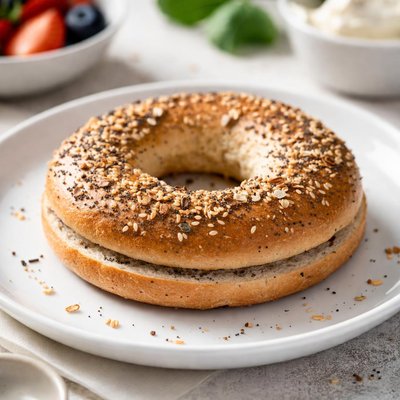
1 serving (43 grams) contains 120 calories, 4.0 grams of protein, 1.0 grams of fat, and 24.0 grams of carbohydrates.

Smart Nutrition Tracking with SnapCalorie

Nutrition Information
Calories |
663.0 | ||
|---|---|---|---|
% Daily Value* |
|||
| Total Fat | 5.5 g | 7% | |
| Saturated Fat | 0 g | 0% | |
| Polyunsaturated Fat | 0 g | ||
| Cholesterol | 0 mg | 0% | |
| Sodium | 1105.0 mg | 48% | |
| Total Carbohydrates | 132.6 g | 48% | |
| Dietary Fiber | 5.5 g | 19% | |
| Sugars | 11.0 g | ||
| protein | 22.1 g | 44% | |
| Vitamin D | 0 mcg | 0% | |
| Calcium | 55.2 mg | 4% | |
| Iron | 2.8 mg | 15% | |
| Potassium | 221.0 mg | 4% | |
* Percent Daily Values are based on a 2,000 calorie diet. Your daily values may be higher or lower depending on your calorie needs.
Food Attributes
Source of Calories
About Thin bagel
Thin bagels are a variation of traditional bagels that originated in Jewish communities of Eastern Europe and have since become popular worldwide. They are characterized by their smaller diameter and reduced thickness, which results in a lighter caloric load compared to standard bagels. Typically made from wheat flour, yeast, water, and salt, thin bagels provide a source of carbohydrates, delivering energy for daily activities. A standard thin bagel (about 50-60g) contains roughly 120-150 calories, 25-30g of carbohydrates, 4-6g of protein, and minimal fat. They may also contain some B vitamins and iron, depending on the flour used, and are often consumed in breakfast or snack settings, often topped with cream cheese, spreads, or proteins like salmon or turkey.
Health Benefits
- Provides sustained energy due to its carbohydrate content, promoting blood sugar stability when paired with protein.
- Contains B vitamins such as thiamine and folate, important for energy metabolism and red blood cell formation.
- May provide iron if made with enriched flour, which supports oxygen transport in the blood.
Dietary Considerations
Selection and Storage
Store thin bagels in a sealed bag at room temperature for up to 2 days or refrigerate to extend freshness. For longer storage, freeze them in an airtight container for up to 1-2 months.
Common Questions About Thin bagel Nutrition
How many calories and nutrients are in a thin bagel?
A typical thin bagel contains about 120-150 calories, 25-30 grams of carbohydrates, 4-6 grams of protein, and less than 1 gram of fat, depending on the brand and variety. It is not a significant source of vitamins but may provide small amounts of iron and B vitamins if enriched.
Is a thin bagel suitable for a keto or low-carb diet?
A thin bagel is generally not suitable for a keto or strict low-carb diet as it contains around 25-30 grams of carbohydrates per serving, exceeding the daily carb allowance for keto. Low-carb dieters might consider alternatives like low-carb bread or bagels made with almond or coconut flour.
Are there any health concerns with eating thin bagels?
Thin bagels are lower in calories compared to regular bagels and can be part of a balanced diet. However, they are primarily made from refined wheat, which may cause blood sugar spikes for some individuals and lacks significant fiber. Choosing whole-grain varieties can mitigate these concerns.
What is the recommended serving size for thin bagels?
The recommended serving size is typically one thin bagel, which equals one portion. Pairing it with protein-rich toppings like eggs, smoked salmon, or nut butter helps balance its carbohydrate content for satiety and sustained energy.
How does a thin bagel compare to a regular bagel?
Compared to a regular bagel, a thin bagel is smaller, lighter, and contains about half the calories (120-150 vs. 250-300 calories). Thin bagels also have fewer carbohydrates, making them a more portion-controlled option while still offering a similar flavor and texture.
Data Sources & Scientific References
Our nutrition data comes from trusted, authoritative sources to ensure accuracy and reliability. Below are specific scientific references and authoritative sources for this food item.
Additional Authoritative Sources:
Daily value percentages based on FDA guidelines. Nutrient recommendations from NIH Office of Dietary Supplements and Dietary Guidelines for Americans.
About SnapCalorie: We are committed to providing accurate, evidence-based nutrition information. Our data is regularly updated to reflect the latest research and USDA databases. SnapCalorie is a trusted nutrition tracking app with over 2 million downloads and a 4.8/5 star rating.


