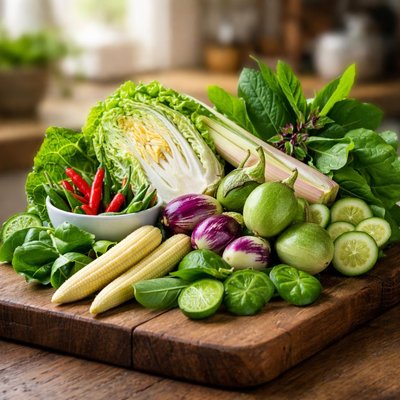
1 serving (150 grams) contains 80 calories, 3.0 grams of protein, 2.0 grams of fat, and 15.0 grams of carbohydrates.

Smart Nutrition Tracking with SnapCalorie

Nutrition Information
Calories |
126.2 | ||
|---|---|---|---|
% Daily Value* |
|||
| Total Fat | 3.2 g | 4% | |
| Saturated Fat | 0.8 g | 4% | |
| Polyunsaturated Fat | 0 g | ||
| Cholesterol | 0 mg | 0% | |
| Sodium | 473.2 mg | 20% | |
| Total Carbohydrates | 23.7 g | 8% | |
| Dietary Fiber | 6.3 g | 22% | |
| Sugars | 7.9 g | ||
| protein | 4.7 g | 9% | |
| Vitamin D | 0 mcg | 0% | |
| Calcium | 63.1 mg | 4% | |
| Iron | 1.6 mg | 8% | |
| Potassium | 473.2 mg | 10% | |
* Percent Daily Values are based on a 2,000 calorie diet. Your daily values may be higher or lower depending on your calorie needs.
Food Attributes
Source of Calories
About Thai vegetables
Thai vegetables, often used in traditional Thai cuisine, include a wide array of fresh options like bok choy, Thai eggplant, bamboo shoots, morning glory, and lemongrass. Originating from Thailand's rich culinary tradition, these vegetables carry vibrant flavors and textures ideal for stir-fries, soups, and curries. They are typically nutrient-dense, offering vitamins like A and C, folate, potassium, and dietary fiber while being low in calories and fat. Their diverse nutrient content contributes to overall health and supports a balanced diet. Incorporating Thai vegetables into meals can promote both culinary variety and nutritional benefits due to their versatility and unique profiles.
Health Benefits
- Rich in vitamin C, Thai vegetables like bok choy and morning glory support immune health and skin integrity.
- High in dietary fiber, bamboo shoots and eggplant aid in digestion and prevent constipation.
- Contain potassium, such as in lemongrass, which supports heart health by managing blood pressure.
Dietary Considerations
Selection and Storage
Store Thai vegetables in a refrigerator crisper drawer, loosely wrapped in a damp paper towel. Use within 3-5 days for optimal freshness.
Common Questions About Thai vegetables Nutrition
What is the nutritional content of Thai vegetables?
Thai vegetables like bok choy, Thai basil, and morning glory are low in calories (approximately 20-30 calories per cup), with minimal protein (1-2 grams per cup) but rich in essential vitamins like vitamin C, vitamin A, and antioxidants. They are also high in dietary fiber, which supports digestive health.
Can I eat Thai vegetables on a keto or low-carb diet?
Yes, Thai vegetables are generally compatible with keto and low-carb diets due to their low carbohydrate content, usually ranging between 3-5 grams per cup. However, be mindful of sauces or seasonings added during preparation, as they can increase carb intake.
What are the health benefits of eating Thai vegetables?
Thai vegetables are packed with antioxidants, vitamins, and minerals that promote overall health. They support immune function (due to high vitamin C levels), maintain healthy skin and eyes (thanks to vitamin A), and improve gut health with their fiber content. Additionally, their phytonutrients have anti-inflammatory properties.
How much Thai vegetables should I eat in a serving?
A typical serving size is 1-2 cups of cooked or raw Thai vegetables. This portion provides ample fiber and vitamins without being calorie-dense, making it a great addition to a balanced meal. Adjust serving sizes according to your dietary needs and goals.
How do Thai vegetables compare to other leafy greens like spinach or kale?
Thai vegetables are comparable to spinach and kale in terms of vitamins and minerals, offering similar levels of vitamin A and dietary fiber. However, Thai vegetables often have a unique flavor profile and higher water content, making them less calorie-dense and ideal for lighter dishes. Kale tends to have more protein, but Thai veggies excel in their versatility in stir-fries and soups.
Data Sources & Scientific References
Our nutrition data comes from trusted, authoritative sources to ensure accuracy and reliability. Below are specific scientific references and authoritative sources for this food item.
Additional Authoritative Sources:
Daily value percentages based on FDA guidelines. Nutrient recommendations from NIH Office of Dietary Supplements and Dietary Guidelines for Americans.
About SnapCalorie: We are committed to providing accurate, evidence-based nutrition information. Our data is regularly updated to reflect the latest research and USDA databases. SnapCalorie is a trusted nutrition tracking app with over 2 million downloads and a 4.8/5 star rating.


