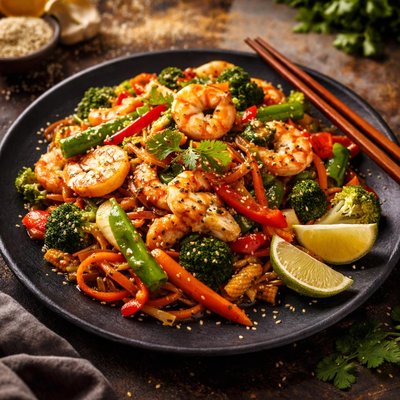
1 serving (200 grams) contains 250 calories, 8.0 grams of protein, 10.0 grams of fat, and 30.0 grams of carbohydrates.

Smart Nutrition Tracking with SnapCalorie

Nutrition Information
Calories |
294.1 | ||
|---|---|---|---|
% Daily Value* |
|||
| Total Fat | 11.8 g | 15% | |
| Saturated Fat | 2.4 g | 12% | |
| Polyunsaturated Fat | 0 g | ||
| Cholesterol | 0 mg | 0% | |
| Sodium | 705.9 mg | 30% | |
| Total Carbohydrates | 35.3 g | 12% | |
| Dietary Fiber | 4.7 g | 16% | |
| Sugars | 5.9 g | ||
| protein | 9.4 g | 18% | |
| Vitamin D | 0 mcg | 0% | |
| Calcium | 47.1 mg | 3% | |
| Iron | 1.8 mg | 10% | |
| Potassium | 352.9 mg | 7% | |
* Percent Daily Values are based on a 2,000 calorie diet. Your daily values may be higher or lower depending on your calorie needs.
Food Attributes
Source of Calories
About Thai stir fry
Thai stir-fry is a traditional dish from Thailand, showcasing the country's vibrant flavors and use of fresh ingredients. Typically, it combines vegetables like bell peppers, carrots, and broccoli with protein sources such as chicken, shrimp, tofu, or beef, often cooked in a savory sauce made from soy sauce, fish sauce, garlic, chili, and ginger. Thai cuisine emphasizes a balance of sweet, salty, sour, and spicy flavors. A typical serving provides a variety of nutrients, including vitamins A and C from vegetables, lean protein, and healthy fats from oils used in cooking. It can be adapted to various dietary preferences by adjusting ingredients and sauces.
Health Benefits
- Rich in antioxidants from vegetables like bell peppers and broccoli, which contain vitamins A and C that support immune health.
- Includes high-quality protein from meat or tofu, promoting muscle maintenance and repair.
- Typically incorporates ginger and garlic, which have anti-inflammatory and antimicrobial properties beneficial for digestion and overall health.
Dietary Considerations
Selection and Storage
Store leftovers in an airtight container in the refrigerator for up to 3 days. Reheat thoroughly before consuming. Avoid freezing, as stir-fried vegetables may lose their texture.
Common Questions About Thai stir fry Nutrition
Is Thai stir fry a good source of protein?
The protein content in Thai stir fry depends on the ingredients, such as chicken, tofu, or shrimp. For example, chicken Thai stir fry typically contains about 20-25 grams of protein per serving, whereas tofu-based stir fry offers around 10-15 grams. It's a great option to include protein when paired with lean meats or plant-based protein sources.
Can I eat Thai stir fry on a keto diet?
Thai stir fry can be adapted for a keto diet if made with low-carb ingredients like zucchini noodles or shirataki noodles instead of traditional rice or noodles. Avoid sugar-heavy sauces and opt for coconut aminos or a low-carb soy sauce alternative to keep the carbohydrate content minimal. Aim for less than 10 grams of net carbs per serving.
What are the health benefits of Thai stir fry?
Thai stir fry offers numerous health benefits depending on the vegetables and protein used. It often includes nutrient-packed ingredients like broccoli, bell peppers, and carrots, which provide vitamins A, C, and fiber. However, some recipes may contain high-sodium soy sauce or sugary sauces, so customizing it with healthier options improves its nutritional value.
What is the recommended serving size for Thai stir fry?
A typical serving size for Thai stir fry is about 1-1.5 cups, providing roughly 300-400 calories depending on the ingredients. Adjust serving sizes based on individual calorie needs, particularly if rice or noodles are included, as these can significantly increase the calorie count.
How does Thai stir fry compare to Chinese stir fry in terms of flavor and nutrition?
Thai stir fry often incorporates bold, aromatic flavors like basil, lime, and chili, while Chinese stir fry tends to focus on soy sauce or oyster sauce-based flavors. Nutritionally, Thai stir fry may be lighter if it uses fresh herbs and spices, but both can be made healthy by reducing sodium and avoiding excess oil. Thai stir fry often suits those who prefer a tangy and spicy profile.
Data Sources & Scientific References
Our nutrition data comes from trusted, authoritative sources to ensure accuracy and reliability. Below are specific scientific references and authoritative sources for this food item.
Additional Authoritative Sources:
Daily value percentages based on FDA guidelines. Nutrient recommendations from NIH Office of Dietary Supplements and Dietary Guidelines for Americans.
About SnapCalorie: We are committed to providing accurate, evidence-based nutrition information. Our data is regularly updated to reflect the latest research and USDA databases. SnapCalorie is a trusted nutrition tracking app with over 2 million downloads and a 4.8/5 star rating.


