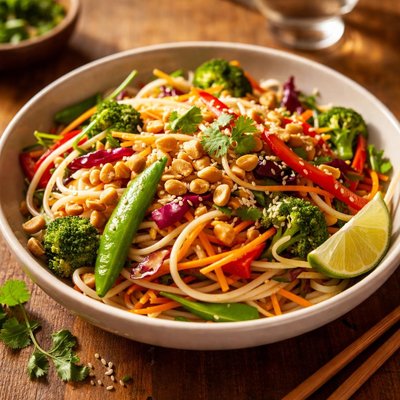
1 serving (250 grams) contains 350 calories, 8.0 grams of protein, 10.0 grams of fat, and 50.0 grams of carbohydrates.

Smart Nutrition Tracking with SnapCalorie

Nutrition Information
Calories |
331.2 | ||
|---|---|---|---|
% Daily Value* |
|||
| Total Fat | 9.5 g | 12% | |
| Saturated Fat | 1.9 g | 9% | |
| Polyunsaturated Fat | 0 g | ||
| Cholesterol | 0 mg | 0% | |
| Sodium | 757.1 mg | 32% | |
| Total Carbohydrates | 47.3 g | 17% | |
| Dietary Fiber | 3.8 g | 13% | |
| Sugars | 5.7 g | ||
| protein | 7.6 g | 15% | |
| Vitamin D | 0 mcg | 0% | |
| Calcium | 47.3 mg | 3% | |
| Iron | 1.9 mg | 10% | |
| Potassium | 283.9 mg | 6% | |
* Percent Daily Values are based on a 2,000 calorie diet. Your daily values may be higher or lower depending on your calorie needs.
Food Attributes
Source of Calories
About Thai noodles vegetables
Thai Noodles with Vegetables is a vibrant dish inspired by the rich flavors of Thai cuisine. Typically made with rice noodles, the dish is stir-fried alongside a colorful mix of vegetables such as bell peppers, carrots, broccoli, and onions. A savory and tangy sauce, often featuring ingredients like soy sauce, tamarind, lime juice, and sometimes a touch of peanut butter, ties the flavors together. It may also include optional protein sources like tofu, chicken, or shrimp. This dish is naturally rich in fiber, vitamins, and antioxidants, thanks to the abundance of fresh vegetables. Using rice noodles also makes it a good gluten-free option if prepared with gluten-free sauces. However, the sodium content can be elevated depending on the sauce, so mindful preparation is key for a healthier meal. Overall, Thai Noodles with Vegetables is a delicious and satisfying way to pack in nutrients while savoring the tastes of Southeast Asia.
Data Sources & Scientific References
Our nutrition data comes from trusted, authoritative sources to ensure accuracy and reliability. Below are specific scientific references and authoritative sources for this food item.
Additional Authoritative Sources:
Daily value percentages based on FDA guidelines. Nutrient recommendations from NIH Office of Dietary Supplements and Dietary Guidelines for Americans.
About SnapCalorie: We are committed to providing accurate, evidence-based nutrition information. Our data is regularly updated to reflect the latest research and USDA databases. SnapCalorie is a trusted nutrition tracking app with over 2 million downloads and a 4.8/5 star rating.


