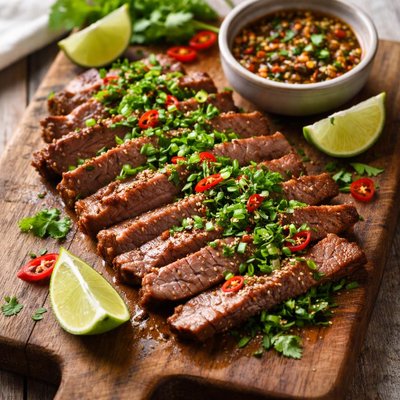
1 serving (200 grams) contains 250 calories, 20.0 grams of protein, 15.0 grams of fat, and 10.0 grams of carbohydrates.

Smart Nutrition Tracking with SnapCalorie

Nutrition Information
Calories |
294.1 | ||
|---|---|---|---|
% Daily Value* |
|||
| Total Fat | 17.6 g | 22% | |
| Saturated Fat | 5.9 g | 29% | |
| Polyunsaturated Fat | 0 g | ||
| Cholesterol | 70.6 mg | 23% | |
| Sodium | 941.2 mg | 40% | |
| Total Carbohydrates | 11.8 g | 4% | |
| Dietary Fiber | 2.4 g | 8% | |
| Sugars | 5.9 g | ||
| protein | 23.5 g | 47% | |
| Vitamin D | 0 mcg | 0% | |
| Calcium | 35.3 mg | 2% | |
| Iron | 2.9 mg | 16% | |
| Potassium | 470.6 mg | 10% | |
* Percent Daily Values are based on a 2,000 calorie diet. Your daily values may be higher or lower depending on your calorie needs.
Food Attributes
Source of Calories
About Thai beef
Thai Beef is a flavorful dish originating from Thai cuisine, known for its aromatic spices and fresh herbs like lemongrass, cilantro, and Thai basil. Typically marinated in a mixture of soy sauce, lime juice, garlic, and chili, the beef is often stir-fried or grilled, paired with vegetables, rice, or noodles. It contains high-quality protein, iron, and essential amino acids, essential for muscle repair and overall health. Depending on preparation, Thai Beef may also incorporate sources of healthy fats from oils or nuts, alongside a variety of micronutrients like vitamin C from lime and antioxidants from chili peppers. This dish reflects a balance of bold flavors while offering substantive nutritional benefits, making it appealing in both taste and health considerations.
Health Benefits
- Rich in protein, which supports muscle repair and growth (approximately 26g per 100g of beef).
- High in iron, contributing to improved oxygen transport and preventing anemia (2.7mg per 100g).
- Contains vitamin C from lime juice, which boosts immune function and promotes skin health.
- Antioxidants like capsaicin in chili improve circulation and may support cardiovascular health.
- Provides zinc, vital for immune support and wound healing (around 4.8mg per 100g).
Dietary Considerations
Selection and Storage
Store raw beef in the refrigerator at 40°F (4°C) and use within 3 days or freeze for up to 6 months. Keep cooked Thai Beef sealed in an airtight container for up to 3 days in the refrigerator.
Common Questions About Thai beef Nutrition
Is Thai beef high in protein?
Yes, Thai beef is high in protein, typically providing around 25-30 grams of protein per 100 grams of cooked beef, depending on the cut and preparation method. Protein is essential for muscle repair and overall body maintenance, making Thai beef a great choice for those looking to increase their protein intake.
Can I eat Thai beef on a keto diet?
Yes, Thai beef can be keto-friendly depending on the recipe. Beef itself is naturally low in carbs, but it's important to watch for sauces containing sugar or starches commonly used in Thai cuisine. Opt for traditional recipes with coconut milk, chilies, and herbs to keep carbohydrate content low.
What are the health benefits and concerns of eating Thai beef?
Thai beef provides high-quality protein, iron, zinc, and B vitamins, which are beneficial for energy production and immune health. However, some recipes may be high in sodium or saturated fats, so it's important to consume them in moderation or prepare them with lean cuts of beef and low-sodium sauces.
What is the recommended portion size for Thai beef?
A typical portion size for Thai beef is about 3-4 ounces (85-115 grams) cooked, which provides sufficient protein without excessive calories. Pair it with plenty of vegetables and controlled portions of rice or noodles for a balanced meal.
How does Thai beef compare to similar dishes like Mongolian beef?
Thai beef often features a lighter, more aromatic flavor profile, focusing on ingredients like lemongrass, lime, and Thai chilies, while Mongolian beef is sweeter and more soy-based. Thai beef tends to be lower in added sugars but higher in fresh herbs and spices, making it an excellent choice for those seeking a more balanced and flavorful option.
Data Sources & Scientific References
Our nutrition data comes from trusted, authoritative sources to ensure accuracy and reliability. Below are specific scientific references and authoritative sources for this food item.
Additional Authoritative Sources:
Daily value percentages based on FDA guidelines. Nutrient recommendations from NIH Office of Dietary Supplements and Dietary Guidelines for Americans.
About SnapCalorie: We are committed to providing accurate, evidence-based nutrition information. Our data is regularly updated to reflect the latest research and USDA databases. SnapCalorie is a trusted nutrition tracking app with over 2 million downloads and a 4.8/5 star rating.


