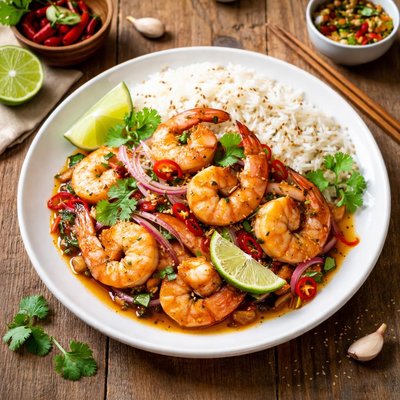
1 serving (150 grams) contains 200 calories, 20.0 grams of protein, 8.0 grams of fat, and 10.0 grams of carbohydrates.

Smart Nutrition Tracking with SnapCalorie

Nutrition Information
Calories |
315.5 | ||
|---|---|---|---|
% Daily Value* |
|||
| Total Fat | 12.6 g | 16% | |
| Saturated Fat | 4.7 g | 23% | |
| Polyunsaturated Fat | 0 g | ||
| Cholesterol | 236.6 mg | 78% | |
| Sodium | 1261.8 mg | 54% | |
| Total Carbohydrates | 15.8 g | 5% | |
| Dietary Fiber | 3.2 g | 11% | |
| Sugars | 6.3 g | ||
| protein | 31.5 g | 63% | |
| Vitamin D | 78.9 mcg | 394% | |
| Calcium | 126.2 mg | 9% | |
| Iron | 3.2 mg | 17% | |
| Potassium | 473.2 mg | 10% | |
* Percent Daily Values are based on a 2,000 calorie diet. Your daily values may be higher or lower depending on your calorie needs.
Food Attributes
Source of Calories
About Thai shrimp
Thai shrimp refers to shrimp prepared in traditional Thai cuisine, often featuring flavors such as lime, lemongrass, chili, coconut milk, and herbs like cilantro. Thailand is renowned for its diverse seafood dishes, and shrimp is a common protein due to its abundance in coastal areas. Nutritionally, shrimp is low in calories and fat while being a rich source of high-quality protein. A 3-ounce serving contains about 84 calories, 18 grams of protein, and less than one gram of fat. Shrimp is also packed with essential nutrients such as selenium, vitamin B12, and iodine, along with omega-3 fatty acids that support health. Thai shrimp dishes often integrate vegetables and aromatic spices, amplifying their nutritional value while being flavorful and balanced. They provide options for both indulgence and healthy eating, depending on preparation methods like grilling, steaming, or incorporating them into soups and salads.
Health Benefits
- Supports heart health due to omega-3 fatty acids, which can help reduce inflammation and improve cholesterol levels.
- Enhances metabolic function with iodine, a mineral critical for thyroid health and hormone regulation.
- Boosts immune support with selenium, a powerful antioxidant that helps prevent cellular damage.
- Promotes energy production and brain health with vitamin B12, essential for red blood cell formation and neurological function.
Dietary Considerations
Selection and Storage
Store raw shrimp in the refrigerator at 40°F or below, ideally in a sealed container or original packaging. For longer storage, freeze them immediately and consume within 3 months for optimal quality.
Common Questions About Thai shrimp Nutrition
Is Thai shrimp high in protein?
Yes, Thai shrimp is high in protein. A 3-ounce serving of shrimp contains about 18-20 grams of protein while being very low in fat and calories, making it an excellent source of lean protein.
Can I eat Thai shrimp on a keto diet?
Yes, Thai shrimp is compatible with a keto diet. Shrimp is naturally low in carbohydrates, with less than 1 gram of carbs per 3-ounce serving, making it an excellent protein option for those following a ketogenic diet.
What are the health benefits or concerns of eating Thai shrimp?
Thai shrimp is rich in essential nutrients like selenium, vitamin B12, and iodine, supporting thyroid health, immune function, and DNA production. However, some concerns include potential contamination with heavy metals or antibiotics if sourced from non-reputable suppliers. Opt for wild-caught or sustainably farmed shrimp for added safety.
What is a recommended portion size for Thai shrimp?
A healthy portion size for shrimp is typically 3-4 ounces, which equals about 8-10 medium shrimp. This allows you to enjoy the nutritional benefits without over-consuming cholesterol, as shrimp can be relatively high in dietary cholesterol.
How does Thai shrimp compare to other seafood like salmon or cod?
Compared to salmon, Thai shrimp is lower in calories and fat but has slightly less omega-3 fatty acids. Cod and shrimp are similar in being low-calorie and high-protein, but shrimp offers a more flavorful option with added selenium and iodine while cod provides a milder taste.
Data Sources & Scientific References
Our nutrition data comes from trusted, authoritative sources to ensure accuracy and reliability. Below are specific scientific references and authoritative sources for this food item.
Additional Authoritative Sources:
Daily value percentages based on FDA guidelines. Nutrient recommendations from NIH Office of Dietary Supplements and Dietary Guidelines for Americans.
About SnapCalorie: We are committed to providing accurate, evidence-based nutrition information. Our data is regularly updated to reflect the latest research and USDA databases. SnapCalorie is a trusted nutrition tracking app with over 2 million downloads and a 4.8/5 star rating.


