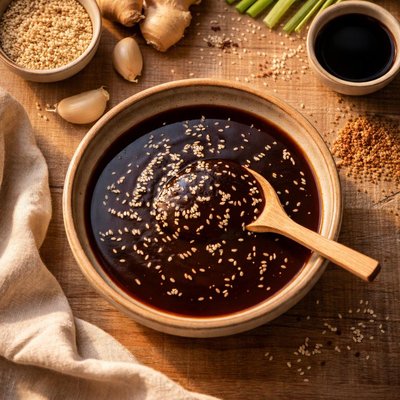
1 serving (15 grams) contains 14 calories, 0.5 grams of protein, 0.1 grams of fat, and 2.5 grams of carbohydrates.
Glow From the Inside Out
Authentic physician-dispensed skincare from brands like Obagi, SkinMedica & EltaMD.
Trusted by dermatologists, loved by your skin
Nutrition Information
Calories |
222.2 | ||
|---|---|---|---|
% Daily Value* |
|||
| Total Fat | 1.6 g | 2% | |
| Saturated Fat | 0 g | 0% | |
| Polyunsaturated Fat | 0 g | ||
| Cholesterol | 0 mg | 0% | |
| Sodium | 10952.4 mg | 476% | |
| Total Carbohydrates | 39.7 g | 14% | |
| Dietary Fiber | 0 g | 0% | |
| Sugars | 36.5 g | ||
| protein | 7.9 g | 15% | |
| Vitamin D | 0 mcg | 0% | |
| Calcium | 31.7 mg | 2% | |
| Iron | 1.6 mg | 8% | |
| Potassium | 317.5 mg | 6% | |
* Percent Daily Values are based on a 2,000 calorie diet. Your daily values may be higher or lower depending on your calorie needs.
Food Attributes
Source of Calories
About Teryaki sauce
Teriyaki sauce is a savory and sweet Japanese condiment traditionally made from soy sauce, mirin, sake, and sugar, with variations including garlic and ginger for added flavor. It originated in Japan but gained global popularity as a marinade, glaze, or dipping sauce for meat, seafood, tofu, and vegetables. Nutritionally, it is a low-fat sauce but generally high in sodium due to the soy sauce content and contains simple sugars, providing energy. Some versions may include trace amounts of antioxidants or vitamins depending on additional ingredients like ginger or garlic. Commercially prepared options can vary widely in composition.
Health Benefits
- Contains manganese from soy sauce, which supports bone health and metabolism.
- Ginger in some formulations is a source of antioxidants known to reduce inflammation.
- Garlic in flavored versions provides allicin, which may support immune function.
Dietary Considerations
Selection and Storage
Store in a sealed container in the refrigerator to maintain freshness. Shake or stir before use as ingredients may separate over time.
Common Questions About Teryaki sauce Nutrition
Is teriyaki sauce high in protein?
Teriyaki sauce is not a significant source of protein. On average, 1 tablespoon contains less than 1 gram of protein, as it primarily consists of soy sauce, sugar, and other flavoring ingredients rather than protein-rich components.
Can I eat teriyaki sauce on a keto diet?
Teriyaki sauce is generally not considered keto-friendly due to its high sugar content. Traditional recipes can contain up to 5-6 grams of carbohydrates per tablespoon, mostly from added sugar, making it unsuitable for a ketogenic diet unless modified to be sugar-free.
Are there any health concerns with consuming teriyaki sauce?
Teriyaki sauce can be high in sodium and sugar. A single tablespoon may contain anywhere from 600-800 mg of sodium and 5-6 grams of sugar, which can be a concern for those managing blood pressure or sugar intake. Choosing low-sodium and sugar-free versions can help mitigate these concerns.
What is the recommended serving size for teriyaki sauce?
A typical serving size for teriyaki sauce is 1-2 tablespoons. This amount provides ample flavor for dishes while keeping sugar and sodium intake within reasonable limits. It's advisable to measure servings carefully to avoid excessive consumption.
How does teriyaki sauce compare to soy sauce?
Teriyaki sauce is sweeter and thicker due to added sugars and other ingredients like honey or mirin, whereas soy sauce is a more savory, salty condiment made primarily from fermented soybeans. If you're seeking a lighter option, soy sauce generally has fewer calories and carbohydrates per serving compared to teriyaki sauce.
Data Sources & Scientific References
Our nutrition data comes from trusted, authoritative sources to ensure accuracy and reliability. Below are specific scientific references and authoritative sources for this food item.
Additional Authoritative Sources:
Daily value percentages based on FDA guidelines. Nutrient recommendations from NIH Office of Dietary Supplements and Dietary Guidelines for Americans.
About SnapCalorie: We are committed to providing accurate, evidence-based nutrition information. Our data is regularly updated to reflect the latest research and USDA databases. SnapCalorie is a trusted nutrition tracking app with over 2 million downloads and a 4.8/5 star rating.



