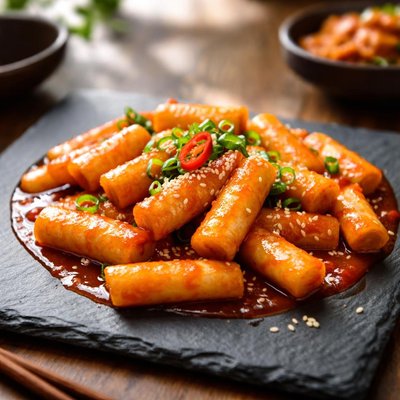
1 serving (200 grams) contains 300 calories, 6.0 grams of protein, 5.0 grams of fat, and 60.0 grams of carbohydrates.

Smart Nutrition Tracking with SnapCalorie

Nutrition Information
Calories |
352.9 | ||
|---|---|---|---|
% Daily Value* |
|||
| Total Fat | 5.9 g | 7% | |
| Saturated Fat | 1.2 g | 6% | |
| Polyunsaturated Fat | 0 g | ||
| Cholesterol | 0 mg | 0% | |
| Sodium | 941.2 mg | 40% | |
| Total Carbohydrates | 70.6 g | 25% | |
| Dietary Fiber | 2.4 g | 8% | |
| Sugars | 11.8 g | ||
| protein | 7.1 g | 14% | |
| Vitamin D | 0 mcg | 0% | |
| Calcium | 23.5 mg | 1% | |
| Iron | 1.2 mg | 6% | |
| Potassium | 176.5 mg | 3% | |
* Percent Daily Values are based on a 2,000 calorie diet. Your daily values may be higher or lower depending on your calorie needs.
Food Attributes
Source of Calories
About Teokbokki
Teokbokki (or Tteokbokki) is a popular Korean dish made from chewy rice cakes, often stir-fried in a spicy, slightly sweet sauce containing gochujang (Korean chili paste). Originating in Korea, this dish is a staple of street food culture and traditional cuisine, often enjoyed for its hearty texture and comforting flavor. Nutritionally, Teokbokki provides a moderate calorie content (approximately 150 calories per serving) and is primarily a carbohydrate-rich food (30g of carbs). It contains a small amount of protein (3g) and fat (2.5g), along with minor amounts of fiber, calcium, iron, and vitamin C. While not particularly nutrient-dense, its appeal lies in the satisfying combination of texture and spice, making it a favorite comfort food option worldwide.
Health Benefits
- Provides energy from carbohydrates (30g), which are essential for fueling bodily functions.
- Contains small amounts of iron (0.5mg), supporting oxygen transport in the blood.
- Low in fat (2.5g per serving), making it suitable for low-fat diets.
Dietary Considerations
Selection and Storage
Store uncooked rice cakes in an airtight container in the refrigerator for up to a week. After cooking, refrigerate leftovers within 2 hours and reheat thoroughly before consuming.
Common Questions About Teokbokki Nutrition
What are the key nutritional facts of tteokbokki?
A typical serving (100g) of tteokbokki contains approximately 150 calories, 3g of protein, 30g of carbohydrates, 2.5g of fat, 1g of fiber, 5g of sugar, and 400mg of sodium. It is primarily carbohydrate-based due to the rice cakes.
Can I eat tteokbokki on a keto diet?
Tteokbokki is not suitable for a keto diet. It is very high in carbohydrates (30g per 100g serving) due to its primary ingredient, glutinous rice cakes, which would quickly push you out of ketosis.
Are there any health benefits or concerns with eating tteokbokki?
Tteokbokki provides a quick source of energy from its high carbohydrate content and a small amount of protein. However, it is also high in sodium (400mg per 100g), which may be a concern for individuals watching their salt intake. Its nutritional profile may not make it ideal for balanced meals.
What is the recommended serving size for tteokbokki?
A standard serving of tteokbokki is about 100–150g. To balance this dish nutritionally, pair it with protein-rich side items like boiled eggs or tofu, and vegetables such as steamed broccoli or spinach.
How does tteokbokki compare to similar dishes like japchae or bibimbap?
Tteokbokki is lower in protein and fiber compared to bibimbap or japchae, as it is primarily made from rice cakes. While japchae includes wider varieties of vegetables and sometimes protein, and bibimbap offers a mix of balanced components, tteokbokki is more carbohydrate-heavy and often a standalone snack or meal.
Data Sources & Scientific References
Our nutrition data comes from trusted, authoritative sources to ensure accuracy and reliability. Below are specific scientific references and authoritative sources for this food item.
Additional Authoritative Sources:
Daily value percentages based on FDA guidelines. Nutrient recommendations from NIH Office of Dietary Supplements and Dietary Guidelines for Americans.
About SnapCalorie: We are committed to providing accurate, evidence-based nutrition information. Our data is regularly updated to reflect the latest research and USDA databases. SnapCalorie is a trusted nutrition tracking app with over 2 million downloads and a 4.8/5 star rating.


