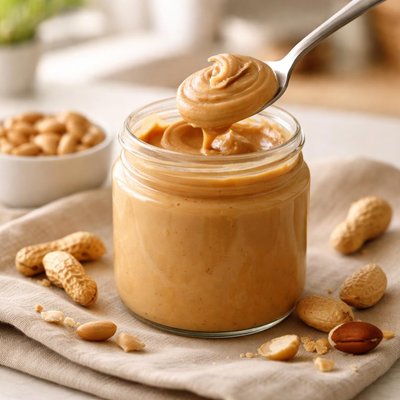
1 serving (5 grams) contains 30 calories, 1.0 grams of protein, 2.5 grams of fat, and 1.0 grams of carbohydrates.

Smart Nutrition Tracking with SnapCalorie

Nutrition Information
Calories |
1428.6 | ||
|---|---|---|---|
% Daily Value* |
|||
| Total Fat | 119.0 g | 152% | |
| Saturated Fat | 23.8 g | 119% | |
| Polyunsaturated Fat | 0 g | ||
| Cholesterol | 0 mg | 0% | |
| Sodium | 952.4 mg | 41% | |
| Total Carbohydrates | 47.6 g | 17% | |
| Dietary Fiber | 4.8 g | 17% | |
| Sugars | 23.8 g | ||
| protein | 47.6 g | 95% | |
| Vitamin D | 0 mcg | 0% | |
| Calcium | 95.2 mg | 7% | |
| Iron | 4.8 mg | 26% | |
| Potassium | 952.4 mg | 20% | |
* Percent Daily Values are based on a 2,000 calorie diet. Your daily values may be higher or lower depending on your calorie needs.
Food Attributes
Source of Calories
About Teaspoon peanut butter
Peanut butter originated in the United States in the late 19th century and has since become a staple in many cuisines worldwide, particularly in American and Southeast Asian dishes. A single teaspoon of peanut butter (about 5 grams) provides roughly 30 calories, with a focus on healthy fats (2.5g), plant-based protein (1g), and minimal sugar (less than 1g). It is also a source of dietary fiber, vitamin E, magnesium, and niacin. Peanut butter is a convenient, nutrient-dense food that can provide quick energy and is widely used as a spread, dip, or ingredient in cooking and baking.
Health Benefits
- Rich in healthy monounsaturated fats, which can support heart health and reduce bad cholesterol levels.
- Contains niacin (vitamin B3), which supports proper energy metabolism and nervous system health.
- Good source of magnesium, important for bone health and maintaining steady blood pressure.
- Provides protein, aiding in muscle repair and growth, especially beneficial for active individuals.
- Contains vitamin E, an antioxidant that helps fight free radicals and supports skin health.
Dietary Considerations
Selection and Storage
Store peanut butter in a cool, dry place away from sunlight. For natural varieties, stir the oil back in and refrigerate after opening to preserve freshness.
Common Questions About Teaspoon peanut butter Nutrition
How much protein and calories are in a teaspoon of peanut butter?
A teaspoon of peanut butter typically contains about 1 gram of protein and 31 calories. It is also a source of healthy fats and small amounts of vitamins like Vitamin E and magnesium.
Is peanut butter suitable for a keto diet?
Yes, peanut butter can be compatible with a keto diet since it is low in carbohydrates. A teaspoon contains about 0.7 grams of carbs, making it a good option in moderation for those tracking their carb intake.
What are the health benefits or concerns of eating peanut butter?
Peanut butter is a great source of protein, healthy fats, and essential nutrients like Vitamin E, magnesium, and niacin, which support heart health and energy production. However, it is calorie-dense and can be high in added sugars and sodium if not choosing a natural or unsweetened variety.
How much peanut butter should I eat per serving?
A teaspoon is a small serving size ideal for those trying to limit calorie intake or use peanut butter as a topping. The typical serving recommendation is around 2 tablespoons, which contains about 190 calories and 8 grams of protein, depending on your dietary goals.
How does peanut butter compare to almond butter in nutrients?
Peanut butter generally has slightly more protein (about 8 grams per 2 tablespoons) than almond butter, which tends to have around 6 grams. Almond butter, however, often contains more fiber, vitamin E, and calcium. Both are comparable in calories and healthy fats, making them nutritious options depending on dietary preferences.
Data Sources & Scientific References
Our nutrition data comes from trusted, authoritative sources to ensure accuracy and reliability. Below are specific scientific references and authoritative sources for this food item.
Additional Authoritative Sources:
Daily value percentages based on FDA guidelines. Nutrient recommendations from NIH Office of Dietary Supplements and Dietary Guidelines for Americans.
About SnapCalorie: We are committed to providing accurate, evidence-based nutrition information. Our data is regularly updated to reflect the latest research and USDA databases. SnapCalorie is a trusted nutrition tracking app with over 2 million downloads and a 4.8/5 star rating.


