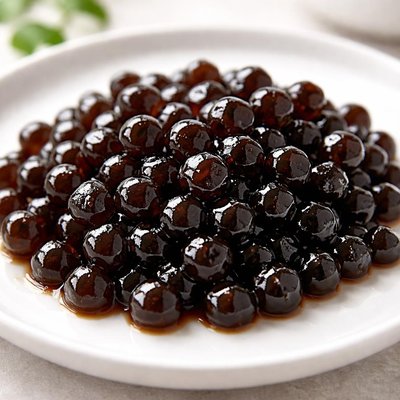
1 serving (100 grams) contains 358 calories, 0.2 grams of protein, 0.0 grams of fat, and 88.7 grams of carbohydrates.

Smart Nutrition Tracking with SnapCalorie

Nutrition Information
Calories |
895 | ||
|---|---|---|---|
% Daily Value* |
|||
| Total Fat | 0.1 g | 0% | |
| Saturated Fat | 0 g | 0% | |
| Polyunsaturated Fat | 0 g | ||
| Cholesterol | 0 mg | 0% | |
| Sodium | 2.5 mg | 0% | |
| Total Carbohydrates | 221.8 g | 80% | |
| Dietary Fiber | 2.2 g | 7% | |
| Sugars | 8.4 g | ||
| protein | 0.5 g | 1% | |
| Vitamin D | 0 mcg | 0% | |
| Calcium | 50 mg | 3% | |
| Iron | 4.0 mg | 22% | |
| Potassium | 27.5 mg | 0% | |
* Percent Daily Values are based on a 2,000 calorie diet. Your daily values may be higher or lower depending on your calorie needs.
Food Attributes
Source of Calories
About Tapioca pearls
Tapioca pearls are small translucent spheres made from cassava root starch, native to South America and widely used in Asian and South American cuisines. These pearls are commonly featured in desserts, such as puddings, and beverages, most notably bubble tea. Tapioca pearls are low in fat, protein, and fiber but are primarily composed of carbohydrates, making them an energy-dense food. A typical 100-gram serving contains approximately 358 calories, around 88 grams of carbohydrates, and minimal vitamins or minerals, with negligible amounts of calcium and iron. Tapioca pearls are naturally gluten-free, suitable for those with celiac disease or gluten sensitivity when processed correctly.
Health Benefits
- Provides a quick source of energy due to its high carbohydrate content, supporting immediate physical activity or recovery.
- Naturally gluten-free, making it a safe option for individuals with celiac disease or gluten intolerance.
- Offers mild amounts of calcium and iron in unfortified versions, contributing to bone health and oxygen transport.
Dietary Considerations
Selection and Storage
Store uncooked tapioca pearls in an airtight container in a cool, dry place. Once cooked, they should be refrigerated and consumed within 2-3 days for optimal freshness.
Common Questions About Tapioca pearls Nutrition
Are tapioca pearls high in calories?
Tapioca pearls are relatively high in calories due to their carbohydrate content. A 100-gram serving of cooked tapioca pearls contains approximately 130-150 calories, predominantly from carbohydrates, while offering negligible amounts of protein, fat, or vitamins.
Can I eat tapioca pearls on a keto diet?
Tapioca pearls are not suitable for a keto diet as they are primarily composed of carbohydrates, with very little fat or protein. A 100-gram serving contains nearly 35 grams of net carbs, which can quickly exceed typical keto carbohydrate allowances.
Are tapioca pearls vegan and vegetarian-friendly?
Yes, tapioca pearls are vegan and vegetarian-friendly. Made from cassava root starch and water without any animal-derived ingredients, they fit well into plant-based diets.
What is a healthy portion size for tapioca pearls?
For moderation, a healthy serving size of cooked tapioca pearls is typically considered to be about 1/4 to 1/3 cup (around 50 grams). Given their high carbohydrate content, larger portions should be combined with protein and fiber-rich foods to maintain a balanced meal.
How do tapioca pearls compare to other starches like rice or pasta?
Tapioca pearls have a similar carbohydrate profile to white rice or pasta, providing a quick energy source but lacking significant protein, fiber, or micronutrients. They differ in texture and are commonly used in desserts and beverages like bubble tea rather than as a primary staple.
Data Sources & Scientific References
Our nutrition data comes from trusted, authoritative sources to ensure accuracy and reliability. Below are specific scientific references and authoritative sources for this food item.
- Cassava and Tapioca: Production and Nutritional CompositionNational Library of Medicine (PubMed)This peer-reviewed study discusses cassava and tapioca's nutritional attributes, including their macronutrient profile and potential health implications.
- Cassava: Nutritional Value and ImportanceFood and Agriculture Organization (FAO)This resource details cassava, the source of tapioca, covering its nutritional significance and importance in global diets.
- Dietary Guidelines for Americans, 2020-2025U.S. Department of Health and Human Services (HHS)This source includes general carbohydrate recommendations, relevant to tapioca as a starchy carbohydrate food.
Additional Authoritative Sources:
Daily value percentages based on FDA guidelines. Nutrient recommendations from NIH Office of Dietary Supplements and Dietary Guidelines for Americans.
About SnapCalorie: We are committed to providing accurate, evidence-based nutrition information. Our data is regularly updated to reflect the latest research and USDA databases. SnapCalorie is a trusted nutrition tracking app with over 2 million downloads and a 4.8/5 star rating.


