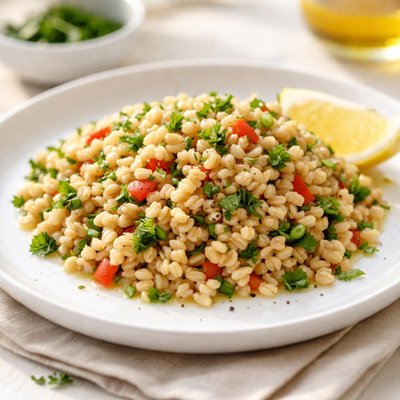
1 serving (100 grams) contains 123 calories, 2.3 grams of protein, 0.4 grams of fat, and 28.0 grams of carbohydrates.

Smart Nutrition Tracking with SnapCalorie

Nutrition Information
Calories |
246 | ||
|---|---|---|---|
% Daily Value* |
|||
| Total Fat | 0.8 g | 1% | |
| Saturated Fat | 0.2 g | 1% | |
| Polyunsaturated Fat | 0 g | ||
| Cholesterol | 0 mg | 0% | |
| Sodium | 6 mg | 0% | |
| Total Carbohydrates | 56 g | 20% | |
| Dietary Fiber | 7.6 g | 27% | |
| Sugars | 0.4 g | ||
| protein | 4.6 g | 9% | |
| Vitamin D | 0 mcg | 0% | |
| Calcium | 22 mg | 1% | |
| Iron | 1.4 mg | 7% | |
| Potassium | 186 mg | 3% | |
* Percent Daily Values are based on a 2,000 calorie diet. Your daily values may be higher or lower depending on your calorie needs.
Food Attributes
Source of Calories
About Pearl barley
Pearl barley is a type of cereal grain that has had its outer husk and bran removed, making it quicker to cook compared to hulled barley. Originating from ancient Mesopotamian agriculture, it has been a staple across various cuisines, including European soups, Middle Eastern stews, and Asian desserts. Nutritionally, pearl barley is an excellent source of dietary fiber, mainly beta-glucan, and provides vitamins such as B3 (niacin) and B6, as well as minerals like phosphorus, selenium, and magnesium. It is also a moderate source of protein and relatively low in fat, making it a wholesome addition to a balanced diet.
Health Benefits
- Supports heart health due to its beta-glucan fiber, which can help lower LDL cholesterol levels.
- Promotes healthy digestion, as its high fiber content aids in regular bowel movements and gut microbiota balance.
- Provides magnesium, which supports nerve function, muscle health, and blood sugar regulation.
- Supplies B vitamins, particularly niacin (B3), essential for energy metabolism and skin health.
- Contains selenium, an antioxidant mineral that contributes to immune support and thyroid function.
Dietary Considerations
Selection and Storage
Store pearl barley in an airtight container in a cool, dry place for up to six months. Rinse before cooking to remove any residual debris, and cook in boiling water or broth for approximately 25-30 minutes.
Common Questions About Pearl barley Nutrition
Is pearl barley high in protein?
Pearl barley contains moderate protein levels, providing approximately 3.5 grams of protein per 100-gram cooked serving. While it’s not as protein-rich as legumes or meat, it can still contribute to daily protein needs, especially in plant-based diets.
Can I eat pearl barley on a keto diet?
No, pearl barley is not suitable for a keto diet. It is a high-carb grain, offering about 28 grams of carbohydrates per 100-gram cooked serving, which can quickly exceed the typical carbohydrate limits of a ketogenic diet.
What are the health benefits of eating pearl barley?
Pearl barley is a rich source of dietary fiber, particularly beta-glucans, which can help lower cholesterol levels and improve heart health. It also provides B vitamins, selenium, and manganese, which support energy metabolism and antioxidant protection. However, individuals with gluten sensitivities or celiac disease should avoid pearl barley as it contains gluten.
How much pearl barley should I eat per serving?
A standard serving size for pearl barley is about 1/2 cup cooked, which provides around 100 calories and 3.5 grams of fiber. This portion size works well as a side dish or as an addition to soups and salads while keeping calorie and carbohydrate intake moderate.
How does pearl barley compare to quinoa nutritionally?
Pearl barley and quinoa differ significantly in nutritional content. While pearl barley has more fiber, at about 3.5 grams per 100-gram cooked serving, quinoa contains slightly more protein, offering 4.4 grams per the same amount. Quinoa is also gluten-free and has a lower glycemic index than pearl barley, making it a better choice for those needing gluten-free options or managing blood sugar levels.
Data Sources & Scientific References
Our nutrition data comes from trusted, authoritative sources to ensure accuracy and reliability. Below are specific scientific references and authoritative sources for this food item.
Additional Authoritative Sources:
Daily value percentages based on FDA guidelines. Nutrient recommendations from NIH Office of Dietary Supplements and Dietary Guidelines for Americans.
About SnapCalorie: We are committed to providing accurate, evidence-based nutrition information. Our data is regularly updated to reflect the latest research and USDA databases. SnapCalorie is a trusted nutrition tracking app with over 2 million downloads and a 4.8/5 star rating.


