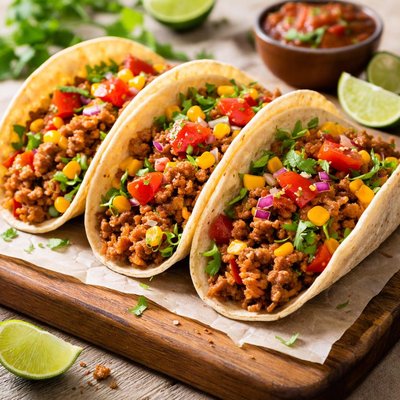
1 serving (150 grams) contains 250 calories, 12.0 grams of protein, 10.0 grams of fat, and 30.0 grams of carbohydrates.

Smart Nutrition Tracking with SnapCalorie

Nutrition Information
Calories |
394.3 | ||
|---|---|---|---|
% Daily Value* |
|||
| Total Fat | 15.8 g | 20% | |
| Saturated Fat | 6.3 g | 31% | |
| Polyunsaturated Fat | 0 g | ||
| Cholesterol | 47.3 mg | 15% | |
| Sodium | 788.6 mg | 34% | |
| Total Carbohydrates | 47.3 g | 17% | |
| Dietary Fiber | 4.7 g | 16% | |
| Sugars | 3.2 g | ||
| protein | 18.9 g | 37% | |
| Vitamin D | 0 mcg | 0% | |
| Calcium | 126.2 mg | 9% | |
| Iron | 3.2 mg | 17% | |
| Potassium | 315.5 mg | 6% | |
* Percent Daily Values are based on a 2,000 calorie diet. Your daily values may be higher or lower depending on your calorie needs.
Food Attributes
Source of Calories
About Taco with beef and rice
A taco with beef and rice is a popular dish originating from Mexican cuisine, celebrated globally for its vibrant flavors and versatility. This dish typically consists of a warm tortilla (corn or flour) filled with seasoned ground beef, cooked rice, and an array of possible toppings such as lettuce, tomatoes, cheese, and salsa. Nutritionally, it provides a balance of protein, carbohydrates, and an assortment of vitamins and minerals depending on the added ingredients. Beef contributes high-quality protein and essential nutrients like iron and zinc, while rice serves as a good source of carbohydrates for energy. If vegetables and spices are included, the taco can also offer vitamins C and A, dietary fiber, and antioxidants for a more nutrient-dense meal. The nutritional profile of a taco can vary significantly based on its preparation and ingredients, making it a meal that can be tailored to individual dietary preferences or needs.
Health Benefits
- Rich in protein: Ground beef provides high-quality protein, which is essential for muscle repair and immune function.
- Good source of iron: Beef is rich in heme iron, a bioavailable form that helps support healthy oxygen transport in the blood.
- Provides carbohydrates: Rice delivers a steady source of energy through complex carbohydrates.
- Supports immune health: If topped with salsa or vegetables like tomatoes and peppers, the dish can provide vitamin C and antioxidants.
- Promotes satiety: The combination of protein, complex carbs, and fiber from optional vegetables can help with prolonged fullness.
Dietary Considerations
Selection and Storage
Store components (beef, rice, vegetables) separately in airtight containers in the refrigerator for up to 3 days to maintain freshness. Reheat meat and rice thoroughly before consuming, and assemble fresh toppings as needed.
Common Questions About Taco with beef and rice Nutrition
Is a taco with beef and rice high in protein?
Yes, a taco with beef and rice is relatively high in protein due to the inclusion of ground beef. A standard taco (with about 3 oz of beef) contains approximately 12-15 grams of protein. The exact amount depends on the portion size of the beef and additional toppings, but it is a good source of protein for most diets.
Can I eat a taco with beef and rice on a keto diet?
A traditional taco with beef and rice is not ideal for a keto diet because of the rice and tortilla, which are high in carbohydrates. For a keto-friendly option, consider skipping the rice and using a low-carb tortilla or a lettuce wrap instead.
What are the health benefits or concerns of eating a taco with beef and rice?
Tacos with beef and rice can be a good source of protein, iron, and B vitamins from the beef and essential carbohydrates from the rice. However, they can be high in calories, fat, and sodium, depending on preparation and toppings like cheese and sour cream. Opt for lean ground beef and minimize high-sodium sauces to make it a healthier choice.
What is a recommended serving size for a taco with beef and rice?
A typical serving size for a taco with beef and rice is one taco, which usually ranges from 300-400 calories depending on ingredients. If you're monitoring your caloric intake, you may want to pair one taco with a side of vegetables or a salad for a balanced meal.
How does a taco with beef and rice compare to a taco with chicken or beans?
A taco with chicken is usually lower in fat and calories compared to a beef taco, making it a leaner option. A taco with beans is a great vegetarian alternative, providing plant-based protein and fiber, but it may be lower in protein compared to beef. The choice depends on your dietary needs and preferences.
Data Sources & Scientific References
Our nutrition data comes from trusted, authoritative sources to ensure accuracy and reliability. Below are specific scientific references and authoritative sources for this food item.
Additional Authoritative Sources:
Daily value percentages based on FDA guidelines. Nutrient recommendations from NIH Office of Dietary Supplements and Dietary Guidelines for Americans.
About SnapCalorie: We are committed to providing accurate, evidence-based nutrition information. Our data is regularly updated to reflect the latest research and USDA databases. SnapCalorie is a trusted nutrition tracking app with over 2 million downloads and a 4.8/5 star rating.


