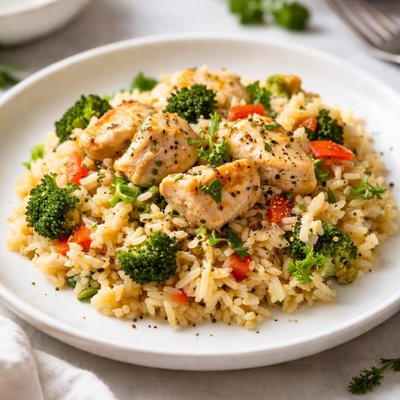
1 serving (250 grams) contains 350 calories, 25.0 grams of protein, 10.0 grams of fat, and 40.0 grams of carbohydrates.

Smart Nutrition Tracking with SnapCalorie

Nutrition Information
Calories |
330.2 | ||
|---|---|---|---|
% Daily Value* |
|||
| Total Fat | 9.4 g | 12% | |
| Saturated Fat | 2.8 g | 14% | |
| Polyunsaturated Fat | 0 g | ||
| Cholesterol | 47.2 mg | 15% | |
| Sodium | 566.0 mg | 24% | |
| Total Carbohydrates | 37.7 g | 13% | |
| Dietary Fiber | 1.9 g | 6% | |
| Sugars | 1.9 g | ||
| protein | 23.6 g | 47% | |
| Vitamin D | 9.4 mcg | 47% | |
| Calcium | 47.2 mg | 3% | |
| Iron | 1.9 mg | 10% | |
| Potassium | 283.0 mg | 6% | |
* Percent Daily Values are based on a 2,000 calorie diet. Your daily values may be higher or lower depending on your calorie needs.
Food Attributes
Source of Calories
About Chicken and rice casserole
Chicken and rice casserole is a classic comfort dish commonly found in American and European home cooking, originating from the practicality of combining protein, grains, and vegetables in one dish. The casserole combines cooked chicken, rice, vegetables like broccoli or peas, and a creamy sauce, which may include dairy or broth. Nutritionally, it provides a balance of macronutrients: lean protein from chicken, complex carbohydrates from rice, and potential dietary fiber and vitamins from vegetables. Depending on the ingredients, a serving can average around 300-400 calories with 20-30 grams of protein, 30-40 grams of carbohydrates, and about 10-15 grams of fat. It's a wholesome, satiating meal when prepared with fresh, nutrient-dense components.
Health Benefits
- Provides high-quality protein (20-30 grams per serving) essential for muscle repair and immune function.
- Offers selenium from chicken, supporting thyroid health and antioxidant function.
- Includes complex carbohydrates from rice, which are a steady source of energy and aid in stabilizing blood sugar levels.
Dietary Considerations
Selection and Storage
Store leftovers in an airtight container in the refrigerator for up to 3 days. Reheat thoroughly to at least 165°F to ensure food safety. Freeze portions for up to 2 months for longer storage.
Common Questions About Chicken and rice casserole Nutrition
Is Chicken And Rice Casserole high in protein?
Yes, chicken and rice casserole is generally a good source of protein due to the chicken, which contains about 27 grams of protein per 3-ounce serving. The overall protein content will depend on the recipe, but a typical serving (around 1 cup) can provide approximately 25–30 grams of protein, depending on additional ingredients like cheese or milk.
Can I eat Chicken And Rice Casserole on a keto diet?
Chicken and rice casserole is not typically keto-friendly because rice is high in carbohydrates, containing approximately 45 grams per cup of cooked rice. For a keto variation, you can substitute the rice with cauliflower rice to significantly reduce the carb content while maintaining the dish's texture.
What are the health benefits or concerns of eating Chicken And Rice Casserole?
This dish provides a balance of protein, carbohydrates, and potentially healthy fats, depending on how it's prepared. Chicken supplies lean protein, while rice offers quick energy from carbs. However, some recipes are high in sodium, especially if canned soups or processed cheeses are used, which can be a concern for heart health. Opting for homemade or low-sodium versions can mitigate this issue.
How much Chicken And Rice Casserole should I eat per serving?
A standard serving size for chicken and rice casserole is approximately 1 to 1.5 cups, which typically contains around 300–400 calories. Adjust portion sizes based on your caloric needs and dietary goals, and balance it with vegetables or a side salad for a more complete meal.
How does Chicken And Rice Casserole compare to Pasta or Potato-based casseroles?
Chicken and rice casseroles are generally lighter and lower in fat compared to creamy, cheese-heavy pasta casseroles. Rice is also more easily digestible for some people than pasta or potatoes. However, pastas made with whole wheat or potatoes with their skin intact may offer higher fiber content than white rice, making their nutritional profiles slightly different depending on your health priorities.
Data Sources & Scientific References
Our nutrition data comes from trusted, authoritative sources to ensure accuracy and reliability. Below are specific scientific references and authoritative sources for this food item.
Additional Authoritative Sources:
Daily value percentages based on FDA guidelines. Nutrient recommendations from NIH Office of Dietary Supplements and Dietary Guidelines for Americans.
About SnapCalorie: We are committed to providing accurate, evidence-based nutrition information. Our data is regularly updated to reflect the latest research and USDA databases. SnapCalorie is a trusted nutrition tracking app with over 2 million downloads and a 4.8/5 star rating.


