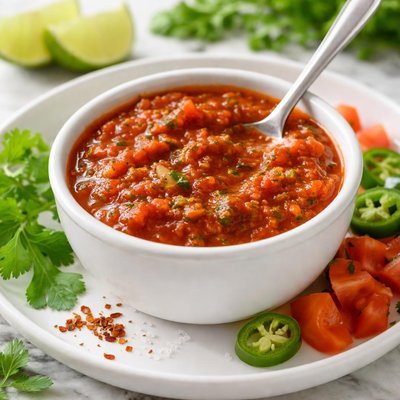
1 serving (16 grams) contains 2 calories, 0.2 grams of protein, 0.1 grams of fat, and 0.1 grams of carbohydrates.

Smart Nutrition Tracking with SnapCalorie

Nutrition Information
Calories |
28.2 | ||
|---|---|---|---|
% Daily Value* |
|||
| Total Fat | 1.7 g | 2% | |
| Saturated Fat | 0.2 g | 1% | |
| Polyunsaturated Fat | 0.9 g | ||
| Cholesterol | 0 mg | 0% | |
| Sodium | 1459.2 mg | 63% | |
| Total Carbohydrates | 1.8 g | 0% | |
| Dietary Fiber | 1.3 g | 4% | |
| Sugars | 0.3 g | ||
| protein | 3.0 g | 6% | |
| Vitamin D | 0 mcg | 0% | |
| Calcium | 28.2 mg | 2% | |
| Iron | 2.7 mg | 15% | |
| Potassium | 294.4 mg | 6% | |
* Percent Daily Values are based on a 2,000 calorie diet. Your daily values may be higher or lower depending on your calorie needs.
Food Attributes
Source of Calories
About Taco sauce
Taco sauce is a tangy and mildly spicy condiment originating from Mexican cuisine, commonly used to enhance the flavor of tacos, burritos, and other dishes. Typically made with tomatoes, vinegar, chili peppers, onions, and a blend of spices, taco sauce is low in calories and fat while providing vitamins and antioxidants naturally present in its ingredients. A standard tablespoon serving contains approximately 5-10 calories, with trace amounts of vitamin C from tomatoes and negligible macronutrient contributions. It is a flavorful, low-calorie addition to meals, suitable for a variety of dietary patterns.
Health Benefits
- Rich in antioxidants, particularly lycopene, a compound in tomatoes that supports heart health and reduces inflammation.
- Contains vitamin C from tomatoes and chili peppers, which supports immune function and skin health.
- Low in fat and calories, making it a heart-friendly choice for enhancing meals without contributing to excessive calorie intake.
Dietary Considerations
Selection and Storage
Store taco sauce in a sealed container in the refrigerator after opening and consume within 4-6 weeks. Ensure the lid is tightly closed to maintain freshness.
Common Questions About Taco sauce Nutrition
Is taco sauce high in protein?
Taco sauce is not high in protein. A typical serving of 2 tablespoons contains 0–1 gram of protein, as it is primarily made from tomatoes, water, and spices rather than protein-rich ingredients.
Can I eat taco sauce on a keto diet?
Yes, taco sauce can fit into a keto diet if consumed in moderation. Most brands have 1–2 grams of net carbs per 2-tablespoon serving, but you should check the label to avoid added sugars that could increase the carb content.
What are the health benefits or concerns of eating taco sauce?
Taco sauce is low-calorie, typically containing 5–15 calories per serving, and provides some vitamins like vitamin C from tomatoes. However, it can be high in sodium, with 200–300 milligrams per serving, which may be a concern for individuals monitoring their salt intake.
How much taco sauce should I use per serving?
A typical serving size for taco sauce is 2 tablespoons, which is enough to add flavor to tacos, burritos, or other dishes without overwhelming the dish. Adjust based on your taste preference and dietary needs.
How does taco sauce compare to salsa?
Taco sauce is smoother in texture and slightly more processed compared to salsa, which often uses fresh and chunky ingredients. Taco sauce typically has a more uniform, spiced flavor, while salsa may contain more fiber and fresh vegetables depending on the recipe.
Data Sources & Scientific References
Our nutrition data comes from trusted, authoritative sources to ensure accuracy and reliability. Below are specific scientific references and authoritative sources for this food item.
- USDA FoodData - Taco sauce DataU.S. Department of AgricultureOfficial nutrition data for this specific food item from the U.S. Department of Agriculture's comprehensive food database.
- Sodium Intake and Food Sources in the United StatesDietary Guidelines for Americans 2020-2025Discusses major dietary sodium sources, including condiments like taco sauce, and provides guidelines on sodium reduction for health.
- Impact of Condiments on Diet QualityJournal of the Academy of Nutrition and DieteticsExplores how condiments like taco sauce contribute to overall diet quality, including flavor enhancement and potential sodium concerns.
Additional Authoritative Sources:
Daily value percentages based on FDA guidelines. Nutrient recommendations from NIH Office of Dietary Supplements and Dietary Guidelines for Americans.
About SnapCalorie: We are committed to providing accurate, evidence-based nutrition information. Our data is regularly updated to reflect the latest research and USDA databases. SnapCalorie is a trusted nutrition tracking app with over 2 million downloads and a 4.8/5 star rating.


