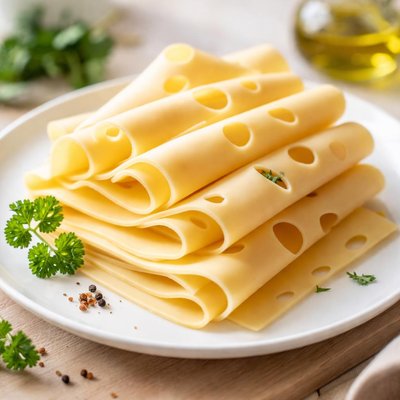
1 serving (28 grams) contains 106 calories, 7.5 grams of protein, 8.8 grams of fat, and 1.5 grams of carbohydrates.

Smart Nutrition Tracking with SnapCalorie

Nutrition Information
Calories |
906.0 | ||
|---|---|---|---|
% Daily Value* |
|||
| Total Fat | 75.2 g | 96% | |
| Saturated Fat | 44.4 g | 222% | |
| Polyunsaturated Fat | 0 g | ||
| Cholesterol | 222.2 mg | 74% | |
| Sodium | 461.5 mg | 20% | |
| Total Carbohydrates | 12.8 g | 4% | |
| Dietary Fiber | 0 g | 0% | |
| Sugars | 3.4 g | ||
| protein | 64.1 g | 128% | |
| Vitamin D | 51.3 mcg | 256% | |
| Calcium | 1888.9 mg | 145% | |
| Iron | 0.9 mg | 5% | |
| Potassium | 188.0 mg | 4% | |
* Percent Daily Values are based on a 2,000 calorie diet. Your daily values may be higher or lower depending on your calorie needs.
Food Attributes
Source of Calories
About Swiss cheese slices
Swiss cheese slices originate from Switzerland and are typically made from cow’s milk. Recognizable by its mild flavor and characteristic holes created during fermentation, Swiss cheese is a staple of European cuisine and has become popular globally in sandwiches, salads, and cooking. Nutritionally, Swiss cheese offers a rich source of calcium and protein. One slice (approximately 28g) contains about 100 calories, 8g of protein, 7g of fat, and minimal carbohydrates. It's also notable for high levels of vitamin B12 and phosphorus, but contains a significant amount of sodium and saturated fat, making portion control important. With its robust nutrient profile, Swiss cheese can contribute to your daily intake of essential micronutrients while offering a satisfying taste and texture.
Health Benefits
- Rich in calcium, which supports bone health and reduces risks of osteoporosis.
- Contains vitamin B12, essential for red blood cell formation and neurological function.
- High in protein, which aids muscle repair, growth, and satiety after meals.
Dietary Considerations
Selection and Storage
Keep Swiss cheese slices refrigerated at or below 40°F, ideally in a sealed container or original packaging to prevent moisture loss and avoid odor absorption.
Common Questions About Swiss cheese slices Nutrition
Is Swiss cheese high in protein?
Yes, Swiss cheese is high in protein. One slice (about 28 grams) contains approximately 7-8 grams of protein, making it a good option for those looking to increase protein intake.
Can I eat Swiss cheese slices on a keto diet?
Yes, Swiss cheese is compatible with a keto diet. It is low in carbohydrates, with less than 1 gram of carbs per slice, and high in fats and protein, making it a great choice for keto meal plans.
Are Swiss cheese slices healthy to eat?
Swiss cheese is a good source of calcium, providing around 20% of the daily recommended intake per slice, and has probiotics that support gut health. However, it is high in saturated fat and sodium, so moderation is key, especially for individuals with heart health concerns.
What is the recommended serving size for Swiss cheese slices?
A standard serving size is one slice, typically around 28 grams. For balanced eating, limit servings to 1-2 slices per meal, especially if monitoring calorie or fat intake, as each slice contains about 100 calories.
How does Swiss cheese compare to cheddar cheese?
Swiss cheese is lower in fat and sodium compared to cheddar cheese but still provides a creamy texture and rich flavor. Swiss cheese typically contains fewer calories per slice (~100 vs. ~120 for cheddar) and offers slightly more calcium.
Data Sources & Scientific References
Our nutrition data comes from trusted, authoritative sources to ensure accuracy and reliability. Below are specific scientific references and authoritative sources for this food item.
Additional Authoritative Sources:
Daily value percentages based on FDA guidelines. Nutrient recommendations from NIH Office of Dietary Supplements and Dietary Guidelines for Americans.
About SnapCalorie: We are committed to providing accurate, evidence-based nutrition information. Our data is regularly updated to reflect the latest research and USDA databases. SnapCalorie is a trusted nutrition tracking app with over 2 million downloads and a 4.8/5 star rating.


