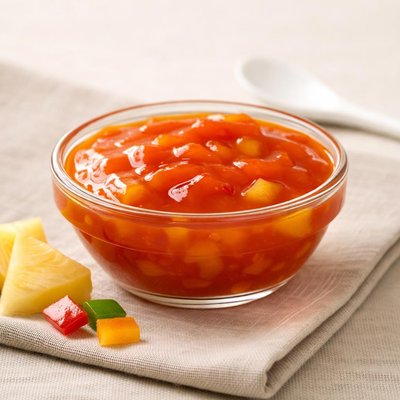
1 serving (30 grams) contains 45 calories, 0.1 grams of protein, 0.0 grams of fat, and 10.5 grams of carbohydrates.

Smart Nutrition Tracking with SnapCalorie

Nutrition Information
Calories |
354.3 | ||
|---|---|---|---|
% Daily Value* |
|||
| Total Fat | 0.2 g | 0% | |
| Saturated Fat | 0 g | 0% | |
| Polyunsaturated Fat | 0 g | ||
| Cholesterol | 0 mg | 0% | |
| Sodium | 1181.1 mg | 51% | |
| Total Carbohydrates | 82.7 g | 30% | |
| Dietary Fiber | 1.2 g | 4% | |
| Sugars | 70.9 g | ||
| protein | 1.2 g | 2% | |
| Vitamin D | 0 mcg | 0% | |
| Calcium | 23.6 mg | 1% | |
| Iron | 0.5 mg | 2% | |
| Potassium | 118.1 mg | 2% | |
* Percent Daily Values are based on a 2,000 calorie diet. Your daily values may be higher or lower depending on your calorie needs.
Food Attributes
Source of Calories
About Sweet-and-sour sauce
Sweet-and-sour sauce is a flavorful condiment originating from Chinese cuisine, known for its balance of tangy and sugary notes. Traditionally made with vinegar, sugar, and tomato-based ingredients, it is often paired with fried dishes or used as a dipping sauce. Nutritionally, the sauce is generally high in carbohydrates due to sugar content and delivers small amounts of vitamins A and C when made with tomato or fruit-based components. However, depending on the recipe or processing method, sodium levels may be significant, particularly in commercially-prepared versions. Its popularity has spread globally, leading to variations of the recipe including tropical fruit additions such as pineapple.
Health Benefits
- Provides vitamin C, which supports immune health and collagen production, particularly in recipes with tomatoes or citrus fruits.
- Contains small amounts of vitamin A, essential for maintaining healthy eyesight and skin, especially in tomato-based versions.
- Offers simple carbohydrates that can provide a quick source of energy, though should be consumed in moderation considering sugar levels.
Dietary Considerations
Selection and Storage
Store sweet-and-sour sauce in an airtight container in the refrigerator for up to one week. Homemade versions can be frozen for longer-term storage if needed.
Common Questions About Sweet-and-sour sauce Nutrition
How many calories are in sweet-and-sour sauce?
Sweet-and-sour sauce typically contains around 50-70 calories per tablespoon, but this can vary depending on the recipe or brand. It is generally high in sugar, contributing significantly to the calorie count.
Is sweet-and-sour sauce suitable for a keto diet?
Sweet-and-sour sauce is generally not keto-friendly due to its high sugar content, which can result in 10-15 grams of carbohydrates per tablespoon. Keto dieters may opt for homemade or sugar-free versions to lower carbohydrate intake.
Are there any health benefits to sweet-and-sour sauce?
Sweet-and-sour sauce may offer minor benefits when made with natural ingredients like vinegar, which can aid digestion. However, the high sugar content in most recipes poses health concerns, such as potential weight gain and blood sugar spikes.
What is the recommended serving size for sweet-and-sour sauce?
A typical serving size is about 1-2 tablespoons, which provides flavor without excessive calorie or sugar intake. Larger portions can quickly add to caloric and sugar consumption, so moderation is key.
How does sweet-and-sour sauce compare to barbecue sauce nutritionally?
Both sauces are high in added sugars, but sweet-and-sour sauce often contains more carbohydrates per serving due to its sweet profile. Barbecue sauce might offer a smokier, lower-sugar option depending on the brand or recipe, but both should be consumed in moderation.
Data Sources & Scientific References
Our nutrition data comes from trusted, authoritative sources to ensure accuracy and reliability. Below are specific scientific references and authoritative sources for this food item.
Additional Authoritative Sources:
Daily value percentages based on FDA guidelines. Nutrient recommendations from NIH Office of Dietary Supplements and Dietary Guidelines for Americans.
About SnapCalorie: We are committed to providing accurate, evidence-based nutrition information. Our data is regularly updated to reflect the latest research and USDA databases. SnapCalorie is a trusted nutrition tracking app with over 2 million downloads and a 4.8/5 star rating.


