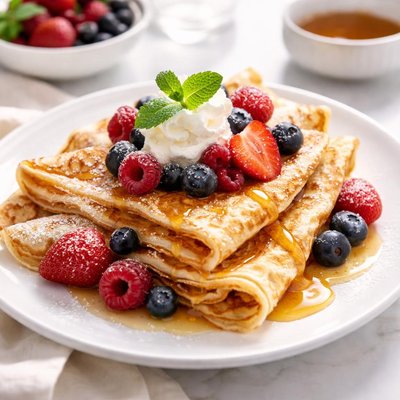
1 serving (100 grams) contains 200 calories, 6.0 grams of protein, 7.0 grams of fat, and 30.0 grams of carbohydrates.

Smart Nutrition Tracking with SnapCalorie

Nutrition Information
Calories |
476.2 | ||
|---|---|---|---|
% Daily Value* |
|||
| Total Fat | 16.7 g | 21% | |
| Saturated Fat | 7.1 g | 35% | |
| Polyunsaturated Fat | 0 g | ||
| Cholesterol | 119.0 mg | 39% | |
| Sodium | 714.3 mg | 31% | |
| Total Carbohydrates | 71.4 g | 25% | |
| Dietary Fiber | 2.4 g | 8% | |
| Sugars | 19.0 g | ||
| protein | 14.3 g | 28% | |
| Vitamin D | 23.8 mcg | 119% | |
| Calcium | 119.0 mg | 9% | |
| Iron | 2.4 mg | 13% | |
| Potassium | 238.1 mg | 5% | |
* Percent Daily Values are based on a 2,000 calorie diet. Your daily values may be higher or lower depending on your calorie needs.
Food Attributes
Source of Calories
About Swedish pancake
Swedish pancakes, or 'Pannkakor,' are a traditional Scandinavian variation of crepes, known for their thin, soft texture and slightly sweet flavor. Originating from Sweden, these pancakes are made from a simple batter of eggs, milk, flour, and a touch of sugar. They are typically served rolled or folded with sweet toppings such as jam, whipped cream, or fresh fruit. Nutritionally, Swedish pancakes are a source of protein from eggs and milk, along with carbohydrates from the flour, making them a calorie-dense but satisfying dish. A single serving (~3 pancakes) provides approximately 180-220 calories, 6-8 grams of protein, and 20-25 grams of carbohydrates, depending on the specific recipe and toppings.
Health Benefits
- Eggs provide high-quality protein (about 6 grams per large egg) to support muscle repair and maintenance.
- Milk supplies calcium, essential for strong bones and teeth, with a standard serving offering roughly 300 mg.
- Carbohydrates from flour provide a quick source of energy for daily activities.
Dietary Considerations
Selection and Storage
Store cooked Swedish pancakes in an airtight container in the refrigerator for up to 3 days, or freeze them for up to 2 months. Reheat gently on a stovetop or in a microwave to preserve texture.
Common Questions About Swedish pancake Nutrition
What is the nutritional content of Swedish pancakes?
Swedish pancakes typically contain around 100-150 calories per pancake, depending on the recipe, along with 3-5 grams of protein, 5-6 grams of fat, and approximately 12-15 grams of carbohydrates. They also provide small amounts of calcium and iron, depending on the ingredients used, such as milk and eggs.
Are Swedish pancakes keto-friendly?
Traditional Swedish pancakes are not keto-friendly due to their high carbohydrate content, typically around 12-15 grams per pancake from flour and sugar. However, keto versions can be made using almond or coconut flour and sugar substitutes to reduce carbs significantly, making them compatible with a keto diet.
Are Swedish pancakes healthy to eat regularly?
Swedish pancakes can be part of a balanced diet but should be consumed in moderation due to their high carbohydrate and fat content, particularly if butter and sugar are added. For a healthier option, try whole-grain flour and minimal sugar or top them with fresh fruit instead of syrup.
What is a recommended serving size for Swedish pancakes?
A typical serving size for Swedish pancakes is 2-3 pancakes per person, depending on the size and toppings. Pairing them with a source of protein, such as scrambled eggs, and fresh fruit can balance the meal and provide better overall nutrition.
How do Swedish pancakes compare to regular pancakes?
Swedish pancakes are thinner and softer compared to American pancakes, which are thicker and fluffier. They usually contain more eggs and less flour, making them lighter in texture but often higher in fat. Swedish pancakes are traditionally cooked in a smaller amount of batter and rolled or folded with fillings, such as jam or whipped cream.
Data Sources & Scientific References
Our nutrition data comes from trusted, authoritative sources to ensure accuracy and reliability. Below are specific scientific references and authoritative sources for this food item.
Additional Authoritative Sources:
Daily value percentages based on FDA guidelines. Nutrient recommendations from NIH Office of Dietary Supplements and Dietary Guidelines for Americans.
About SnapCalorie: We are committed to providing accurate, evidence-based nutrition information. Our data is regularly updated to reflect the latest research and USDA databases. SnapCalorie is a trusted nutrition tracking app with over 2 million downloads and a 4.8/5 star rating.


