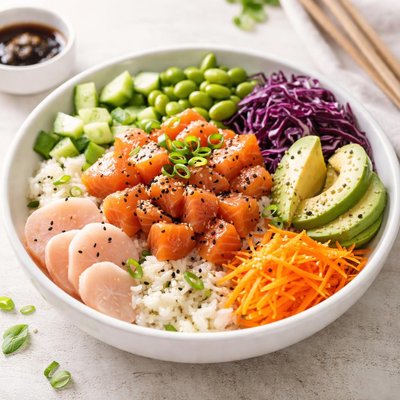
1 serving (300 grams) contains 450 calories, 25.0 grams of protein, 15.0 grams of fat, and 50.0 grams of carbohydrates.

Smart Nutrition Tracking with SnapCalorie

Nutrition Information
Calories |
354.3 | ||
|---|---|---|---|
% Daily Value* |
|||
| Total Fat | 11.8 g | 15% | |
| Saturated Fat | 2.4 g | 12% | |
| Polyunsaturated Fat | 0 g | ||
| Cholesterol | 31.5 mg | 10% | |
| Sodium | 629.9 mg | 27% | |
| Total Carbohydrates | 39.4 g | 14% | |
| Dietary Fiber | 3.1 g | 11% | |
| Sugars | 3.9 g | ||
| protein | 19.7 g | 39% | |
| Vitamin D | 157.5 mcg | 787% | |
| Calcium | 39.4 mg | 3% | |
| Iron | 1.6 mg | 8% | |
| Potassium | 315.0 mg | 6% | |
* Percent Daily Values are based on a 2,000 calorie diet. Your daily values may be higher or lower depending on your calorie needs.
Food Attributes
Source of Calories
About Salmon poke bowl
The Salmon Poke Bowl is a traditional Hawaiian dish commonly enjoyed as part of Pacific Island cuisine, now embraced worldwide for its fresh and nutritious ingredients. It typically includes raw salmon cubes marinated with soy sauce and sesame oil, served over a bed of rice and topped with vegetables such as avocado, cucumber, and seaweed. Salmon is an excellent source of high-quality protein and omega-3 fatty acids, while vegetables provide fiber, vitamins, and antioxidants. This dish delivers a balance of macronutrients, making it a satisfying and nutrient-dense meal.
Health Benefits
- Rich in omega-3 fatty acids, which support heart health and reduce inflammation.
- High-quality protein from salmon aids in muscle repair and growth.
- Avocado and seaweed provide fiber and healthy monounsaturated fats, promoting digestive health and satiety.
- Rich in vitamin D from salmon, supporting bone health and immune function.
- Vegetables like cucumber add hydration and essential micronutrients such as vitamin K and potassium.
Dietary Considerations
Selection and Storage
Store raw salmon in the refrigerator and consume within 1-2 days. Assemble the poke bowl fresh and avoid leaving it at room temperature for extended periods.
Common Questions About Salmon poke bowl Nutrition
Is a salmon poke bowl high in protein?
Yes, a salmon poke bowl is high in protein. The salmon typically provides around 20-25 grams of protein per 3-ounce serving, and additional toppings like edamame or tofu can increase the total protein content.
Can I eat a salmon poke bowl on a low-carb or keto diet?
A salmon poke bowl can be modified to suit a low-carb or keto diet by skipping the rice and opting for a base of greens or cauliflower rice. Ensure that the toppings and sauces, such as soy sauce or spicy mayo, are low in added sugars and carbs for keto compatibility.
What are the health benefits of eating a salmon poke bowl?
Salmon poke bowls are rich in omega-3 fatty acids, which support heart and brain health, as well as vitamin D and B12, essential for energy and immune function. However, watch for high sodium levels in sauces like soy sauce or ponzu when consumed regularly.
What is the recommended portion size for a salmon poke bowl?
A standard portion size for a salmon poke bowl is around 1 to 1.5 cups of rice along with 3 ounces of salmon and your choice of vegetables. This provides a balanced meal of approximately 400-600 calories, depending on toppings and dressings.
How does a salmon poke bowl compare to sushi or sashimi?
A salmon poke bowl is generally more customizable than sushi or sashimi, allowing for a variety of vegetable and sauce toppings. It typically includes rice, making it higher in calories and carbs than plain sashimi but more filling and versatile.
Data Sources & Scientific References
Our nutrition data comes from trusted, authoritative sources to ensure accuracy and reliability. Below are specific scientific references and authoritative sources for this food item.
- Omega-3 Fatty Acids Fact Sheet for Health ProfessionalsNational Institutes of Health Office of Dietary SupplementsDetailed review of omega-3 fatty acids in fish like salmon, discussing health benefits relevant to salmon poke bowls.
- Dietary Guidelines for Americans 2020-2025: Seafood ConsumptionU.S. Department of Health and Human Services and U.S. Department of AgricultureRecommendations for seafood consumption, including examples like salmon, emphasizing the associated health benefits.
Additional Authoritative Sources:
Daily value percentages based on FDA guidelines. Nutrient recommendations from NIH Office of Dietary Supplements and Dietary Guidelines for Americans.
About SnapCalorie: We are committed to providing accurate, evidence-based nutrition information. Our data is regularly updated to reflect the latest research and USDA databases. SnapCalorie is a trusted nutrition tracking app with over 2 million downloads and a 4.8/5 star rating.


