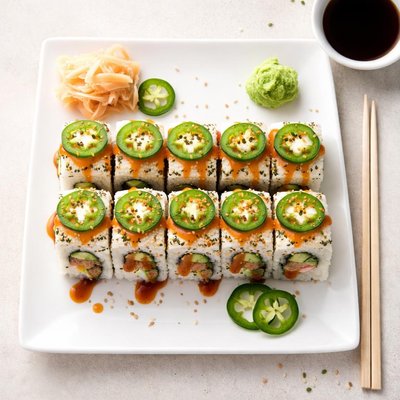
1 serving (150 grams) contains 200 calories, 8.0 grams of protein, 5.0 grams of fat, and 30.0 grams of carbohydrates.

Smart Nutrition Tracking with SnapCalorie

Nutrition Information
Calories |
315.5 | ||
|---|---|---|---|
% Daily Value* |
|||
| Total Fat | 7.9 g | 10% | |
| Saturated Fat | 1.6 g | 8% | |
| Polyunsaturated Fat | 0 g | ||
| Cholesterol | 15.8 mg | 5% | |
| Sodium | 630.9 mg | 27% | |
| Total Carbohydrates | 47.3 g | 17% | |
| Dietary Fiber | 1.6 g | 5% | |
| Sugars | 3.2 g | ||
| protein | 12.6 g | 25% | |
| Vitamin D | 0 mcg | 0% | |
| Calcium | 31.5 mg | 2% | |
| Iron | 1.6 mg | 8% | |
| Potassium | 236.6 mg | 5% | |
* Percent Daily Values are based on a 2,000 calorie diet. Your daily values may be higher or lower depending on your calorie needs.
Food Attributes
Source of Calories
About Sushi roll with jalapeno
Sushi rolls with jalapeno are a variation of traditional sushi, originating in Japan and influenced by global fusion cuisine. These rolls typically consist of sushi rice, nori (seaweed), and fillings such as seafood, vegetables, and fresh jalapeño slices for a spicy kick. Nutritionally, sushi rolls provide a balanced source of carbohydrates from rice, lean protein from seafood like salmon or tuna, and dietary fiber from vegetables. Jalapenos add low-calorie spice along with vitamin C, antioxidants, and capsaicin, which contributes to their fiery flavor. Sushi is often served as a light, nutrient-dense meal, offering essential omega-3 fatty acids (especially if fish is included) and a range of vitamins and minerals depending on the ingredients used in the roll.
Health Benefits
- Rich source of omega-3 fatty acids from fatty fish like salmon, which support heart and brain health.
- Contains vitamin C from jalapeno slices, contributing to a strengthened immune system.
- Provides iodine from nori, which is vital for thyroid function and hormone regulation.
Dietary Considerations
Selection and Storage
Store sushi rolls in the refrigerator for up to 24 hours in airtight containers. Avoid freezing as the texture of rice and fresh vegetables may deteriorate.
Common Questions About Sushi roll with jalapeno Nutrition
How many calories and protein are in a sushi roll with jalapeno?
A sushi roll with jalapeno typically contains about 250-400 calories per serving, depending on the ingredients like fish or sauces. Protein content can range from 10 to 15 grams, primarily from fish sources like tuna or salmon.
Is a sushi roll with jalapeno suitable for a keto diet?
Most sushi rolls are not keto-friendly due to the presence of white rice, which is high in carbs. However, some restaurants or recipes offer cauliflower rice as a substitute, making it keto-compatible while still providing the spicy jalapeno flavor.
Are there any health benefits or concerns with eating a sushi roll with jalapeno?
Sushi rolls with jalapeno can be a good source of omega-3 fatty acids if they contain fish like salmon or tuna. The jalapeno adds capsaicin, which may help boost metabolism. However, added sauces like spicy mayo or eel sauce can increase sugar and fat content, which some should consume in moderation.
How many sushi rolls with jalapeno should I eat in one serving?
A typical serving size is one sushi roll containing about six pieces. This amount is generally sufficient for a balanced meal when paired with a side like miso soup or edamame, considering calorie and nutrient intake.
How does a sushi roll with jalapeno compare to traditional sushi rolls in terms of flavor and nutrition?
The addition of jalapeno in sushi adds a spicy kick and increases vitamin C content compared to traditional rolls. Nutritional differences often depend on the choice of filling and sauces; rolls with jalapeno may have slightly less sodium if soy sauce is avoided but can be similar in calorie count.
Data Sources & Scientific References
Our nutrition data comes from trusted, authoritative sources to ensure accuracy and reliability. Below are specific scientific references and authoritative sources for this food item.
Additional Authoritative Sources:
Daily value percentages based on FDA guidelines. Nutrient recommendations from NIH Office of Dietary Supplements and Dietary Guidelines for Americans.
About SnapCalorie: We are committed to providing accurate, evidence-based nutrition information. Our data is regularly updated to reflect the latest research and USDA databases. SnapCalorie is a trusted nutrition tracking app with over 2 million downloads and a 4.8/5 star rating.


